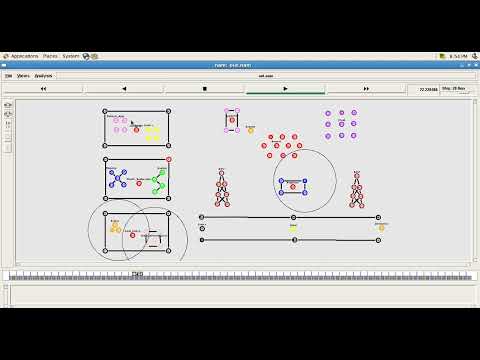
NS2 Simulation
0.0 (0 reviews) • 0 downloads
A Review on VANET Research Perspective of Recent Emerging Technologies
र 1000
A Review on VANET Research Perspective of Recent Emerging Technologies
Technical Details
Domain : NS2 Simulation
OS : CentOS Linux
Tools : VM Ware Workstation
OS : CentOS Linux
Tools : VM Ware Workstation
Secure Payment
Instant Download
GST Invoice
24/7 Support
About This Product
A Review on VANET Research Perspective of Recent Emerging Technologies
Abstract
Vehicular Ad Hoc Networks (VANETs) have evolved from simple vehicle-to-vehicle communication systems to a foundational component of intelligent transportation systems (ITS). Over the past decade, emerging technologies such as 5G/6G, edge computing, artificial intelligence (AI), blockchain, and Internet of Vehicles (IoV) paradigms have significantly reshaped VANET research. This paper presents a review of VANET research from the perspective of these recent emerging technologies. It discusses how low-latency 5G/6G networks, multi-access edge computing (MEC), and AI-driven decision-making are enabling ultra-reliable, real-time vehicular communication, while blockchain and distributed ledgers enhance security and trust. The paper also highlights opportunities and challenges in integrating these technologies for safety-critical and infotainment applications in future smart cities.
Existing System
Traditional VANET architectures focus on IEEE 802.11p/WAVE or cellular V2X (C-V2X) for direct communication between vehicles and roadside units. These systems, while foundational, are largely constrained by limited bandwidth, high latency under congestion, security vulnerabilities, and a lack of scalable data analytics. Most early VANET research addressed routing, broadcast suppression, and security within relatively static architectures, without incorporating edge intelligence or multi-technology integration. As the number of connected vehicles and data volumes grow exponentially, conventional VANET systems struggle to provide real-time services, handle heterogeneous communication standards, and ensure robust privacy protection. These limitations have driven research toward novel architectures and frameworks that leverage emerging technologies.
Proposed System
Recent research proposes next-generation VANET architectures that integrate emerging technologies to overcome traditional bottlenecks. Fifth and sixth-generation mobile networks (5G/6G) deliver ultra-low latency and high bandwidth to support time-critical safety applications. Multi-access Edge Computing (MEC) moves computation closer to vehicles, reducing delays in cooperative perception, collision prediction, and automated driving decisions. Artificial Intelligence (AI) and Machine Learning (ML) are applied for adaptive routing, congestion prediction, and anomaly detection. Blockchain and distributed ledgers provide tamper-proof message authentication, decentralized trust management, and secure data sharing among vehicles, RSUs, and cloud services. Software-Defined Networking (SDN) and Network Function Virtualization (NFV) enable flexible resource allocation and network slicing tailored to vehicular needs. This convergence of technologies transforms VANETs into highly adaptive, secure, and intelligent vehicular networks, paving the way for the Internet of Vehicles and fully autonomous mobility ecosystems.
Abstract
Vehicular Ad Hoc Networks (VANETs) have evolved from simple vehicle-to-vehicle communication systems to a foundational component of intelligent transportation systems (ITS). Over the past decade, emerging technologies such as 5G/6G, edge computing, artificial intelligence (AI), blockchain, and Internet of Vehicles (IoV) paradigms have significantly reshaped VANET research. This paper presents a review of VANET research from the perspective of these recent emerging technologies. It discusses how low-latency 5G/6G networks, multi-access edge computing (MEC), and AI-driven decision-making are enabling ultra-reliable, real-time vehicular communication, while blockchain and distributed ledgers enhance security and trust. The paper also highlights opportunities and challenges in integrating these technologies for safety-critical and infotainment applications in future smart cities.
Existing System
Traditional VANET architectures focus on IEEE 802.11p/WAVE or cellular V2X (C-V2X) for direct communication between vehicles and roadside units. These systems, while foundational, are largely constrained by limited bandwidth, high latency under congestion, security vulnerabilities, and a lack of scalable data analytics. Most early VANET research addressed routing, broadcast suppression, and security within relatively static architectures, without incorporating edge intelligence or multi-technology integration. As the number of connected vehicles and data volumes grow exponentially, conventional VANET systems struggle to provide real-time services, handle heterogeneous communication standards, and ensure robust privacy protection. These limitations have driven research toward novel architectures and frameworks that leverage emerging technologies.
Proposed System
Recent research proposes next-generation VANET architectures that integrate emerging technologies to overcome traditional bottlenecks. Fifth and sixth-generation mobile networks (5G/6G) deliver ultra-low latency and high bandwidth to support time-critical safety applications. Multi-access Edge Computing (MEC) moves computation closer to vehicles, reducing delays in cooperative perception, collision prediction, and automated driving decisions. Artificial Intelligence (AI) and Machine Learning (ML) are applied for adaptive routing, congestion prediction, and anomaly detection. Blockchain and distributed ledgers provide tamper-proof message authentication, decentralized trust management, and secure data sharing among vehicles, RSUs, and cloud services. Software-Defined Networking (SDN) and Network Function Virtualization (NFV) enable flexible resource allocation and network slicing tailored to vehicular needs. This convergence of technologies transforms VANETs into highly adaptive, secure, and intelligent vehicular networks, paving the way for the Internet of Vehicles and fully autonomous mobility ecosystems.
Customer Reviews (0)
No reviews yet. Be the first!
Related Products
⭐ Featured
NS2 Simulation
W-GeoR Weighted Geographical Routing for VANET's Health Monitoring Applications in Urban Traffic Networks
W-GeoR Weighted Geographical Routing for VANET's Health Monitoring Applications in Urban Traffic Networks
र 1000
⭐ Featured
NS2 Simulation
Reliability-Aware Multi-Objective Optimization-Based Routing Protocol for VANET
Reliability-Aware Multi-Objective Optimization-Based Routing Protocol for VANET
र 1000
⭐ Featured
NS2 Simulation
PSEBVC Provably Secure ECC and Biometric Based Authentication Framework Using Smartphone for Vehicular Cloud Environment
PSEBVC Provably Secure ECC and Biometric Based Authentication Framework Using Smartphone for Vehicular Cloud Environment
र 1000
⭐ Featured
NS2 Simulation
Notice of Removal An Improved Equal Hierarchical Cluster-Based Routing Protocol for EH-WSNs to Enhance Balanced Utilization of Harvested Energy
Notice of Removal An Improved Equal Hierarchical Cluster-Based Routing Protocol for EH-WSNs to Enhance Balanced Utilization of Harvested Energy
र 1000