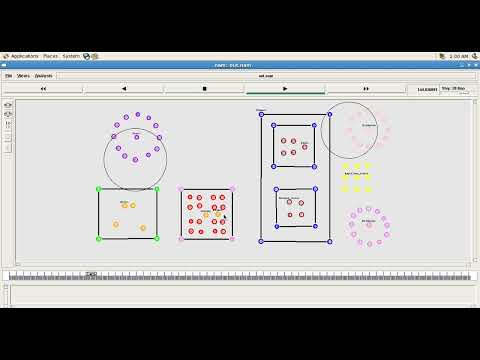
NS2 Simulation
0.0 (0 reviews) • 0 downloads
A Fault-Tolerant and Secure Architecture for Key Management in LoRaWAN based on Permissioned Blockchain
र 1000
A Fault-Tolerant and Secure Architecture for Key Management in LoRaWAN based on Permissioned Blockchain
Technical Details
Domain : NS2 Simulation
OS : CentOS Linux
Tools : VM Ware Workstation
OS : CentOS Linux
Tools : VM Ware Workstation
Secure Payment
Instant Download
GST Invoice
24/7 Support
About This Product
A Fault-Tolerant and Secure Architecture for Key Management in LoRaWAN based on Permissioned Blockchain
Abstract
LoRaWAN has emerged as a leading low-power, wide-area network (LPWAN) technology for Internet of Things (IoT) applications, offering long-range connectivity and low energy consumption. However, its centralized key management and join procedures expose it to key compromise, replay, and single-point-of-failure vulnerabilities. This paper presents a fault-tolerant and secure key management architecture for LoRaWAN leveraging a permissioned blockchain to decentralize trust, improve auditability, and enhance resilience. The proposed system records device registrations, key derivations, and key revocations on an immutable ledger shared among authorized network stakeholders. Smart contracts automate key lifecycle management and enforce fine-grained access policies, while a Byzantine fault-tolerant consensus algorithm ensures high availability and integrity of key records even under node failures or malicious attacks. The approach balances LoRaWAN’s low-power constraints with robust security and scalability, making it suitable for large-scale IoT deployments.
Existing System
Current LoRaWAN deployments largely use a centralized Join Server or Network Server for device authentication and session key derivation (AppKey, NwkKey). While simple to implement, this model creates a single point of trust and failure. If the Join Server or Network Server is compromised, all associated devices are at risk. Furthermore, LoRaWAN 1.0/1.1 specifications do not provide native mechanisms for distributed key management or auditable key lifecycle tracking. Key revocation and rotation require manual intervention or proprietary extensions, which can be inefficient and error-prone at scale. Existing solutions also lack transparent, tamper-evident logs to demonstrate compliance and security audits. This combination of centralization, limited visibility, and manual processes weakens the overall resilience of LoRaWAN networks, especially when deployed across multiple administrative domains.
Proposed System
The proposed architecture replaces the single Join Server trust anchor with a permissioned blockchain network operated collaboratively by multiple trusted entities—such as network operators, utilities, and municipal agencies—forming a consortium. Device registrations, session key derivations, and key revocations are recorded as blockchain transactions, producing an immutable audit trail. Smart contracts automate key generation, distribution, and expiration, while enforcing policy compliance (e.g., device-type restrictions, revocation triggers). A lightweight Byzantine Fault Tolerant (BFT) consensus protocol is employed to ensure ledger integrity and high availability, even if some nodes fail or act maliciously. To accommodate LoRaWAN’s constrained devices, keys are only referenced on-chain (hashes or encrypted key pointers), while actual keys are exchanged off-chain via secure channels. This hybrid design minimizes overhead on end devices while providing strong security guarantees and decentralized resilience. Additionally, the architecture supports automated key rotation, cross-domain interoperability, and integration with existing LoRaWAN back-end components, ensuring a practical migration path for operators.
Abstract
LoRaWAN has emerged as a leading low-power, wide-area network (LPWAN) technology for Internet of Things (IoT) applications, offering long-range connectivity and low energy consumption. However, its centralized key management and join procedures expose it to key compromise, replay, and single-point-of-failure vulnerabilities. This paper presents a fault-tolerant and secure key management architecture for LoRaWAN leveraging a permissioned blockchain to decentralize trust, improve auditability, and enhance resilience. The proposed system records device registrations, key derivations, and key revocations on an immutable ledger shared among authorized network stakeholders. Smart contracts automate key lifecycle management and enforce fine-grained access policies, while a Byzantine fault-tolerant consensus algorithm ensures high availability and integrity of key records even under node failures or malicious attacks. The approach balances LoRaWAN’s low-power constraints with robust security and scalability, making it suitable for large-scale IoT deployments.
Existing System
Current LoRaWAN deployments largely use a centralized Join Server or Network Server for device authentication and session key derivation (AppKey, NwkKey). While simple to implement, this model creates a single point of trust and failure. If the Join Server or Network Server is compromised, all associated devices are at risk. Furthermore, LoRaWAN 1.0/1.1 specifications do not provide native mechanisms for distributed key management or auditable key lifecycle tracking. Key revocation and rotation require manual intervention or proprietary extensions, which can be inefficient and error-prone at scale. Existing solutions also lack transparent, tamper-evident logs to demonstrate compliance and security audits. This combination of centralization, limited visibility, and manual processes weakens the overall resilience of LoRaWAN networks, especially when deployed across multiple administrative domains.
Proposed System
The proposed architecture replaces the single Join Server trust anchor with a permissioned blockchain network operated collaboratively by multiple trusted entities—such as network operators, utilities, and municipal agencies—forming a consortium. Device registrations, session key derivations, and key revocations are recorded as blockchain transactions, producing an immutable audit trail. Smart contracts automate key generation, distribution, and expiration, while enforcing policy compliance (e.g., device-type restrictions, revocation triggers). A lightweight Byzantine Fault Tolerant (BFT) consensus protocol is employed to ensure ledger integrity and high availability, even if some nodes fail or act maliciously. To accommodate LoRaWAN’s constrained devices, keys are only referenced on-chain (hashes or encrypted key pointers), while actual keys are exchanged off-chain via secure channels. This hybrid design minimizes overhead on end devices while providing strong security guarantees and decentralized resilience. Additionally, the architecture supports automated key rotation, cross-domain interoperability, and integration with existing LoRaWAN back-end components, ensuring a practical migration path for operators.
Customer Reviews (0)
No reviews yet. Be the first!
Related Products
⭐ Featured
NS2 Simulation
W-GeoR Weighted Geographical Routing for VANET's Health Monitoring Applications in Urban Traffic Networks
W-GeoR Weighted Geographical Routing for VANET's Health Monitoring Applications in Urban Traffic Networks
र 1000
⭐ Featured
NS2 Simulation
Reliability-Aware Multi-Objective Optimization-Based Routing Protocol for VANET
Reliability-Aware Multi-Objective Optimization-Based Routing Protocol for VANET
र 1000
⭐ Featured
NS2 Simulation
PSEBVC Provably Secure ECC and Biometric Based Authentication Framework Using Smartphone for Vehicular Cloud Environment
PSEBVC Provably Secure ECC and Biometric Based Authentication Framework Using Smartphone for Vehicular Cloud Environment
र 1000
⭐ Featured
NS2 Simulation
Notice of Removal An Improved Equal Hierarchical Cluster-Based Routing Protocol for EH-WSNs to Enhance Balanced Utilization of Harvested Energy
Notice of Removal An Improved Equal Hierarchical Cluster-Based Routing Protocol for EH-WSNs to Enhance Balanced Utilization of Harvested Energy
र 1000