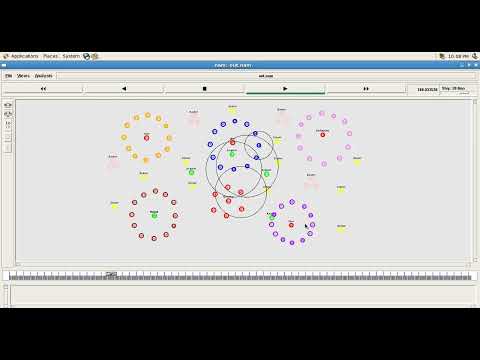
NS2 Simulation
0.0 (0 reviews) • 0 downloads
A Concealed Based Approach for Secure Transmission in Advanced Metering Infrastructure
र 1000
A Concealed Based Approach for Secure Transmission in Advanced Metering Infrastructure
Technical Details
Domain : NS2 Simulation
OS : CentOS Linux
Tools : VM Ware Workstation
OS : CentOS Linux
Tools : VM Ware Workstation
Secure Payment
Instant Download
GST Invoice
24/7 Support
About This Product
A Concealed Based Approach for Secure Transmission in Advanced Metering Infrastructure
Abstract
Advanced Metering Infrastructure (AMI) forms the backbone of modern smart grids, enabling two-way communication between smart meters, utilities, and control centers. While AMI improves efficiency and enables demand-side management, it also exposes consumer data to cyber threats such as eavesdropping, spoofing, and data tampering. Traditional cryptographic measures provide a degree of security but are often resource-intensive and do not address traffic pattern privacy. This paper proposes a concealed-based approach for secure transmission in AMI, combining lightweight cryptographic primitives with data concealment and obfuscation techniques to protect consumer privacy and enhance resilience against adversarial interception. The approach masks sensitive meter readings, ensures integrity and authenticity of messages, and maintains low computational overhead to suit resource-constrained smart meters. Evaluation of the proposed system shows improved confidentiality, reduced vulnerability to traffic analysis, and compatibility with existing AMI standards.
Existing System
Current AMI security models rely heavily on public-key infrastructure (PKI), symmetric encryption, or proprietary protocols embedded within smart meters and data concentrators. These systems secure communication channels but still leak metadata such as transmission frequency, timing, and consumption patterns, which can be exploited by attackers for traffic analysis or consumer profiling. Additionally, high computational demands of conventional cryptography stress low-power smart meters, resulting in latency, scalability, and cost issues. Furthermore, key management across millions of meters poses operational challenges, and centralized trust models create single points of failure. The absence of robust data obfuscation and concealment at the network layer leaves AMI communications susceptible to advanced persistent threats and privacy breaches.
Proposed System
The proposed system integrates data concealment techniques—such as dynamic packet padding, traffic shaping, and lightweight steganographic encoding—with lightweight cryptography to protect both content and metadata. Each smart meter applies a concealment module before transmission, obfuscating identifiable patterns in energy usage while encrypting payload data with an efficient symmetric cipher (e.g., AES-GCM in constrained mode). At the collector or utility end, a complementary deconcealment module restores the original data stream. Key features of the system include decentralized key management using pre-shared lightweight tokens, adaptive concealment to thwart traffic analysis, and compatibility with IPv6-based smart grid protocols. By hiding both the content and its transmission characteristics, the approach mitigates eavesdropping, spoofing, and profiling attacks, while maintaining low overhead suitable for large-scale AMI deployments. This dual-layer security mechanism provides a scalable, privacy-preserving, and future-ready communication framework for smart grids.
Abstract
Advanced Metering Infrastructure (AMI) forms the backbone of modern smart grids, enabling two-way communication between smart meters, utilities, and control centers. While AMI improves efficiency and enables demand-side management, it also exposes consumer data to cyber threats such as eavesdropping, spoofing, and data tampering. Traditional cryptographic measures provide a degree of security but are often resource-intensive and do not address traffic pattern privacy. This paper proposes a concealed-based approach for secure transmission in AMI, combining lightweight cryptographic primitives with data concealment and obfuscation techniques to protect consumer privacy and enhance resilience against adversarial interception. The approach masks sensitive meter readings, ensures integrity and authenticity of messages, and maintains low computational overhead to suit resource-constrained smart meters. Evaluation of the proposed system shows improved confidentiality, reduced vulnerability to traffic analysis, and compatibility with existing AMI standards.
Existing System
Current AMI security models rely heavily on public-key infrastructure (PKI), symmetric encryption, or proprietary protocols embedded within smart meters and data concentrators. These systems secure communication channels but still leak metadata such as transmission frequency, timing, and consumption patterns, which can be exploited by attackers for traffic analysis or consumer profiling. Additionally, high computational demands of conventional cryptography stress low-power smart meters, resulting in latency, scalability, and cost issues. Furthermore, key management across millions of meters poses operational challenges, and centralized trust models create single points of failure. The absence of robust data obfuscation and concealment at the network layer leaves AMI communications susceptible to advanced persistent threats and privacy breaches.
Proposed System
The proposed system integrates data concealment techniques—such as dynamic packet padding, traffic shaping, and lightweight steganographic encoding—with lightweight cryptography to protect both content and metadata. Each smart meter applies a concealment module before transmission, obfuscating identifiable patterns in energy usage while encrypting payload data with an efficient symmetric cipher (e.g., AES-GCM in constrained mode). At the collector or utility end, a complementary deconcealment module restores the original data stream. Key features of the system include decentralized key management using pre-shared lightweight tokens, adaptive concealment to thwart traffic analysis, and compatibility with IPv6-based smart grid protocols. By hiding both the content and its transmission characteristics, the approach mitigates eavesdropping, spoofing, and profiling attacks, while maintaining low overhead suitable for large-scale AMI deployments. This dual-layer security mechanism provides a scalable, privacy-preserving, and future-ready communication framework for smart grids.
Customer Reviews (0)
No reviews yet. Be the first!
Related Products
⭐ Featured
NS2 Simulation
W-GeoR Weighted Geographical Routing for VANET's Health Monitoring Applications in Urban Traffic Networks
W-GeoR Weighted Geographical Routing for VANET's Health Monitoring Applications in Urban Traffic Networks
र 1000
⭐ Featured
NS2 Simulation
Reliability-Aware Multi-Objective Optimization-Based Routing Protocol for VANET
Reliability-Aware Multi-Objective Optimization-Based Routing Protocol for VANET
र 1000
⭐ Featured
NS2 Simulation
PSEBVC Provably Secure ECC and Biometric Based Authentication Framework Using Smartphone for Vehicular Cloud Environment
PSEBVC Provably Secure ECC and Biometric Based Authentication Framework Using Smartphone for Vehicular Cloud Environment
र 1000
⭐ Featured
NS2 Simulation
Notice of Removal An Improved Equal Hierarchical Cluster-Based Routing Protocol for EH-WSNs to Enhance Balanced Utilization of Harvested Energy
Notice of Removal An Improved Equal Hierarchical Cluster-Based Routing Protocol for EH-WSNs to Enhance Balanced Utilization of Harvested Energy
र 1000