AI & ML Models
0.0 (0 reviews) • 0 downloads
Weed Identification CNN Train Analysis in Python Projects
र 1000
Weed Identification CNN Train Analysis in Python Projects
Technical Details
Domain : Python
Database : Sqlite
Tools : Anaconda
Run Tools: VS Code
Database : Sqlite
Tools : Anaconda
Run Tools: VS Code
Secure Payment
Instant Download
GST Invoice
24/7 Support
About This Product
Weed Identification CNN Train Analysis in Python Projects
Abstract
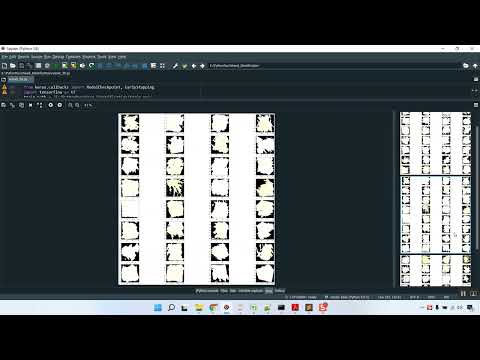
Weed identification in agriculture is essential for optimizing crop yields and reducing the use of herbicides. This project focuses on Weed Identification using Convolutional Neural Networks (CNN) in Python, which automatically detects and classifies weeds from crop images. The system collects image datasets of crops and weeds, preprocesses them by resizing, normalization, and augmentation, and trains a CNN model to distinguish between weed and non-weed plants. Python libraries such as TensorFlow/Keras, OpenCV, NumPy, and Matplotlib are used for data processing, model training, and visualization. The project aims to provide an automated, accurate, and scalable solution for weed detection, supporting precision agriculture and reducing manual labor.
Existing System
Existing weed detection methods rely primarily on manual inspection, traditional image processing techniques, or simple threshold-based segmentation. Manual methods are time-consuming and labor-intensive, while traditional techniques struggle under varying lighting, occlusion, or complex field conditions. Some systems use feature-based machine learning classifiers, but these require extensive feature engineering and often fail to generalize to diverse weed types or crop backgrounds. Many current approaches also lack real-time detection capability, making them less practical for large-scale or automated agricultural systems.
Proposed System
The proposed system implements a CNN-based weed identification framework in Python. Crop and weed images are collected and preprocessed to enhance contrast, normalize pixel values, and augment the dataset for better generalization. A Convolutional Neural Network is trained to automatically extract spatial features and classify images as weed or non-weed. The trained model can analyze new field images in real-time or batch mode. Visualization tools display classification results and highlight weed locations for actionable insights. By combining deep learning with automated image analysis, the system provides a highly accurate, efficient, and scalable solution for weed identification, supporting precision agriculture, reducing chemical usage, and improving crop management.
Abstract
Weed identification in agriculture is essential for optimizing crop yields and reducing the use of herbicides. This project focuses on Weed Identification using Convolutional Neural Networks (CNN) in Python, which automatically detects and classifies weeds from crop images. The system collects image datasets of crops and weeds, preprocesses them by resizing, normalization, and augmentation, and trains a CNN model to distinguish between weed and non-weed plants. Python libraries such as TensorFlow/Keras, OpenCV, NumPy, and Matplotlib are used for data processing, model training, and visualization. The project aims to provide an automated, accurate, and scalable solution for weed detection, supporting precision agriculture and reducing manual labor.
Existing System
Existing weed detection methods rely primarily on manual inspection, traditional image processing techniques, or simple threshold-based segmentation. Manual methods are time-consuming and labor-intensive, while traditional techniques struggle under varying lighting, occlusion, or complex field conditions. Some systems use feature-based machine learning classifiers, but these require extensive feature engineering and often fail to generalize to diverse weed types or crop backgrounds. Many current approaches also lack real-time detection capability, making them less practical for large-scale or automated agricultural systems.
Proposed System
The proposed system implements a CNN-based weed identification framework in Python. Crop and weed images are collected and preprocessed to enhance contrast, normalize pixel values, and augment the dataset for better generalization. A Convolutional Neural Network is trained to automatically extract spatial features and classify images as weed or non-weed. The trained model can analyze new field images in real-time or batch mode. Visualization tools display classification results and highlight weed locations for actionable insights. By combining deep learning with automated image analysis, the system provides a highly accurate, efficient, and scalable solution for weed identification, supporting precision agriculture, reducing chemical usage, and improving crop management.
Customer Reviews (0)
No reviews yet. Be the first!
Related Products
⭐ Featured

AI & ML Models
Zomato Restaurant Reviews Sentimental Analyzer in Python Projects
Zomato Restaurant Reviews Sentimental Analyzer in Python Projects
र 1000
⭐ Featured
⭐ Featured

AI & ML Models
Voice Disorder Prediction using Audio Dataset in Python Projects
Voice Disorder Prediction using Audio Dataset in Python Projects
र 1000

AI & ML Models
Vitamin Deficiency Detection Using Image Processing in Python Projects
Vitamin Deficiency Detection Using Image Processing in Python Projects
र 1000