AI & ML Models
0.0 (0 reviews) • 0 downloads
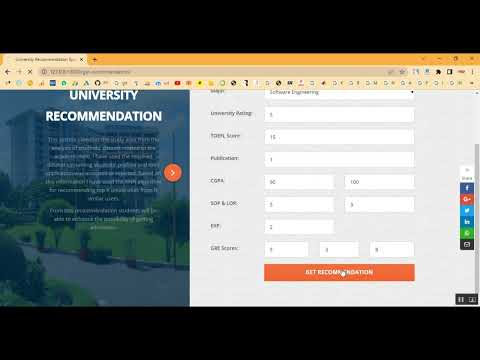
University Recommendation College Admission Prediction in Python Projects
र 1000
University Recommendation College Admission Prediction in Python Projects
Technical Details
Domain : Python
Database : Sqlite
Tools : Anaconda
Run Tools: VS Code
Database : Sqlite
Tools : Anaconda
Run Tools: VS Code
Secure Payment
Instant Download
GST Invoice
24/7 Support
About This Product
University Recommendation College Admission Prediction in Python Projects
Abstract
Choosing the right university or college for admission is a critical decision for students, often based on multiple factors like academic performance, preferences, and eligibility criteria. This project focuses on University Recommendation and College Admission Prediction using Python, which predicts the likelihood of admission for a student into various colleges and provides personalized university recommendations. The system collects student data such as grades, test scores, extracurricular activities, and preferences. Machine learning classifiers, including Logistic Regression, Random Forest, Support Vector Machines, or Gradient Boosting, are trained to predict admission chances. Python libraries like Pandas, NumPy, Scikit-learn, and Matplotlib are used for data preprocessing, model training, and visualization. The project aims to assist students in making informed decisions about college applications and improving admission success rates.
Existing System
Existing admission guidance systems largely rely on manual counseling, generic eligibility criteria, or static ranking lists of colleges. Manual counseling is time-consuming and may not provide personalized recommendations. Traditional eligibility checks focus only on scores and cutoff marks, ignoring other important factors like extracurricular achievements, personal interests, and historical admission trends. Many existing systems do not incorporate predictive modeling or data-driven recommendations, limiting their accuracy and relevance. Consequently, students often make application decisions based on incomplete or generic information, which may reduce their chances of admission success.
Proposed System
The proposed system implements a Python-based predictive framework for college admission and university recommendation. Student data is collected and preprocessed to handle missing values, normalize numerical features, and encode categorical variables. Feature engineering extracts relevant information, such as academic performance trends, test scores, and extracurricular achievements. Machine learning classifiers such as Logistic Regression, Random Forest, Gradient Boosting, or Support Vector Machines are trained on historical admission datasets to predict the probability of admission into different universities or colleges. Based on predicted probabilities, the system generates personalized recommendations for suitable institutions. Data visualization using Matplotlib or Seaborn provides insights into student performance and admission chances. By combining predictive analytics with recommendation modeling, the system helps students make informed decisions, improves application strategies, and increases the likelihood of successful admissions.
Abstract
Choosing the right university or college for admission is a critical decision for students, often based on multiple factors like academic performance, preferences, and eligibility criteria. This project focuses on University Recommendation and College Admission Prediction using Python, which predicts the likelihood of admission for a student into various colleges and provides personalized university recommendations. The system collects student data such as grades, test scores, extracurricular activities, and preferences. Machine learning classifiers, including Logistic Regression, Random Forest, Support Vector Machines, or Gradient Boosting, are trained to predict admission chances. Python libraries like Pandas, NumPy, Scikit-learn, and Matplotlib are used for data preprocessing, model training, and visualization. The project aims to assist students in making informed decisions about college applications and improving admission success rates.
Existing System
Existing admission guidance systems largely rely on manual counseling, generic eligibility criteria, or static ranking lists of colleges. Manual counseling is time-consuming and may not provide personalized recommendations. Traditional eligibility checks focus only on scores and cutoff marks, ignoring other important factors like extracurricular achievements, personal interests, and historical admission trends. Many existing systems do not incorporate predictive modeling or data-driven recommendations, limiting their accuracy and relevance. Consequently, students often make application decisions based on incomplete or generic information, which may reduce their chances of admission success.
Proposed System
The proposed system implements a Python-based predictive framework for college admission and university recommendation. Student data is collected and preprocessed to handle missing values, normalize numerical features, and encode categorical variables. Feature engineering extracts relevant information, such as academic performance trends, test scores, and extracurricular achievements. Machine learning classifiers such as Logistic Regression, Random Forest, Gradient Boosting, or Support Vector Machines are trained on historical admission datasets to predict the probability of admission into different universities or colleges. Based on predicted probabilities, the system generates personalized recommendations for suitable institutions. Data visualization using Matplotlib or Seaborn provides insights into student performance and admission chances. By combining predictive analytics with recommendation modeling, the system helps students make informed decisions, improves application strategies, and increases the likelihood of successful admissions.
Customer Reviews (0)
No reviews yet. Be the first!
Related Products
⭐ Featured
AI & ML Models
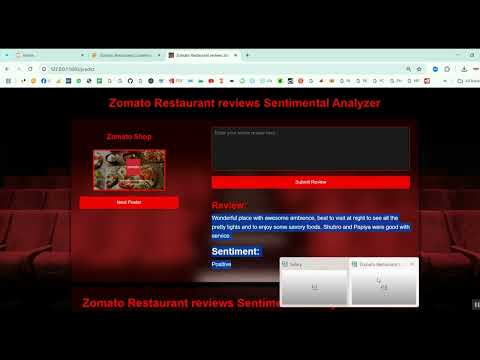
Zomato Restaurant Reviews Sentimental Analyzer in Python Projects
Zomato Restaurant Reviews Sentimental Analyzer in Python Projects
र 1000
⭐ Featured
⭐ Featured
AI & ML Models
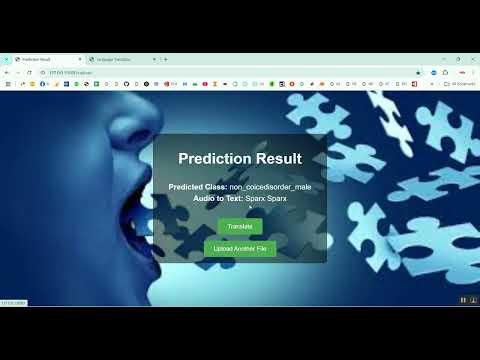
Voice Disorder Prediction using Audio Dataset in Python Projects
Voice Disorder Prediction using Audio Dataset in Python Projects
र 1000
AI & ML Models
Vitamin Deficiency Detection Using Image Processing in Python Projects
Vitamin Deficiency Detection Using Image Processing in Python Projects
र 1000