AI & ML Models
0.0 (0 reviews) • 0 downloads
U NET Lung Cancer in Python Projects
र 1000
U NET Lung Cancer in Python Projects
Technical Details
Domain : Python
Database : Sqlite
Tools : Anaconda
Run Tools: VS Code
Database : Sqlite
Tools : Anaconda
Run Tools: VS Code
Secure Payment
Instant Download
GST Invoice
24/7 Support
About This Product
U NET Lung Cancer in Python Projects
Abstract
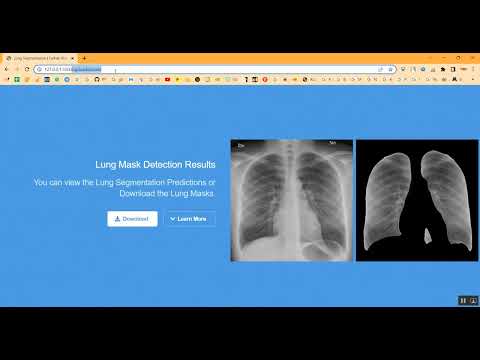
Lung cancer is one of the leading causes of cancer-related deaths worldwide, and early detection significantly improves survival rates. This project focuses on Lung Cancer Detection using U-Net in Python, a deep learning model designed for precise medical image segmentation. The system processes CT or X-ray lung images, segments lung regions, and identifies potential cancerous nodules. The U-Net architecture, known for its encoder-decoder structure with skip connections, enables accurate segmentation even with limited datasets. Python libraries such as TensorFlow/Keras, OpenCV, NumPy, and Matplotlib are used for image preprocessing, model development, and visualization. The project aims to provide an automated, accurate, and reliable solution for early lung cancer detection, assisting radiologists in diagnosis and improving patient outcomes.
Existing System
Existing lung cancer detection systems largely rely on manual inspection of CT or X-ray images by radiologists, which is time-consuming and prone to human error. Some automated methods use traditional image processing techniques such as thresholding, edge detection, or region-growing algorithms to identify lung nodules. However, these approaches often fail to detect small or irregularly shaped nodules and cannot accurately differentiate between benign and malignant growths. Conventional machine learning models may also require extensive feature engineering and fail to generalize well to diverse medical datasets. Consequently, existing systems are limited in accuracy, efficiency, and scalability for large-scale medical imaging.
Proposed System
The proposed system implements a U-Net based deep learning framework for lung cancer detection. Lung CT or X-ray images are preprocessed to normalize intensity, remove noise, and enhance lung regions. The U-Net model, with its encoder-decoder architecture, extracts features and performs pixel-wise segmentation to identify suspicious regions. Skip connections in U-Net help preserve spatial information for precise localization of lung nodules. The system is trained on annotated medical imaging datasets, and model performance is evaluated using metrics such as Dice coefficient, Intersection over Union (IoU), sensitivity, and specificity. By leveraging U-Net for automated segmentation, the system provides accurate and early detection of potential lung cancer areas, assisting radiologists, reducing diagnostic time, and improving patient care. Python libraries such as TensorFlow/Keras, OpenCV, and Matplotlib are used for preprocessing, model training, and visualization.
Abstract
Lung cancer is one of the leading causes of cancer-related deaths worldwide, and early detection significantly improves survival rates. This project focuses on Lung Cancer Detection using U-Net in Python, a deep learning model designed for precise medical image segmentation. The system processes CT or X-ray lung images, segments lung regions, and identifies potential cancerous nodules. The U-Net architecture, known for its encoder-decoder structure with skip connections, enables accurate segmentation even with limited datasets. Python libraries such as TensorFlow/Keras, OpenCV, NumPy, and Matplotlib are used for image preprocessing, model development, and visualization. The project aims to provide an automated, accurate, and reliable solution for early lung cancer detection, assisting radiologists in diagnosis and improving patient outcomes.
Existing System
Existing lung cancer detection systems largely rely on manual inspection of CT or X-ray images by radiologists, which is time-consuming and prone to human error. Some automated methods use traditional image processing techniques such as thresholding, edge detection, or region-growing algorithms to identify lung nodules. However, these approaches often fail to detect small or irregularly shaped nodules and cannot accurately differentiate between benign and malignant growths. Conventional machine learning models may also require extensive feature engineering and fail to generalize well to diverse medical datasets. Consequently, existing systems are limited in accuracy, efficiency, and scalability for large-scale medical imaging.
Proposed System
The proposed system implements a U-Net based deep learning framework for lung cancer detection. Lung CT or X-ray images are preprocessed to normalize intensity, remove noise, and enhance lung regions. The U-Net model, with its encoder-decoder architecture, extracts features and performs pixel-wise segmentation to identify suspicious regions. Skip connections in U-Net help preserve spatial information for precise localization of lung nodules. The system is trained on annotated medical imaging datasets, and model performance is evaluated using metrics such as Dice coefficient, Intersection over Union (IoU), sensitivity, and specificity. By leveraging U-Net for automated segmentation, the system provides accurate and early detection of potential lung cancer areas, assisting radiologists, reducing diagnostic time, and improving patient care. Python libraries such as TensorFlow/Keras, OpenCV, and Matplotlib are used for preprocessing, model training, and visualization.
Customer Reviews (0)
No reviews yet. Be the first!
Related Products
⭐ Featured
AI & ML Models
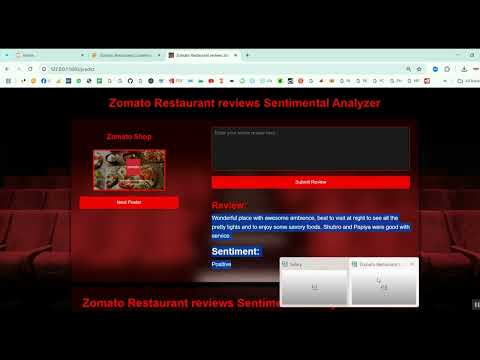
Zomato Restaurant Reviews Sentimental Analyzer in Python Projects
Zomato Restaurant Reviews Sentimental Analyzer in Python Projects
र 1000
⭐ Featured
⭐ Featured
AI & ML Models
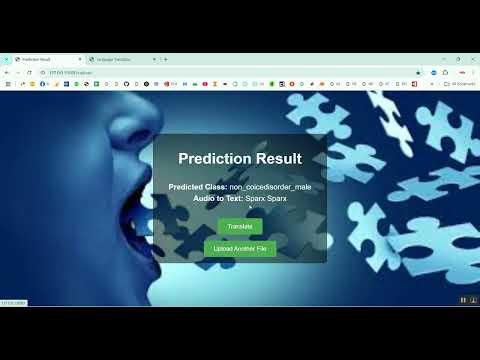
Voice Disorder Prediction using Audio Dataset in Python Projects
Voice Disorder Prediction using Audio Dataset in Python Projects
र 1000
AI & ML Models
Vitamin Deficiency Detection Using Image Processing in Python Projects
Vitamin Deficiency Detection Using Image Processing in Python Projects
र 1000