AI & ML Models
0.0 (0 reviews) • 0 downloads
Twitter Suspicious ML Streamlit in Python Projects
र 1000
Twitter Suspicious ML Streamlit in Python Projects
Technical Details
Domain : Python
Database : Sqlite
Tools : Anaconda
Run Tools: VS Code
Database : Sqlite
Tools : Anaconda
Run Tools: VS Code
Secure Payment
Instant Download
GST Invoice
24/7 Support
About This Product
Twitter Suspicious ML Streamlit in Python Projects
Abstract
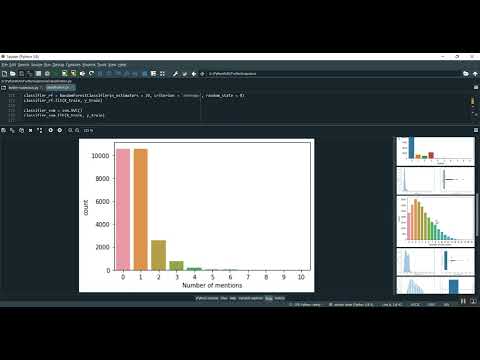
Suspicious accounts on Twitter can spread spam, misinformation, or malicious content, posing threats to platform integrity and user safety. This project focuses on Twitter Suspicious Account Detection using Machine Learning (ML) and Streamlit in Python, which identifies potentially suspicious or malicious accounts based on user behavior, tweet content, and engagement patterns. Data is collected via the Twitter API, including user profiles, tweets, follower-following ratios, retweet patterns, and activity frequency. Text preprocessing and feature extraction are performed using Natural Language Processing (NLP) techniques such as tokenization, lemmatization, and vectorization with TF-IDF or word embeddings. Machine learning classifiers like Random Forest, Gradient Boosting, or Support Vector Machines are trained to detect suspicious accounts. Streamlit provides an interactive web interface for users to input Twitter handles and visualize the detection results. The project aims to improve social media security and mitigate the impact of suspicious activity.
Existing System
Existing methods for identifying suspicious accounts rely primarily on manual inspection, heuristic rules, or simple keyword matching. Manual monitoring is time-consuming and cannot scale effectively across millions of users. Heuristic-based systems flag accounts based on unusual activity patterns, high posting frequency, or abnormal follower-following ratios, but these approaches often produce high false-positive rates. Additionally, many systems fail to consider content quality, semantic meaning, or sophisticated behavior patterns, making them insufficient for detecting advanced suspicious accounts. Existing solutions also lack interactive visualization and real-time detection capabilities, limiting their usability for social media administrators and researchers.
Proposed System
The proposed system implements a Python-based machine learning framework for detecting suspicious Twitter accounts, integrated with a Streamlit web interface. Data from user profiles, tweets, and engagement patterns are collected using the Twitter API and preprocessed to remove noise. Feature engineering is performed to capture behavioral, textual, and network-based indicators, such as tweet frequency, retweet patterns, follower-to-following ratios, and semantic content of tweets. Supervised machine learning classifiers, including Random Forest, Gradient Boosting, or SVM, are trained on labeled datasets to classify accounts as suspicious or legitimate. Streamlit provides a user-friendly platform where users can input Twitter handles and view real-time detection results along with visualizations of account metrics and suspicious activity indicators. This system offers a scalable, automated, and interactive solution to improve Twitter security and reduce the impact of malicious accounts.
Abstract
Suspicious accounts on Twitter can spread spam, misinformation, or malicious content, posing threats to platform integrity and user safety. This project focuses on Twitter Suspicious Account Detection using Machine Learning (ML) and Streamlit in Python, which identifies potentially suspicious or malicious accounts based on user behavior, tweet content, and engagement patterns. Data is collected via the Twitter API, including user profiles, tweets, follower-following ratios, retweet patterns, and activity frequency. Text preprocessing and feature extraction are performed using Natural Language Processing (NLP) techniques such as tokenization, lemmatization, and vectorization with TF-IDF or word embeddings. Machine learning classifiers like Random Forest, Gradient Boosting, or Support Vector Machines are trained to detect suspicious accounts. Streamlit provides an interactive web interface for users to input Twitter handles and visualize the detection results. The project aims to improve social media security and mitigate the impact of suspicious activity.
Existing System
Existing methods for identifying suspicious accounts rely primarily on manual inspection, heuristic rules, or simple keyword matching. Manual monitoring is time-consuming and cannot scale effectively across millions of users. Heuristic-based systems flag accounts based on unusual activity patterns, high posting frequency, or abnormal follower-following ratios, but these approaches often produce high false-positive rates. Additionally, many systems fail to consider content quality, semantic meaning, or sophisticated behavior patterns, making them insufficient for detecting advanced suspicious accounts. Existing solutions also lack interactive visualization and real-time detection capabilities, limiting their usability for social media administrators and researchers.
Proposed System
The proposed system implements a Python-based machine learning framework for detecting suspicious Twitter accounts, integrated with a Streamlit web interface. Data from user profiles, tweets, and engagement patterns are collected using the Twitter API and preprocessed to remove noise. Feature engineering is performed to capture behavioral, textual, and network-based indicators, such as tweet frequency, retweet patterns, follower-to-following ratios, and semantic content of tweets. Supervised machine learning classifiers, including Random Forest, Gradient Boosting, or SVM, are trained on labeled datasets to classify accounts as suspicious or legitimate. Streamlit provides a user-friendly platform where users can input Twitter handles and view real-time detection results along with visualizations of account metrics and suspicious activity indicators. This system offers a scalable, automated, and interactive solution to improve Twitter security and reduce the impact of malicious accounts.
Customer Reviews (0)
No reviews yet. Be the first!
Related Products
⭐ Featured
AI & ML Models
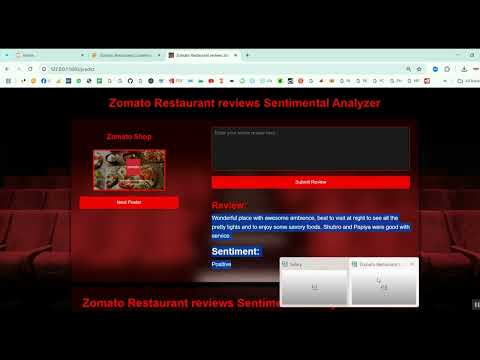
Zomato Restaurant Reviews Sentimental Analyzer in Python Projects
Zomato Restaurant Reviews Sentimental Analyzer in Python Projects
र 1000
⭐ Featured
⭐ Featured
AI & ML Models
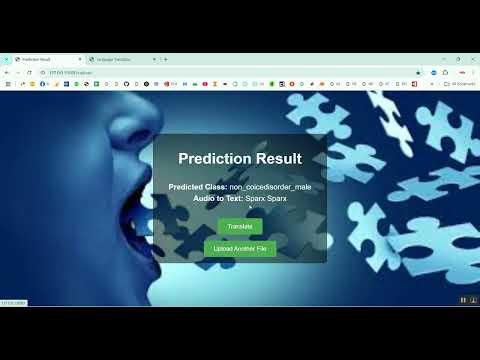
Voice Disorder Prediction using Audio Dataset in Python Projects
Voice Disorder Prediction using Audio Dataset in Python Projects
र 1000

AI & ML Models
Vitamin Deficiency Detection Using Image Processing in Python Projects
Vitamin Deficiency Detection Using Image Processing in Python Projects
र 1000