AI & ML Models
0.0 (0 reviews) • 0 downloads
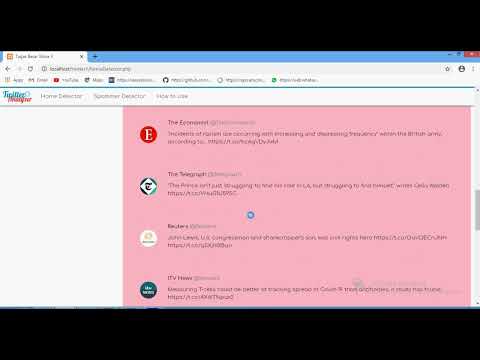
Twitter Spam Detection in Python Projects
र 1000
Twitter Spam Detection in Python Projects
Technical Details
Domain : Python
Database : Sqlite
Tools : Anaconda
Run Tools: VS Code
Database : Sqlite
Tools : Anaconda
Run Tools: VS Code
Secure Payment
Instant Download
GST Invoice
24/7 Support
About This Product
Twitter Spam Detection in Python Projects
Abstract
Twitter, as a widely used social media platform, is prone to spam accounts and malicious content that can degrade user experience and propagate misinformation. This project focuses on Twitter Spam Detection using Python, which automatically identifies spam accounts and spammy tweets. The system collects user profile data, tweet content, posting patterns, and engagement metrics via the Twitter API. Text preprocessing and feature extraction are performed using Natural Language Processing (NLP) techniques such as tokenization, stemming, lemmatization, and TF-IDF or word embeddings. Machine learning classifiers including Random Forest, Gradient Boosting, Support Vector Machines, or deep learning models like LSTM are trained to distinguish spam from legitimate activity. Python libraries such as Pandas, NumPy, Scikit-learn, TensorFlow/Keras, and Matplotlib are used for data processing, modeling, and visualization. The project aims to enhance social media security and user experience by reducing spam content.
Existing System
Existing spam detection methods on Twitter primarily rely on heuristic rules, keyword matching, or manual moderation. Heuristic approaches may flag accounts based on high posting frequency, repetitive content, or suspicious follower patterns. While partially effective, these methods often produce high false positives and fail to detect sophisticated spammers who mimic legitimate users. Manual moderation is labor-intensive and not scalable across millions of accounts. Existing systems also struggle to detect spam in multiple languages or identify subtle spam behaviors hidden within normal interactions. Consequently, traditional methods lack efficiency, accuracy, and adaptability for real-time spam detection.
Proposed System
The proposed system introduces a Python-based machine learning framework for Twitter spam detection. Data is collected from the Twitter API, including user profiles, tweet text, retweet patterns, follower/following ratios, and engagement statistics. Text preprocessing is applied to clean and normalize content, followed by feature extraction using NLP techniques like TF-IDF or word embeddings (Word2Vec, GloVe). Supervised machine learning algorithms such as Random Forest, Gradient Boosting, or SVM are trained on labeled datasets to classify users and tweets as spam or legitimate. Model performance is evaluated using metrics such as accuracy, precision, recall, and F1-score. By integrating feature-based analysis with machine learning, the system provides a scalable, automated, and reliable solution for detecting spam on Twitter, improving content quality, and supporting platform moderation.
Abstract
Twitter, as a widely used social media platform, is prone to spam accounts and malicious content that can degrade user experience and propagate misinformation. This project focuses on Twitter Spam Detection using Python, which automatically identifies spam accounts and spammy tweets. The system collects user profile data, tweet content, posting patterns, and engagement metrics via the Twitter API. Text preprocessing and feature extraction are performed using Natural Language Processing (NLP) techniques such as tokenization, stemming, lemmatization, and TF-IDF or word embeddings. Machine learning classifiers including Random Forest, Gradient Boosting, Support Vector Machines, or deep learning models like LSTM are trained to distinguish spam from legitimate activity. Python libraries such as Pandas, NumPy, Scikit-learn, TensorFlow/Keras, and Matplotlib are used for data processing, modeling, and visualization. The project aims to enhance social media security and user experience by reducing spam content.
Existing System
Existing spam detection methods on Twitter primarily rely on heuristic rules, keyword matching, or manual moderation. Heuristic approaches may flag accounts based on high posting frequency, repetitive content, or suspicious follower patterns. While partially effective, these methods often produce high false positives and fail to detect sophisticated spammers who mimic legitimate users. Manual moderation is labor-intensive and not scalable across millions of accounts. Existing systems also struggle to detect spam in multiple languages or identify subtle spam behaviors hidden within normal interactions. Consequently, traditional methods lack efficiency, accuracy, and adaptability for real-time spam detection.
Proposed System
The proposed system introduces a Python-based machine learning framework for Twitter spam detection. Data is collected from the Twitter API, including user profiles, tweet text, retweet patterns, follower/following ratios, and engagement statistics. Text preprocessing is applied to clean and normalize content, followed by feature extraction using NLP techniques like TF-IDF or word embeddings (Word2Vec, GloVe). Supervised machine learning algorithms such as Random Forest, Gradient Boosting, or SVM are trained on labeled datasets to classify users and tweets as spam or legitimate. Model performance is evaluated using metrics such as accuracy, precision, recall, and F1-score. By integrating feature-based analysis with machine learning, the system provides a scalable, automated, and reliable solution for detecting spam on Twitter, improving content quality, and supporting platform moderation.
Customer Reviews (0)
No reviews yet. Be the first!
Related Products
⭐ Featured
AI & ML Models
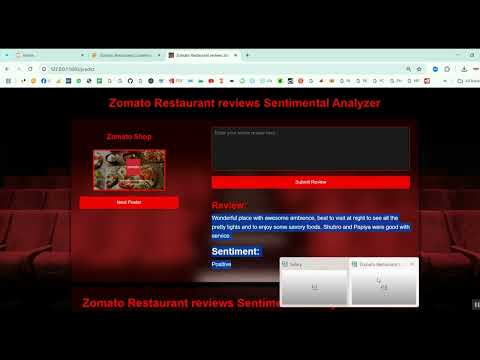
Zomato Restaurant Reviews Sentimental Analyzer in Python Projects
Zomato Restaurant Reviews Sentimental Analyzer in Python Projects
र 1000
⭐ Featured
⭐ Featured

AI & ML Models
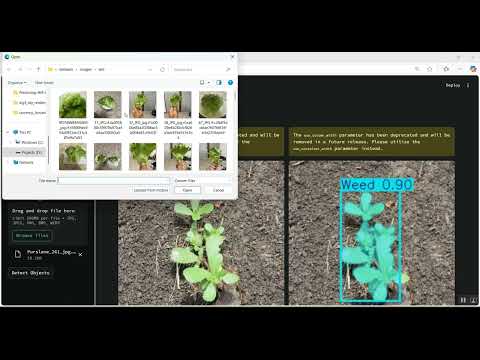
Voice Disorder Prediction using Audio Dataset in Python Projects
Voice Disorder Prediction using Audio Dataset in Python Projects
र 1000
AI & ML Models
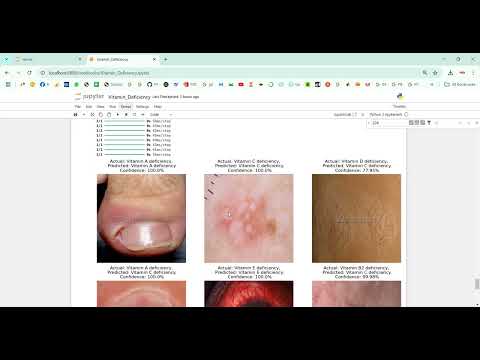
Vitamin Deficiency Detection Using Image Processing in Python Projects
Vitamin Deficiency Detection Using Image Processing in Python Projects
र 1000