AI & ML Models
0.0 (0 reviews) • 0 downloads
Twitter Cyber Bullying Sentiment NLP Streamlit in Python Projects
र 1000
Twitter Cyber Bullying Sentiment NLP Streamlit in Python Projects
Technical Details
Domain : Python
Database : Sqlite
Tools : Anaconda
Run Tools: VS Code
Database : Sqlite
Tools : Anaconda
Run Tools: VS Code
Secure Payment
Instant Download
GST Invoice
24/7 Support
About This Product
Twitter Cyber Bullying Sentiment NLP Streamlit in Python Projects
Abstract
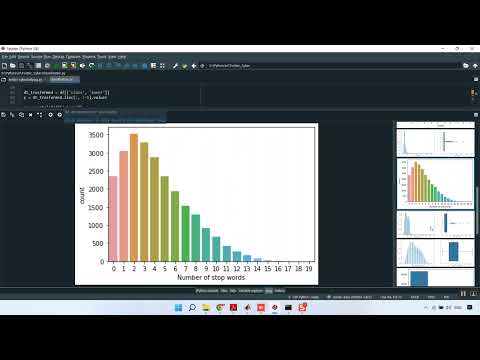
Cyberbullying on social media platforms, particularly Twitter, has become a significant social problem, affecting mental health and user safety. This project focuses on Twitter Cyberbullying Sentiment Analysis using Natural Language Processing (NLP) and Streamlit in Python, which automatically detects cyberbullying-related tweets and analyzes their sentiment. The system collects tweets from the Twitter API, preprocesses text data by removing stopwords, emojis, and special characters, and applies NLP techniques such as tokenization, lemmatization, and TF-IDF vectorization. Machine learning classifiers like Logistic Regression, Random Forest, or Support Vector Machines are used to classify tweets as bullying or non-bullying, while sentiment analysis detects positive, negative, or neutral tones. Streamlit is used to create an interactive web application for visualizing results. The project aims to help social media platforms monitor harmful content, raise awareness, and promote safer online environments.
Existing System
Existing systems for detecting cyberbullying rely heavily on manual moderation, keyword-based filtering, or basic sentiment analysis. Manual moderation is time-consuming and cannot scale effectively, while keyword-based approaches often miss context, sarcasm, or subtle forms of bullying. Basic sentiment analysis methods fail to accurately capture the nuances of cyberbullying content, resulting in false positives and negatives. Most existing solutions also lack interactive platforms for visualizing trends, analyzing sentiment, and providing actionable insights for social media administrators or researchers. Consequently, current systems are inefficient, inconsistent, and unable to provide real-time detection and analysis.
Proposed System
The proposed system introduces a Python-based NLP and Streamlit framework for Twitter cyberbullying detection and sentiment analysis. Tweets are collected using the Twitter API and preprocessed for noise removal and text normalization. Feature extraction is performed using techniques like TF-IDF or word embeddings (Word2Vec, GloVe, or BERT). Machine learning classifiers such as Logistic Regression, Random Forest, or Support Vector Machines are trained on labeled datasets to detect cyberbullying tweets. Sentiment analysis is integrated to classify detected tweets into positive, negative, or neutral categories. Streamlit provides a user-friendly interactive interface to input Twitter handles or keywords, visualize detected cyberbullying instances, sentiment trends, and generate reports. By combining NLP, machine learning, and interactive visualization, the system provides a scalable, automated, and accurate solution for monitoring cyberbullying, supporting proactive intervention, and promoting safer online communities.
Abstract
Cyberbullying on social media platforms, particularly Twitter, has become a significant social problem, affecting mental health and user safety. This project focuses on Twitter Cyberbullying Sentiment Analysis using Natural Language Processing (NLP) and Streamlit in Python, which automatically detects cyberbullying-related tweets and analyzes their sentiment. The system collects tweets from the Twitter API, preprocesses text data by removing stopwords, emojis, and special characters, and applies NLP techniques such as tokenization, lemmatization, and TF-IDF vectorization. Machine learning classifiers like Logistic Regression, Random Forest, or Support Vector Machines are used to classify tweets as bullying or non-bullying, while sentiment analysis detects positive, negative, or neutral tones. Streamlit is used to create an interactive web application for visualizing results. The project aims to help social media platforms monitor harmful content, raise awareness, and promote safer online environments.
Existing System
Existing systems for detecting cyberbullying rely heavily on manual moderation, keyword-based filtering, or basic sentiment analysis. Manual moderation is time-consuming and cannot scale effectively, while keyword-based approaches often miss context, sarcasm, or subtle forms of bullying. Basic sentiment analysis methods fail to accurately capture the nuances of cyberbullying content, resulting in false positives and negatives. Most existing solutions also lack interactive platforms for visualizing trends, analyzing sentiment, and providing actionable insights for social media administrators or researchers. Consequently, current systems are inefficient, inconsistent, and unable to provide real-time detection and analysis.
Proposed System
The proposed system introduces a Python-based NLP and Streamlit framework for Twitter cyberbullying detection and sentiment analysis. Tweets are collected using the Twitter API and preprocessed for noise removal and text normalization. Feature extraction is performed using techniques like TF-IDF or word embeddings (Word2Vec, GloVe, or BERT). Machine learning classifiers such as Logistic Regression, Random Forest, or Support Vector Machines are trained on labeled datasets to detect cyberbullying tweets. Sentiment analysis is integrated to classify detected tweets into positive, negative, or neutral categories. Streamlit provides a user-friendly interactive interface to input Twitter handles or keywords, visualize detected cyberbullying instances, sentiment trends, and generate reports. By combining NLP, machine learning, and interactive visualization, the system provides a scalable, automated, and accurate solution for monitoring cyberbullying, supporting proactive intervention, and promoting safer online communities.
Customer Reviews (0)
No reviews yet. Be the first!
Related Products
⭐ Featured
AI & ML Models
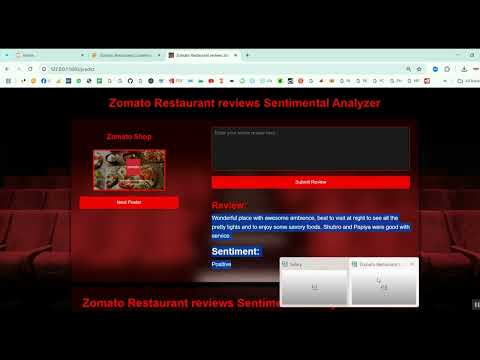
Zomato Restaurant Reviews Sentimental Analyzer in Python Projects
Zomato Restaurant Reviews Sentimental Analyzer in Python Projects
र 1000
⭐ Featured
⭐ Featured
AI & ML Models
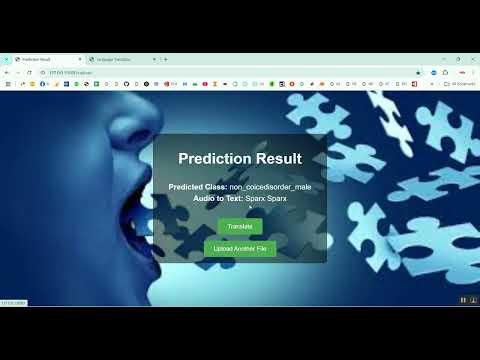
Voice Disorder Prediction using Audio Dataset in Python Projects
Voice Disorder Prediction using Audio Dataset in Python Projects
र 1000
AI & ML Models
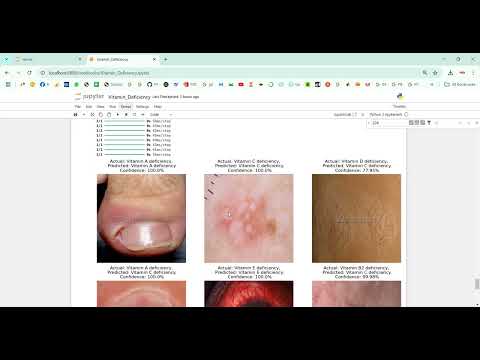
Vitamin Deficiency Detection Using Image Processing in Python Projects
Vitamin Deficiency Detection Using Image Processing in Python Projects
र 1000