Train Time Delay Prediction Streamlit in Python Projects
र 1000
Train Time Delay Prediction Streamlit in Python Projects
Technical Details
Domain : Python
Database : Sqlite
Tools : Anaconda
Run Tools: VS Code
Database : Sqlite
Tools : Anaconda
Run Tools: VS Code
Secure Payment
Instant Download
GST Invoice
24/7 Support
About This Product
Train Time Delay Prediction Streamlit in Python Projects
Abstract
Train delays are a major concern in railway transportation systems, affecting passenger satisfaction and operational efficiency. This project focuses on Train Time Delay Prediction using Python and Streamlit, which predicts the expected delay of trains based on historical and real-time data. The system collects train schedules, historical delay records, weather conditions, and other relevant factors. Machine learning models such as Random Forest, Gradient Boosting, or LSTM networks are trained to predict train arrival delays accurately. Python libraries including Pandas, NumPy, Scikit-learn, TensorFlow/Keras, and Matplotlib are used for data preprocessing, model development, and visualization. Streamlit is used to create an interactive web application where users can input train information and receive predicted delay times, enabling better planning for passengers and railway operators.
Existing System
In the existing system, train delays are typically monitored and announced in real-time through station displays, mobile apps, or SMS alerts. While these methods inform passengers about delays, they do not provide predictive insights or help anticipate delays before they occur. Traditional methods of analyzing train schedules and delay patterns rely on manual inspection or basic statistical techniques, which cannot capture complex interactions among multiple factors such as weather, track conditions, maintenance schedules, and train congestion. Existing systems also lack interactive platforms for passengers or railway operators to simulate and analyze potential delays in advance, limiting proactive planning.
Proposed System
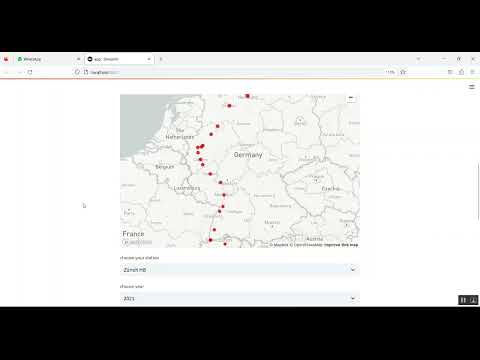
The proposed system introduces a predictive train delay analysis framework using Python and Streamlit. Historical train data is collected, cleaned, and preprocessed to handle missing values and normalize features. Feature engineering is performed to include critical variables such as route, train type, station stops, weather, and past delays. Machine learning or deep learning models, including Random Forests, Gradient Boosting Machines, or LSTM networks, are trained to predict delay times accurately. The Streamlit application provides a user-friendly interface where users can input train number, route, and departure time to receive delay predictions along with visualizations of expected delay trends. By integrating predictive analytics with a web-based interface, the system enables proactive decision-making for passengers and railway management, improves operational efficiency, and enhances user experience by reducing uncertainty about train schedules.
Abstract
Train delays are a major concern in railway transportation systems, affecting passenger satisfaction and operational efficiency. This project focuses on Train Time Delay Prediction using Python and Streamlit, which predicts the expected delay of trains based on historical and real-time data. The system collects train schedules, historical delay records, weather conditions, and other relevant factors. Machine learning models such as Random Forest, Gradient Boosting, or LSTM networks are trained to predict train arrival delays accurately. Python libraries including Pandas, NumPy, Scikit-learn, TensorFlow/Keras, and Matplotlib are used for data preprocessing, model development, and visualization. Streamlit is used to create an interactive web application where users can input train information and receive predicted delay times, enabling better planning for passengers and railway operators.
Existing System
In the existing system, train delays are typically monitored and announced in real-time through station displays, mobile apps, or SMS alerts. While these methods inform passengers about delays, they do not provide predictive insights or help anticipate delays before they occur. Traditional methods of analyzing train schedules and delay patterns rely on manual inspection or basic statistical techniques, which cannot capture complex interactions among multiple factors such as weather, track conditions, maintenance schedules, and train congestion. Existing systems also lack interactive platforms for passengers or railway operators to simulate and analyze potential delays in advance, limiting proactive planning.
Proposed System
The proposed system introduces a predictive train delay analysis framework using Python and Streamlit. Historical train data is collected, cleaned, and preprocessed to handle missing values and normalize features. Feature engineering is performed to include critical variables such as route, train type, station stops, weather, and past delays. Machine learning or deep learning models, including Random Forests, Gradient Boosting Machines, or LSTM networks, are trained to predict delay times accurately. The Streamlit application provides a user-friendly interface where users can input train number, route, and departure time to receive delay predictions along with visualizations of expected delay trends. By integrating predictive analytics with a web-based interface, the system enables proactive decision-making for passengers and railway management, improves operational efficiency, and enhances user experience by reducing uncertainty about train schedules.
Customer Reviews (0)
No reviews yet. Be the first!