AI & ML Models
0.0 (0 reviews) • 0 downloads
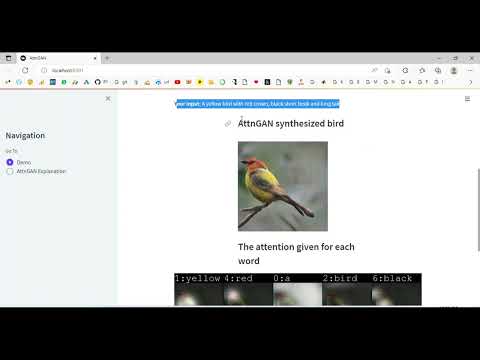
Text to Image Fine GAN Network in Python Projects
र 1000
Text to Image Fine GAN Network in Python Projects
Technical Details
Domain : Python
Database : Sqlite
Tools : Anaconda
Run Tools: VS Code
Database : Sqlite
Tools : Anaconda
Run Tools: VS Code
Secure Payment
Instant Download
GST Invoice
24/7 Support
About This Product
Text to Image Fine GAN Network in Python Projects
Abstract:
Text-to-image generation is an advanced field of artificial intelligence that focuses on synthesizing realistic images from natural language descriptions. This project implements a Text to Image generation system using a Fine-Grained Generative Adversarial Network (Fine-GAN) in Python. The system converts descriptive sentences into high-quality images by learning the semantic relationship between text and visual features. It uses deep learning techniques including word embeddings, text encoders, and conditional GANs to generate images that closely match the given textual input. Python libraries such as TensorFlow, Keras, and PyTorch are used for model development, while Natural Language Processing (NLP) tools process textual descriptions. The primary objective of this project is to generate visually coherent images from textual descriptions, which can be used in applications such as creative design, digital art, e-commerce, gaming, and virtual environments.
Existing System
Existing systems for text-to-image generation are limited in their ability to interpret complex and detailed sentences. Traditional models rely on basic GAN architectures with minimal understanding of linguistic context, resulting in blurry or irrelevant image outputs. Some models fail to capture fine-grained image details such as shape, color, and object structure due to poor semantic mapping between text and images. Additionally, many existing systems cannot handle multi-object scenes, spatial relationships, or background consistency. These limitations reduce the usability of available text-to-image systems in real-world applications where accuracy and clarity are essential.
Proposed System
The proposed system introduces a Fine-GAN based text-to-image generation framework that improves image quality and semantic alignment with textual descriptions. The system uses a multi-stage GAN architecture where the first stage generates a low-resolution image from the input text, and successive GAN layers refine and enhance image resolution and quality. A text encoder converts sentences into meaningful vector embeddings using NLP models such as GloVe or BERT. These embeddings condition the generator to produce context-aware images. The discriminator evaluates not only the image realism but also cross-verifies text-image consistency. Fine-tuning techniques and attention mechanisms are incorporated to capture fine-grained object details, colors, and textures. The system generates clear and semantically accurate images, overcoming the shortcomings of earlier GAN models, and can be used in advanced AI image synthesis applications.
Abstract:
Text-to-image generation is an advanced field of artificial intelligence that focuses on synthesizing realistic images from natural language descriptions. This project implements a Text to Image generation system using a Fine-Grained Generative Adversarial Network (Fine-GAN) in Python. The system converts descriptive sentences into high-quality images by learning the semantic relationship between text and visual features. It uses deep learning techniques including word embeddings, text encoders, and conditional GANs to generate images that closely match the given textual input. Python libraries such as TensorFlow, Keras, and PyTorch are used for model development, while Natural Language Processing (NLP) tools process textual descriptions. The primary objective of this project is to generate visually coherent images from textual descriptions, which can be used in applications such as creative design, digital art, e-commerce, gaming, and virtual environments.
Existing System
Existing systems for text-to-image generation are limited in their ability to interpret complex and detailed sentences. Traditional models rely on basic GAN architectures with minimal understanding of linguistic context, resulting in blurry or irrelevant image outputs. Some models fail to capture fine-grained image details such as shape, color, and object structure due to poor semantic mapping between text and images. Additionally, many existing systems cannot handle multi-object scenes, spatial relationships, or background consistency. These limitations reduce the usability of available text-to-image systems in real-world applications where accuracy and clarity are essential.
Proposed System
The proposed system introduces a Fine-GAN based text-to-image generation framework that improves image quality and semantic alignment with textual descriptions. The system uses a multi-stage GAN architecture where the first stage generates a low-resolution image from the input text, and successive GAN layers refine and enhance image resolution and quality. A text encoder converts sentences into meaningful vector embeddings using NLP models such as GloVe or BERT. These embeddings condition the generator to produce context-aware images. The discriminator evaluates not only the image realism but also cross-verifies text-image consistency. Fine-tuning techniques and attention mechanisms are incorporated to capture fine-grained object details, colors, and textures. The system generates clear and semantically accurate images, overcoming the shortcomings of earlier GAN models, and can be used in advanced AI image synthesis applications.
Customer Reviews (0)
No reviews yet. Be the first!
Related Products
⭐ Featured

AI & ML Models
Zomato Restaurant Reviews Sentimental Analyzer in Python Projects
Zomato Restaurant Reviews Sentimental Analyzer in Python Projects
र 1000
⭐ Featured
⭐ Featured

AI & ML Models
Voice Disorder Prediction using Audio Dataset in Python Projects
Voice Disorder Prediction using Audio Dataset in Python Projects
र 1000
AI & ML Models
Vitamin Deficiency Detection Using Image Processing in Python Projects
Vitamin Deficiency Detection Using Image Processing in Python Projects
र 1000