AI & ML Models
0.0 (0 reviews) • 0 downloads
Taste Based Face Expression in Python Projects
र 1000
Taste Based Face Expression in Python Projects
Technical Details
Domain : Python
Database : Sqlite
Tools : Anaconda
Run Tools: VS Code
Database : Sqlite
Tools : Anaconda
Run Tools: VS Code
Secure Payment
Instant Download
GST Invoice
24/7 Support
About This Product
Taste Based Face Expression in Python Projects
Abstract
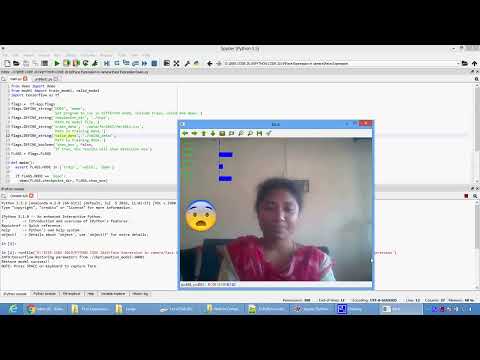
Human taste perception naturally triggers emotional reactions that are visible through facial expressions such as happiness, disgust, surprise, or neutrality. This project focuses on Taste-Based Face Expression Recognition using Python, where a system automatically detects and analyzes a person's facial expression after tasting a sample of food or beverage. The system captures facial images or live video using a camera and processes them using computer vision techniques. Facial landmarks are detected, and deep learning models such as Convolutional Neural Networks (CNN) are used to classify expressions into categories like sweet, sour, bitter, salty, and spicy reactions. This project is implemented using Python libraries such as OpenCV, TensorFlow/Keras, NumPy, and Dlib. The goal is to build an emotion-based taste reaction recognition system which can be useful in food industries, restaurant feedback systems, and human-computer interaction applications.
Existing System
In the existing system, taste feedback is manually collected through surveys or rating forms where users verbally or textually express their taste experience. This method is slow, subjective, and often inaccurate because participants may provide biased responses or fail to express true reactions. Some systems rely on text sentiment analysis or simple rating interfaces, but they cannot capture real-time emotional reactions. There are also basic emotion recognition systems available, but they are not designed specifically for analyzing expressions based on taste stimuli. Hence, current systems lack automation, real-time analysis, and objective interpretation of human taste responses.
Proposed System
The proposed system introduces an automated taste reaction recognition model using facial expression analysis. When a person tastes a food item, the camera captures their facial reaction and the image is processed using OpenCV for face detection. Facial features and emotion-related micro-expressions are extracted using CNN-based deep learning models trained on emotion datasets. The classifier maps these expressions to taste categories such as happy for sweet taste, disgust for bitter taste, surprise for sour taste, and neutral for mild taste. The system provides an unbiased and real-time evaluation of taste responses without requiring user input. It can be integrated with feedback systems in food product testing, user experience research, and smart restaurant applications. The system enhances usability, reduces manual involvement, and provides more natural interaction between humans and machines.
Abstract
Human taste perception naturally triggers emotional reactions that are visible through facial expressions such as happiness, disgust, surprise, or neutrality. This project focuses on Taste-Based Face Expression Recognition using Python, where a system automatically detects and analyzes a person's facial expression after tasting a sample of food or beverage. The system captures facial images or live video using a camera and processes them using computer vision techniques. Facial landmarks are detected, and deep learning models such as Convolutional Neural Networks (CNN) are used to classify expressions into categories like sweet, sour, bitter, salty, and spicy reactions. This project is implemented using Python libraries such as OpenCV, TensorFlow/Keras, NumPy, and Dlib. The goal is to build an emotion-based taste reaction recognition system which can be useful in food industries, restaurant feedback systems, and human-computer interaction applications.
Existing System
In the existing system, taste feedback is manually collected through surveys or rating forms where users verbally or textually express their taste experience. This method is slow, subjective, and often inaccurate because participants may provide biased responses or fail to express true reactions. Some systems rely on text sentiment analysis or simple rating interfaces, but they cannot capture real-time emotional reactions. There are also basic emotion recognition systems available, but they are not designed specifically for analyzing expressions based on taste stimuli. Hence, current systems lack automation, real-time analysis, and objective interpretation of human taste responses.
Proposed System
The proposed system introduces an automated taste reaction recognition model using facial expression analysis. When a person tastes a food item, the camera captures their facial reaction and the image is processed using OpenCV for face detection. Facial features and emotion-related micro-expressions are extracted using CNN-based deep learning models trained on emotion datasets. The classifier maps these expressions to taste categories such as happy for sweet taste, disgust for bitter taste, surprise for sour taste, and neutral for mild taste. The system provides an unbiased and real-time evaluation of taste responses without requiring user input. It can be integrated with feedback systems in food product testing, user experience research, and smart restaurant applications. The system enhances usability, reduces manual involvement, and provides more natural interaction between humans and machines.
Customer Reviews (0)
No reviews yet. Be the first!
Related Products
⭐ Featured
AI & ML Models
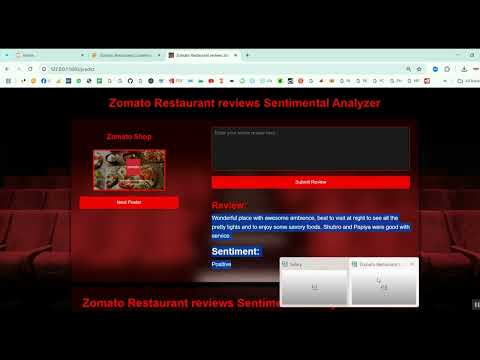
Zomato Restaurant Reviews Sentimental Analyzer in Python Projects
Zomato Restaurant Reviews Sentimental Analyzer in Python Projects
र 1000
⭐ Featured
⭐ Featured

AI & ML Models
Voice Disorder Prediction using Audio Dataset in Python Projects
Voice Disorder Prediction using Audio Dataset in Python Projects
र 1000

AI & ML Models
Vitamin Deficiency Detection Using Image Processing in Python Projects
Vitamin Deficiency Detection Using Image Processing in Python Projects
र 1000