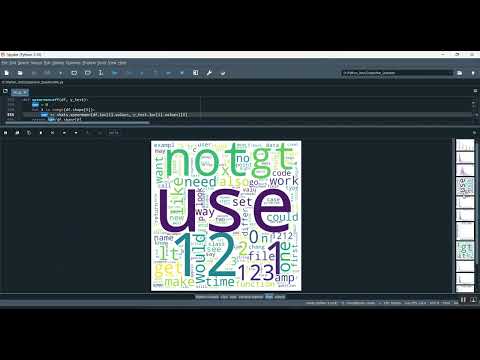
AI & ML Models
0.0 (0 reviews) • 0 downloads
Subjective Question Answer Analysis ML in Python Projects
र 1000
Subjective Question Answer Analysis ML in Python Projects
Technical Details
Domain : Python
Database : Sqlite
Tools : Anaconda
Run Tools: VS Code
Database : Sqlite
Tools : Anaconda
Run Tools: VS Code
Secure Payment
Instant Download
GST Invoice
24/7 Support
About This Product
Subjective Question Answer Analysis ML in Python Projects
Abstract
Subjective question evaluation is a challenging task in academic and professional examinations because answers vary in writing style, sentence structure, and expression. Manual evaluation is time-consuming, prone to human bias, and lacks scalability. This project focuses on Subjective Question Answer Analysis using Machine Learning in Python, which automatically evaluates and scores descriptive answers submitted by students. The system extracts semantic similarity between model answers and student responses using Natural Language Processing (NLP) techniques such as tokenization, stemming, lemmatization, and TF-IDF feature extraction. Machine learning models like Logistic Regression, Support Vector Machines, and BERT-based semantic similarity models are used to assess relevance, keyword coverage, grammar quality, and context correctness. The project aims to provide fair, consistent, and automated evaluation of subjective responses, reducing teacher workload and improving assessment transparency.
Existing System
In the existing educational systems, subjective answers are manually checked by evaluators who follow certain guidelines for scoring. However, this manual method suffers from several disadvantages such as evaluator fatigue, inconsistency in marking, personal bias, and time delay in result processing. Some online assessment systems attempt to automate evaluation but mostly support multiple-choice questions only, ignoring descriptive-type questions. The few systems that exist for subjective evaluation rely on simple keyword matching, which fails to understand sentence meaning, context, or synonyms. Thus, existing solutions are neither intelligent nor reliable for academic assessments and do not support large-scale learning environments like e-learning platforms or universities.
Proposed System
The proposed system introduces an NLP and ML-based automated subjective answer evaluation model that intelligently understands and scores student responses. The system preprocesses answers by removing stopwords, normalizing text, and extracting keywords. Semantic similarity is calculated using Cosine Similarity or Word Embedding models like Word2Vec or BERT to compare the student’s answer with the reference answer. Additional metrics such as grammar score, content relevance, keyword density, and coherence are also calculated to assign a final score. Machine learning regression or classification models are trained on manually graded datasets to improve scoring accuracy. The system uses Python with libraries like NLTK, Scikit-learn, Spacy, and Transformers for implementation. This automated system ensures consistent and unbiased evaluation, supports real-time assessment, and can be deployed in e-learning platforms to enhance learning analytics.
Abstract
Subjective question evaluation is a challenging task in academic and professional examinations because answers vary in writing style, sentence structure, and expression. Manual evaluation is time-consuming, prone to human bias, and lacks scalability. This project focuses on Subjective Question Answer Analysis using Machine Learning in Python, which automatically evaluates and scores descriptive answers submitted by students. The system extracts semantic similarity between model answers and student responses using Natural Language Processing (NLP) techniques such as tokenization, stemming, lemmatization, and TF-IDF feature extraction. Machine learning models like Logistic Regression, Support Vector Machines, and BERT-based semantic similarity models are used to assess relevance, keyword coverage, grammar quality, and context correctness. The project aims to provide fair, consistent, and automated evaluation of subjective responses, reducing teacher workload and improving assessment transparency.
Existing System
In the existing educational systems, subjective answers are manually checked by evaluators who follow certain guidelines for scoring. However, this manual method suffers from several disadvantages such as evaluator fatigue, inconsistency in marking, personal bias, and time delay in result processing. Some online assessment systems attempt to automate evaluation but mostly support multiple-choice questions only, ignoring descriptive-type questions. The few systems that exist for subjective evaluation rely on simple keyword matching, which fails to understand sentence meaning, context, or synonyms. Thus, existing solutions are neither intelligent nor reliable for academic assessments and do not support large-scale learning environments like e-learning platforms or universities.
Proposed System
The proposed system introduces an NLP and ML-based automated subjective answer evaluation model that intelligently understands and scores student responses. The system preprocesses answers by removing stopwords, normalizing text, and extracting keywords. Semantic similarity is calculated using Cosine Similarity or Word Embedding models like Word2Vec or BERT to compare the student’s answer with the reference answer. Additional metrics such as grammar score, content relevance, keyword density, and coherence are also calculated to assign a final score. Machine learning regression or classification models are trained on manually graded datasets to improve scoring accuracy. The system uses Python with libraries like NLTK, Scikit-learn, Spacy, and Transformers for implementation. This automated system ensures consistent and unbiased evaluation, supports real-time assessment, and can be deployed in e-learning platforms to enhance learning analytics.
Customer Reviews (0)
No reviews yet. Be the first!
Related Products
⭐ Featured
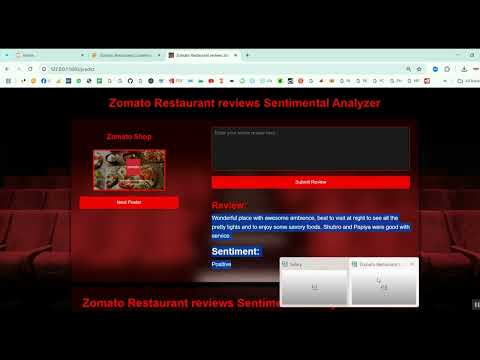
AI & ML Models
Zomato Restaurant Reviews Sentimental Analyzer in Python Projects
Zomato Restaurant Reviews Sentimental Analyzer in Python Projects
र 1000
⭐ Featured
⭐ Featured
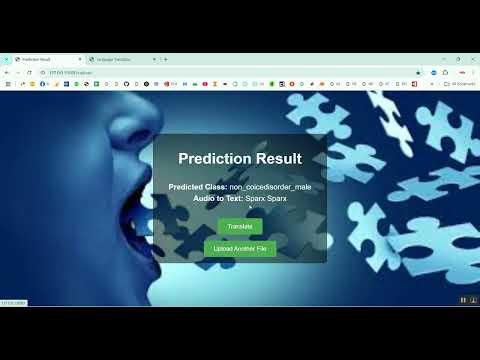
AI & ML Models
Voice Disorder Prediction using Audio Dataset in Python Projects
Voice Disorder Prediction using Audio Dataset in Python Projects
र 1000

AI & ML Models
Vitamin Deficiency Detection Using Image Processing in Python Projects
Vitamin Deficiency Detection Using Image Processing in Python Projects
र 1000