AI & ML Models
0.0 (0 reviews) • 0 downloads
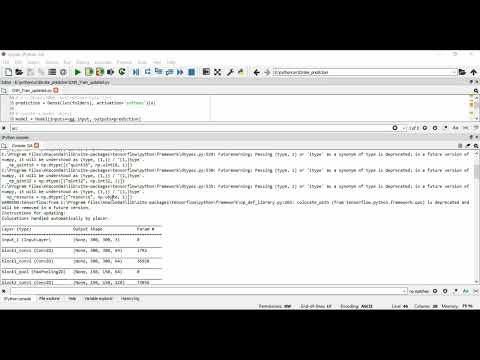
Stroke Prediction CNN Train Analysis in Python Projects
र 1000
Stroke Prediction CNN Train Analysis in Python Projects
Technical Details
Domain : Python
Database : Sqlite
Tools : Anaconda
Run Tools: VS Code
Database : Sqlite
Tools : Anaconda
Run Tools: VS Code
Secure Payment
Instant Download
GST Invoice
24/7 Support
About This Product
Stroke Prediction CNN Train Analysis in Python Projects
Abstract
Stroke is a life-threatening medical condition that requires early detection and timely intervention to prevent severe complications or fatalities. This project focuses on stroke prediction using Convolutional Neural Networks (CNN) in Python, enabling automated analysis of patient data and medical imaging for early risk assessment. The system collects structured patient data such as age, blood pressure, cholesterol levels, and other medical indicators, along with imaging data when available. Data preprocessing and feature extraction are performed before training a CNN model to identify patterns and predict stroke risk. Python libraries such as Pandas, NumPy, TensorFlow/Keras, and Matplotlib are used for data handling, model training, and visualization. The project aims to provide an accurate and efficient tool for early stroke prediction, supporting healthcare professionals in preventive care and treatment planning.
Existing System
Existing stroke prediction methods primarily rely on manual clinical assessments, risk scoring systems, and traditional statistical analysis of patient records. While effective, these methods are time-consuming, subjective, and may fail to capture complex patterns or interactions between multiple risk factors. Conventional machine learning models, such as logistic regression or decision trees, have been applied for stroke prediction, but they often require extensive feature engineering and may struggle with unstructured data like medical images. Moreover, existing systems typically lack automation and real-time predictive capabilities, limiting their scalability and effectiveness in early detection and intervention.
Proposed System
The proposed system implements a CNN-based predictive framework for stroke detection and risk assessment. Patient data and imaging inputs are preprocessed to handle missing values, normalize features, and enhance image quality where applicable. The CNN model extracts high-level features from the input data to learn patterns associated with stroke occurrence. The model is trained using backpropagation and evaluated with performance metrics such as accuracy, precision, recall, and F1-score to ensure reliable predictions. Visualization tools like Matplotlib or Seaborn are used to display feature importance, prediction results, and risk distribution among patients. By integrating structured medical data with deep learning analysis, the system provides early stroke risk detection, improves decision-making for healthcare providers, and enhances patient outcomes. The framework is scalable, capable of handling large datasets, and can be extended to incorporate additional medical parameters or multi-modal imaging for more comprehensive predictions.
Abstract
Stroke is a life-threatening medical condition that requires early detection and timely intervention to prevent severe complications or fatalities. This project focuses on stroke prediction using Convolutional Neural Networks (CNN) in Python, enabling automated analysis of patient data and medical imaging for early risk assessment. The system collects structured patient data such as age, blood pressure, cholesterol levels, and other medical indicators, along with imaging data when available. Data preprocessing and feature extraction are performed before training a CNN model to identify patterns and predict stroke risk. Python libraries such as Pandas, NumPy, TensorFlow/Keras, and Matplotlib are used for data handling, model training, and visualization. The project aims to provide an accurate and efficient tool for early stroke prediction, supporting healthcare professionals in preventive care and treatment planning.
Existing System
Existing stroke prediction methods primarily rely on manual clinical assessments, risk scoring systems, and traditional statistical analysis of patient records. While effective, these methods are time-consuming, subjective, and may fail to capture complex patterns or interactions between multiple risk factors. Conventional machine learning models, such as logistic regression or decision trees, have been applied for stroke prediction, but they often require extensive feature engineering and may struggle with unstructured data like medical images. Moreover, existing systems typically lack automation and real-time predictive capabilities, limiting their scalability and effectiveness in early detection and intervention.
Proposed System
The proposed system implements a CNN-based predictive framework for stroke detection and risk assessment. Patient data and imaging inputs are preprocessed to handle missing values, normalize features, and enhance image quality where applicable. The CNN model extracts high-level features from the input data to learn patterns associated with stroke occurrence. The model is trained using backpropagation and evaluated with performance metrics such as accuracy, precision, recall, and F1-score to ensure reliable predictions. Visualization tools like Matplotlib or Seaborn are used to display feature importance, prediction results, and risk distribution among patients. By integrating structured medical data with deep learning analysis, the system provides early stroke risk detection, improves decision-making for healthcare providers, and enhances patient outcomes. The framework is scalable, capable of handling large datasets, and can be extended to incorporate additional medical parameters or multi-modal imaging for more comprehensive predictions.
Customer Reviews (0)
No reviews yet. Be the first!
Related Products
⭐ Featured
AI & ML Models
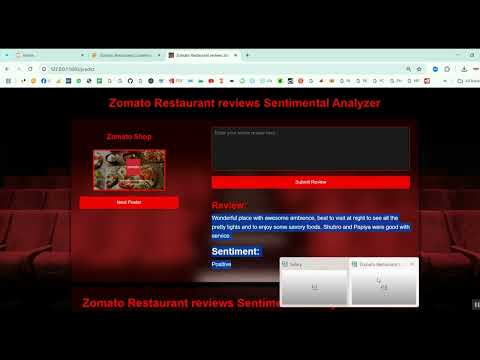
Zomato Restaurant Reviews Sentimental Analyzer in Python Projects
Zomato Restaurant Reviews Sentimental Analyzer in Python Projects
र 1000
⭐ Featured
⭐ Featured
AI & ML Models
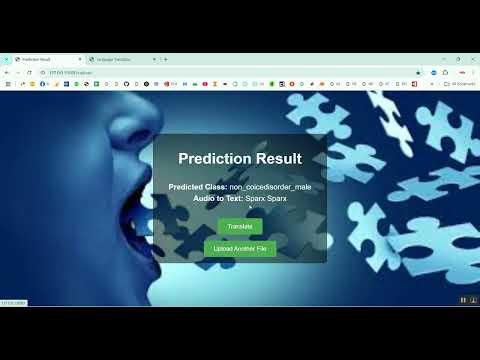
Voice Disorder Prediction using Audio Dataset in Python Projects
Voice Disorder Prediction using Audio Dataset in Python Projects
र 1000
AI & ML Models
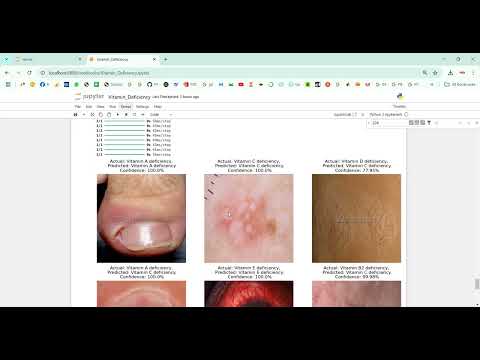
Vitamin Deficiency Detection Using Image Processing in Python Projects
Vitamin Deficiency Detection Using Image Processing in Python Projects
र 1000