AI & ML Models
0.0 (0 reviews) • 0 downloads
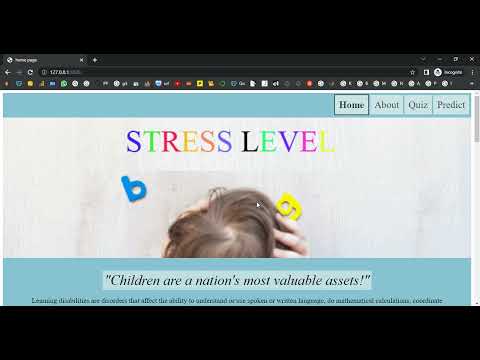
Stress Level Detection Train Flask in Python Projects
र 1000
Stress Level Detection Train Flask in Python Projects
Technical Details
Domain : Python
Database : Sqlite
Tools : Anaconda
Run Tools: VS Code
Database : Sqlite
Tools : Anaconda
Run Tools: VS Code
Secure Payment
Instant Download
GST Invoice
24/7 Support
About This Product
Stress Level Detection Train Flask in Python Projects
Abstract
Stress is a common psychological and physiological condition that affects overall health, productivity, and well-being. Early detection and monitoring of stress levels can help individuals manage their mental health effectively and prevent long-term health complications. This project focuses on stress level detection using machine learning models trained on physiological and behavioral data, deployed via a Flask web application in Python. Data such as heart rate, blood pressure, facial expressions, and activity patterns are collected and preprocessed to extract meaningful features. Machine learning algorithms, such as Support Vector Machines (SVM), Random Forests, or Neural Networks, are trained to classify stress levels into categories like low, moderate, or high. Python libraries such as Pandas, NumPy, Scikit-learn, and Flask are used for data processing, model training, and deployment. The system provides real-time stress monitoring and visualization, enabling proactive interventions for mental well-being.
Existing System
Existing stress detection methods primarily rely on self-reported questionnaires, clinical interviews, or manual observation of behavioral and physiological indicators. While effective, these methods are subjective, time-consuming, and not suitable for continuous monitoring. Some wearable devices and mobile applications can track heart rate or physical activity to estimate stress, but they often lack accurate classification models and real-time analysis. Traditional systems also do not integrate multiple data sources, such as combining physiological signals with facial or voice analysis, which limits their predictive capability. As a result, existing methods may fail to provide timely insights or personalized recommendations for stress management.
Proposed System
The proposed system implements a machine learning-based stress detection framework with Flask deployment for real-time monitoring. Data from physiological sensors, behavioral patterns, or facial images is collected and preprocessed to remove noise, normalize values, and extract relevant features. A trained machine learning model, such as SVM, Random Forest, or a deep neural network, predicts stress levels and classifies them into categories like low, moderate, or high. The Flask application provides a web interface where users can input data or connect compatible devices to receive real-time stress predictions. Visualization tools like Matplotlib or Plotly display stress trends and historical patterns for better understanding and analysis. By integrating data-driven analysis and web deployment, the system offers accurate, scalable, and accessible stress monitoring, supporting early intervention, mental health management, and workplace wellness programs.
Abstract
Stress is a common psychological and physiological condition that affects overall health, productivity, and well-being. Early detection and monitoring of stress levels can help individuals manage their mental health effectively and prevent long-term health complications. This project focuses on stress level detection using machine learning models trained on physiological and behavioral data, deployed via a Flask web application in Python. Data such as heart rate, blood pressure, facial expressions, and activity patterns are collected and preprocessed to extract meaningful features. Machine learning algorithms, such as Support Vector Machines (SVM), Random Forests, or Neural Networks, are trained to classify stress levels into categories like low, moderate, or high. Python libraries such as Pandas, NumPy, Scikit-learn, and Flask are used for data processing, model training, and deployment. The system provides real-time stress monitoring and visualization, enabling proactive interventions for mental well-being.
Existing System
Existing stress detection methods primarily rely on self-reported questionnaires, clinical interviews, or manual observation of behavioral and physiological indicators. While effective, these methods are subjective, time-consuming, and not suitable for continuous monitoring. Some wearable devices and mobile applications can track heart rate or physical activity to estimate stress, but they often lack accurate classification models and real-time analysis. Traditional systems also do not integrate multiple data sources, such as combining physiological signals with facial or voice analysis, which limits their predictive capability. As a result, existing methods may fail to provide timely insights or personalized recommendations for stress management.
Proposed System
The proposed system implements a machine learning-based stress detection framework with Flask deployment for real-time monitoring. Data from physiological sensors, behavioral patterns, or facial images is collected and preprocessed to remove noise, normalize values, and extract relevant features. A trained machine learning model, such as SVM, Random Forest, or a deep neural network, predicts stress levels and classifies them into categories like low, moderate, or high. The Flask application provides a web interface where users can input data or connect compatible devices to receive real-time stress predictions. Visualization tools like Matplotlib or Plotly display stress trends and historical patterns for better understanding and analysis. By integrating data-driven analysis and web deployment, the system offers accurate, scalable, and accessible stress monitoring, supporting early intervention, mental health management, and workplace wellness programs.
Customer Reviews (0)
No reviews yet. Be the first!
Related Products
⭐ Featured
AI & ML Models
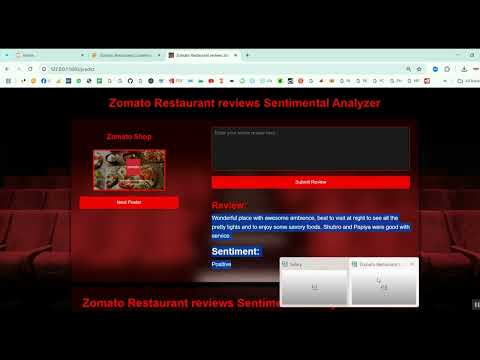
Zomato Restaurant Reviews Sentimental Analyzer in Python Projects
Zomato Restaurant Reviews Sentimental Analyzer in Python Projects
र 1000
⭐ Featured
⭐ Featured
AI & ML Models
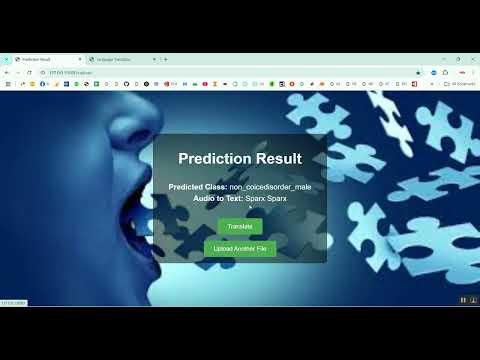
Voice Disorder Prediction using Audio Dataset in Python Projects
Voice Disorder Prediction using Audio Dataset in Python Projects
र 1000
AI & ML Models
Vitamin Deficiency Detection Using Image Processing in Python Projects
Vitamin Deficiency Detection Using Image Processing in Python Projects
र 1000