AI & ML Models
0.0 (0 reviews) • 0 downloads
Software Vulnerabilities ML Classification in Python Projects
र 1000
Software Vulnerabilities ML Classification in Python Projects
Technical Details
Domain : Python
Database : Sqlite
Tools : Anaconda
Run Tools: VS Code
Database : Sqlite
Tools : Anaconda
Run Tools: VS Code
Secure Payment
Instant Download
GST Invoice
24/7 Support
About This Product
Software Vulnerabilities ML Classification in Python Projects
Abstract
Software vulnerabilities pose a significant threat to system security, data privacy, and application reliability. Identifying and classifying vulnerabilities early in the software development lifecycle is essential to prevent exploits and cyberattacks. This project focuses on Software Vulnerabilities Classification using Machine Learning in Python, enabling automated detection and categorization of vulnerabilities based on code patterns, historical data, or security reports. The system extracts relevant features from source code or vulnerability datasets, preprocesses the data, and employs machine learning algorithms such as decision trees, random forests, support vector machines, or neural networks to classify vulnerabilities into types such as buffer overflow, SQL injection, cross-site scripting, or privilege escalation. Python libraries such as Pandas, NumPy, Scikit-learn, and Matplotlib are used for data processing, model training, and visualization. The project aims to enhance software security by providing developers and security analysts with an efficient, automated vulnerability assessment tool.
Existing System
Existing vulnerability detection systems mainly rely on manual code review, static analysis tools, or signature-based scanners to identify software weaknesses. These methods are often time-consuming, prone to human error, and unable to detect novel or complex vulnerabilities effectively. Static analysis tools provide basic code pattern checks but generate high false-positive rates, requiring significant manual verification. Signature-based tools are limited to previously known vulnerabilities and fail to identify zero-day exploits. Furthermore, traditional approaches often lack automated classification, making it difficult to prioritize vulnerabilities based on severity or type. As a result, organizations face delayed responses to critical threats, increased risk of exploits, and challenges in maintaining secure software systems.
Proposed System
The proposed system implements a machine learning-based vulnerability classification framework in Python. Source code or software vulnerability datasets are first preprocessed to extract relevant features such as code metrics, API usage patterns, control flow anomalies, or textual descriptions from security reports. Feature engineering and normalization improve model performance, followed by training machine learning classifiers like random forests, support vector machines, or deep learning models for accurate classification. The system categorizes vulnerabilities into specific types and assigns severity levels, allowing developers and security analysts to prioritize remediation. Visualization tools such as Matplotlib or Seaborn provide insights into vulnerability distribution, frequency, and risk patterns. By automating detection and classification, the proposed system reduces manual effort, improves accuracy, and accelerates the vulnerability management process. This approach enhances software security, mitigates potential exploits, and supports proactive risk management in software development.
Abstract
Software vulnerabilities pose a significant threat to system security, data privacy, and application reliability. Identifying and classifying vulnerabilities early in the software development lifecycle is essential to prevent exploits and cyberattacks. This project focuses on Software Vulnerabilities Classification using Machine Learning in Python, enabling automated detection and categorization of vulnerabilities based on code patterns, historical data, or security reports. The system extracts relevant features from source code or vulnerability datasets, preprocesses the data, and employs machine learning algorithms such as decision trees, random forests, support vector machines, or neural networks to classify vulnerabilities into types such as buffer overflow, SQL injection, cross-site scripting, or privilege escalation. Python libraries such as Pandas, NumPy, Scikit-learn, and Matplotlib are used for data processing, model training, and visualization. The project aims to enhance software security by providing developers and security analysts with an efficient, automated vulnerability assessment tool.
Existing System
Existing vulnerability detection systems mainly rely on manual code review, static analysis tools, or signature-based scanners to identify software weaknesses. These methods are often time-consuming, prone to human error, and unable to detect novel or complex vulnerabilities effectively. Static analysis tools provide basic code pattern checks but generate high false-positive rates, requiring significant manual verification. Signature-based tools are limited to previously known vulnerabilities and fail to identify zero-day exploits. Furthermore, traditional approaches often lack automated classification, making it difficult to prioritize vulnerabilities based on severity or type. As a result, organizations face delayed responses to critical threats, increased risk of exploits, and challenges in maintaining secure software systems.
Proposed System
The proposed system implements a machine learning-based vulnerability classification framework in Python. Source code or software vulnerability datasets are first preprocessed to extract relevant features such as code metrics, API usage patterns, control flow anomalies, or textual descriptions from security reports. Feature engineering and normalization improve model performance, followed by training machine learning classifiers like random forests, support vector machines, or deep learning models for accurate classification. The system categorizes vulnerabilities into specific types and assigns severity levels, allowing developers and security analysts to prioritize remediation. Visualization tools such as Matplotlib or Seaborn provide insights into vulnerability distribution, frequency, and risk patterns. By automating detection and classification, the proposed system reduces manual effort, improves accuracy, and accelerates the vulnerability management process. This approach enhances software security, mitigates potential exploits, and supports proactive risk management in software development.
Customer Reviews (0)
No reviews yet. Be the first!
Related Products
⭐ Featured
AI & ML Models
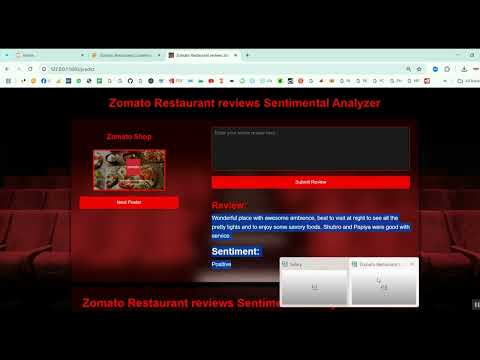
Zomato Restaurant Reviews Sentimental Analyzer in Python Projects
Zomato Restaurant Reviews Sentimental Analyzer in Python Projects
र 1000
⭐ Featured
⭐ Featured
AI & ML Models
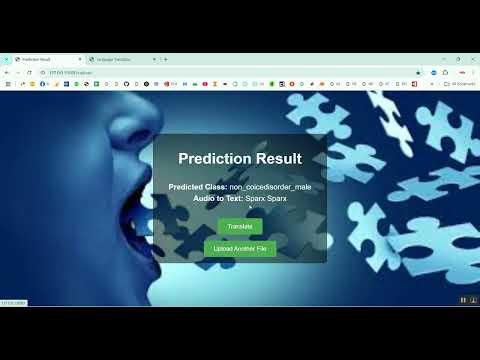
Voice Disorder Prediction using Audio Dataset in Python Projects
Voice Disorder Prediction using Audio Dataset in Python Projects
र 1000
AI & ML Models
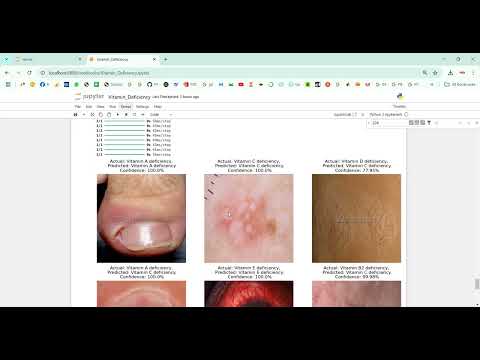
Vitamin Deficiency Detection Using Image Processing in Python Projects
Vitamin Deficiency Detection Using Image Processing in Python Projects
र 1000