Django Projects
0.0 (0 reviews) • 0 downloads
Simulation of 5G Networks in Python Projects
र 1000
Simulation of 5G Networks in Python Projects
Technical Details
Domain : Python
Database : Sqlite
Tools : Anaconda
Run Tools: VS Code
Database : Sqlite
Tools : Anaconda
Run Tools: VS Code
Secure Payment
Instant Download
GST Invoice
24/7 Support
About This Product
Simulation of 5G Networks in Python Projects
Abstract
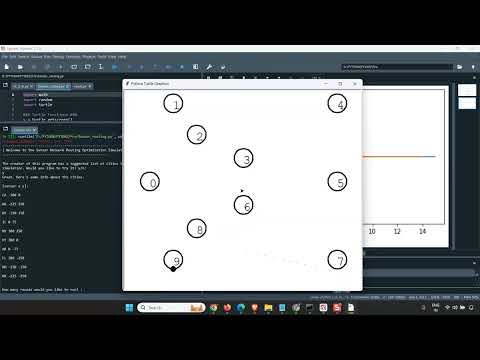
The fifth-generation (5G) mobile communication system is designed to provide ultra-high data rates, extremely low latency, massive device connectivity, and enhanced reliability. To test and evaluate 5G technologies before real-world deployment, simulation environments are essential. This project, Simulation of 5G Networks in Python, focuses on building a Python-based network simulation model to replicate various aspects of 5G communication such as millimeter-wave transmission, beamforming, massive MIMO, network slicing, and mobility management. Using Python libraries like NetworkX, SimPy, NumPy, and Matplotlib, the system simulates network topologies, traffic flows, and routing algorithms to evaluate performance metrics including throughput, latency, jitter, and packet delivery ratio. The project provides researchers and developers with a cost-effective tool to study 5G behavior under different configurations and traffic conditions.
Existing System
Existing simulation frameworks for 5G such as NS-3, OMNeT++, or MATLAB-based models provide high accuracy but are complex, resource-intensive, and require steep learning curves. They are not always flexible for integrating customized algorithms or rapid prototyping. Moreover, traditional simulators often focus on 4G/LTE networks and provide limited extensions to incorporate emerging 5G features like ultra-dense networks, slicing, and edge computing. This limits researchers who need lightweight, Python-based solutions for experimentation and teaching purposes.
Proposed System
The proposed system develops a Python-based simulation framework tailored for 5G networks. The system allows users to define nodes, base stations, and user equipment (UEs) in a mesh or cellular topology and simulate data communication under varied network loads, mobility models, and channel conditions. Key features include beamforming for high-frequency channels, load balancing, routing strategies, and QoS management. The simulation platform provides visualization tools and performance analysis to evaluate the network under scenarios such as massive IoT deployment, vehicular communication (V2X), and ultra-reliable low-latency communication (URLLC). Compared to existing systems, this approach is lightweight, flexible, and customizable, making it ideal for researchers, educators, and students to explore 5G concepts in an interactive manner.
Abstract
The fifth-generation (5G) mobile communication system is designed to provide ultra-high data rates, extremely low latency, massive device connectivity, and enhanced reliability. To test and evaluate 5G technologies before real-world deployment, simulation environments are essential. This project, Simulation of 5G Networks in Python, focuses on building a Python-based network simulation model to replicate various aspects of 5G communication such as millimeter-wave transmission, beamforming, massive MIMO, network slicing, and mobility management. Using Python libraries like NetworkX, SimPy, NumPy, and Matplotlib, the system simulates network topologies, traffic flows, and routing algorithms to evaluate performance metrics including throughput, latency, jitter, and packet delivery ratio. The project provides researchers and developers with a cost-effective tool to study 5G behavior under different configurations and traffic conditions.
Existing System
Existing simulation frameworks for 5G such as NS-3, OMNeT++, or MATLAB-based models provide high accuracy but are complex, resource-intensive, and require steep learning curves. They are not always flexible for integrating customized algorithms or rapid prototyping. Moreover, traditional simulators often focus on 4G/LTE networks and provide limited extensions to incorporate emerging 5G features like ultra-dense networks, slicing, and edge computing. This limits researchers who need lightweight, Python-based solutions for experimentation and teaching purposes.
Proposed System
The proposed system develops a Python-based simulation framework tailored for 5G networks. The system allows users to define nodes, base stations, and user equipment (UEs) in a mesh or cellular topology and simulate data communication under varied network loads, mobility models, and channel conditions. Key features include beamforming for high-frequency channels, load balancing, routing strategies, and QoS management. The simulation platform provides visualization tools and performance analysis to evaluate the network under scenarios such as massive IoT deployment, vehicular communication (V2X), and ultra-reliable low-latency communication (URLLC). Compared to existing systems, this approach is lightweight, flexible, and customizable, making it ideal for researchers, educators, and students to explore 5G concepts in an interactive manner.
Customer Reviews (0)
No reviews yet. Be the first!
Related Products
⭐ Featured
⭐ Featured

Django Projects
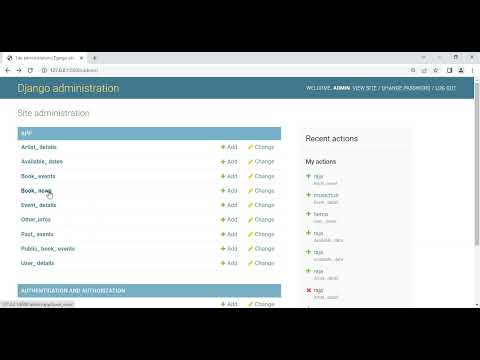
Music Event Booking App in Django Python
Music Event Booking App in Django Python
र 1000
⭐ Featured
Django Projects
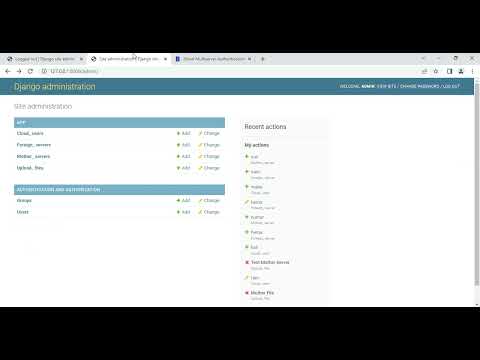
Multi Server Management System in Django Python
Multi Server Management System in Django Python
र 1000
⭐ Featured

Django Projects
Multi Authority Access Control in Django Python
Multi Authority Access Control in Django Python
र 1000