AI & ML Models
0.0 (0 reviews) • 0 downloads
Sign Language Hand Gestures using Live Camera in Python Projects
र 1000
Sign Language Hand Gestures using Live Camera in Python Projects
Technical Details
Domain : Python
Database : Sqlite
Tools : Anaconda
Run Tools: VS Code
Database : Sqlite
Tools : Anaconda
Run Tools: VS Code
Secure Payment
Instant Download
GST Invoice
24/7 Support
About This Product
Sign Language Hand Gestures using Live Camera in Python Projects
Abstract
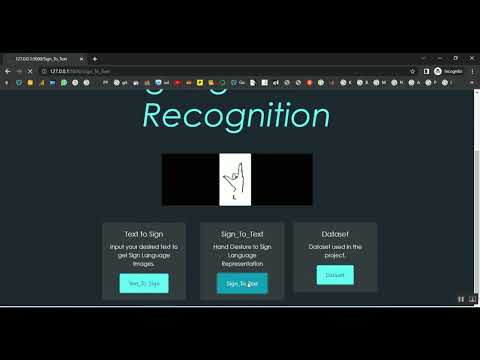
Sign language is an essential mode of communication for individuals with hearing and speech disabilities, yet communication barriers still exist between sign language users and the general population. The advancement of computer vision and machine learning has enabled the development of systems that can recognize and interpret hand gestures in real time, making sign language translation more accessible. This project focuses on detecting and translating sign language hand gestures using a live camera feed in Python. The system captures hand gestures through a webcam, processes the frames, detects hand landmarks, and classifies gestures into corresponding alphabets, words, or expressions. The implementation uses OpenCV for real-time image capture, MediaPipe for hand keypoint detection, and machine learning or deep learning models for gesture classification. This system promotes inclusivity and provides a technological bridge between sign language users and non-sign language users by enabling smooth, real-time gesture recognition.
Existing System
The current systems available for sign language communication predominantly rely on manual interpretation by trained translators or depend on static image datasets where gestures are pre-captured and processed offline. These solutions are limited because they cannot support live communication and require human involvement, which may not always be available. Additionally, many traditional systems are based on glove-based sensors which are costly, uncomfortable to wear, and not user-friendly. These earlier solutions lack scalability and adaptability as they are often trained for limited gesture sets and fail to operate efficiently under real-time scenarios. Furthermore, environmental dependencies such as lighting conditions and varied backgrounds often reduce the accuracy of recognition systems that lack robust image processing capabilities. As a result, existing systems fail to provide effective, real-time, and practical gesture recognition that can be conveniently deployed for everyday communication.
Proposed System
The proposed system introduces a real-time computer vision-based sign language recognition model using a live camera feed in Python. The solution eliminates the need for wearable devices by detecting and interpreting hand gestures using only a standard webcam. The system utilizes MediaPipe Hands to extract precise hand landmark coordinates and track finger movements in each frame. These feature points are passed to a pre-trained machine learning or deep learning model that classifies gestures into sign language meanings. Additionally, OpenCV is used for live video stream processing, frame segmentation, and gesture visualization. The system is capable of recognizing both static and dynamic hand gestures with high accuracy and speed. It also supports real-time translation by mapping recognized gestures to text output displayed on the screen and can optionally convert text to speech, enabling audio communication. The proposed approach is cost-effective, lightweight, user-friendly, and suitable for educational, social, and communication purposes, especially for assisting people with speech and hearing impairments.
Abstract
Sign language is an essential mode of communication for individuals with hearing and speech disabilities, yet communication barriers still exist between sign language users and the general population. The advancement of computer vision and machine learning has enabled the development of systems that can recognize and interpret hand gestures in real time, making sign language translation more accessible. This project focuses on detecting and translating sign language hand gestures using a live camera feed in Python. The system captures hand gestures through a webcam, processes the frames, detects hand landmarks, and classifies gestures into corresponding alphabets, words, or expressions. The implementation uses OpenCV for real-time image capture, MediaPipe for hand keypoint detection, and machine learning or deep learning models for gesture classification. This system promotes inclusivity and provides a technological bridge between sign language users and non-sign language users by enabling smooth, real-time gesture recognition.
Existing System
The current systems available for sign language communication predominantly rely on manual interpretation by trained translators or depend on static image datasets where gestures are pre-captured and processed offline. These solutions are limited because they cannot support live communication and require human involvement, which may not always be available. Additionally, many traditional systems are based on glove-based sensors which are costly, uncomfortable to wear, and not user-friendly. These earlier solutions lack scalability and adaptability as they are often trained for limited gesture sets and fail to operate efficiently under real-time scenarios. Furthermore, environmental dependencies such as lighting conditions and varied backgrounds often reduce the accuracy of recognition systems that lack robust image processing capabilities. As a result, existing systems fail to provide effective, real-time, and practical gesture recognition that can be conveniently deployed for everyday communication.
Proposed System
The proposed system introduces a real-time computer vision-based sign language recognition model using a live camera feed in Python. The solution eliminates the need for wearable devices by detecting and interpreting hand gestures using only a standard webcam. The system utilizes MediaPipe Hands to extract precise hand landmark coordinates and track finger movements in each frame. These feature points are passed to a pre-trained machine learning or deep learning model that classifies gestures into sign language meanings. Additionally, OpenCV is used for live video stream processing, frame segmentation, and gesture visualization. The system is capable of recognizing both static and dynamic hand gestures with high accuracy and speed. It also supports real-time translation by mapping recognized gestures to text output displayed on the screen and can optionally convert text to speech, enabling audio communication. The proposed approach is cost-effective, lightweight, user-friendly, and suitable for educational, social, and communication purposes, especially for assisting people with speech and hearing impairments.
Customer Reviews (0)
No reviews yet. Be the first!
Related Products
⭐ Featured
AI & ML Models
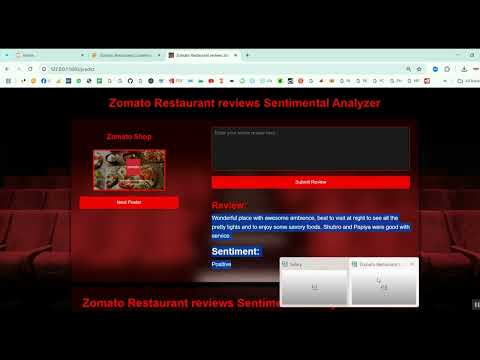
Zomato Restaurant Reviews Sentimental Analyzer in Python Projects
Zomato Restaurant Reviews Sentimental Analyzer in Python Projects
र 1000
⭐ Featured
⭐ Featured
AI & ML Models
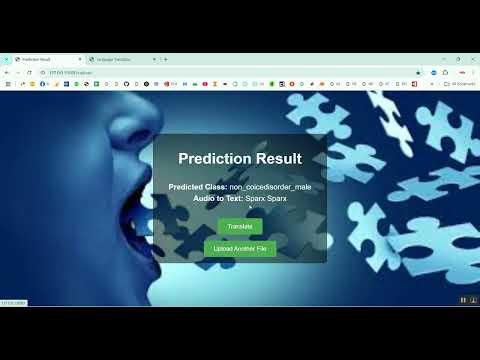
Voice Disorder Prediction using Audio Dataset in Python Projects
Voice Disorder Prediction using Audio Dataset in Python Projects
र 1000
AI & ML Models
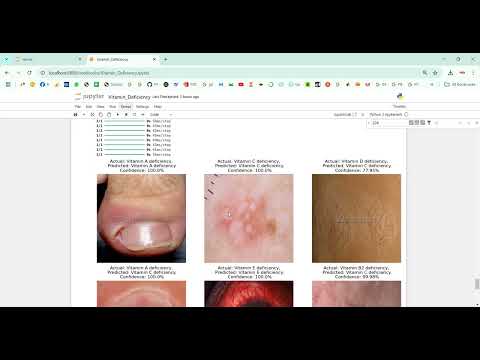
Vitamin Deficiency Detection Using Image Processing in Python Projects
Vitamin Deficiency Detection Using Image Processing in Python Projects
र 1000