AI & ML Models
0.0 (0 reviews) • 0 downloads
Ship Detection CNN Yolo Google Colab in Python Projects
र 1000
Ship Detection CNN Yolo Google Colab in Python Projects
Technical Details
Domain : Python
Database : Sqlite
Tools : Anaconda
Run Tools: VS Code
Database : Sqlite
Tools : Anaconda
Run Tools: VS Code
Secure Payment
Instant Download
GST Invoice
24/7 Support
About This Product
Ship Detection CNN Yolo Google Colab in Python Projects
Abstract
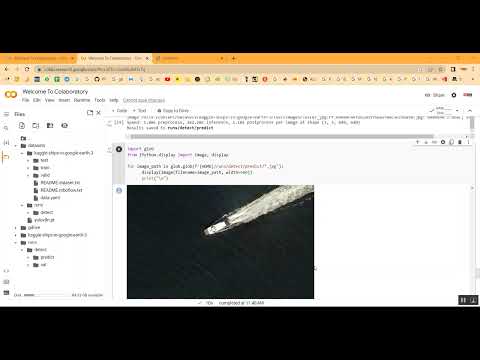
The Ship Detection CNN YOLO Project is a Python-based system designed to detect and classify ships in satellite or aerial images using the YOLO (You Only Look Once) deep learning framework combined with Convolutional Neural Networks (CNNs). The project leverages the real-time object detection capabilities of YOLO to identify ships’ locations, shapes, and types in complex maritime environments. The system is implemented on Google Colab, enabling GPU acceleration for faster training and inference. Python libraries such as TensorFlow/Keras, OpenCV, NumPy, and Matplotlib are used for image preprocessing, model training, prediction, and visualization. This project provides an efficient, scalable, and automated solution for maritime surveillance, port management, and environmental monitoring.
Existing System
Traditional ship detection methods rely on manual inspection or classical image processing techniques like edge detection, thresholding, and template matching. These methods are slow, prone to human error, and cannot handle large-scale or high-resolution datasets effectively. Earlier automated systems often used handcrafted features, which struggle in varying lighting conditions, complex sea backgrounds, and occlusions. While some CNN-based systems improved accuracy, they often required sliding-window approaches or multiple stages, limiting real-time detection and efficiency.
Proposed System
The proposed system integrates YOLO, a single-stage CNN-based object detection model, to achieve fast and accurate ship detection. Satellite or aerial images are preprocessed through resizing, normalization, and augmentation to improve model generalization. The YOLO model is trained on annotated ship datasets, learning to detect multiple ships simultaneously with bounding boxes and class probabilities. Google Colab provides a cloud-based environment with GPU support, enabling accelerated model training and real-time prediction. Python libraries like OpenCV handle preprocessing and visualization, while TensorFlow/Keras manage model construction, training, and inference. This approach ensures high accuracy, real-time performance, and scalability, making it suitable for maritime traffic monitoring, naval operations, and environmental protection.
Abstract
The Ship Detection CNN YOLO Project is a Python-based system designed to detect and classify ships in satellite or aerial images using the YOLO (You Only Look Once) deep learning framework combined with Convolutional Neural Networks (CNNs). The project leverages the real-time object detection capabilities of YOLO to identify ships’ locations, shapes, and types in complex maritime environments. The system is implemented on Google Colab, enabling GPU acceleration for faster training and inference. Python libraries such as TensorFlow/Keras, OpenCV, NumPy, and Matplotlib are used for image preprocessing, model training, prediction, and visualization. This project provides an efficient, scalable, and automated solution for maritime surveillance, port management, and environmental monitoring.
Existing System
Traditional ship detection methods rely on manual inspection or classical image processing techniques like edge detection, thresholding, and template matching. These methods are slow, prone to human error, and cannot handle large-scale or high-resolution datasets effectively. Earlier automated systems often used handcrafted features, which struggle in varying lighting conditions, complex sea backgrounds, and occlusions. While some CNN-based systems improved accuracy, they often required sliding-window approaches or multiple stages, limiting real-time detection and efficiency.
Proposed System
The proposed system integrates YOLO, a single-stage CNN-based object detection model, to achieve fast and accurate ship detection. Satellite or aerial images are preprocessed through resizing, normalization, and augmentation to improve model generalization. The YOLO model is trained on annotated ship datasets, learning to detect multiple ships simultaneously with bounding boxes and class probabilities. Google Colab provides a cloud-based environment with GPU support, enabling accelerated model training and real-time prediction. Python libraries like OpenCV handle preprocessing and visualization, while TensorFlow/Keras manage model construction, training, and inference. This approach ensures high accuracy, real-time performance, and scalability, making it suitable for maritime traffic monitoring, naval operations, and environmental protection.
Customer Reviews (0)
No reviews yet. Be the first!
Related Products
⭐ Featured
AI & ML Models
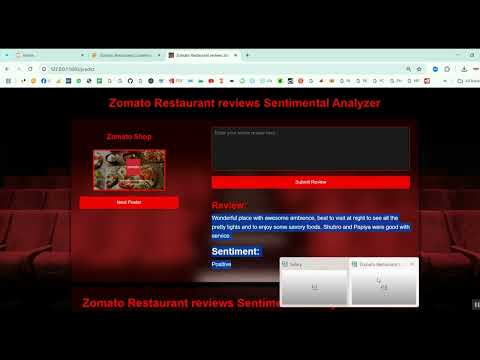
Zomato Restaurant Reviews Sentimental Analyzer in Python Projects
Zomato Restaurant Reviews Sentimental Analyzer in Python Projects
र 1000
⭐ Featured
⭐ Featured
AI & ML Models
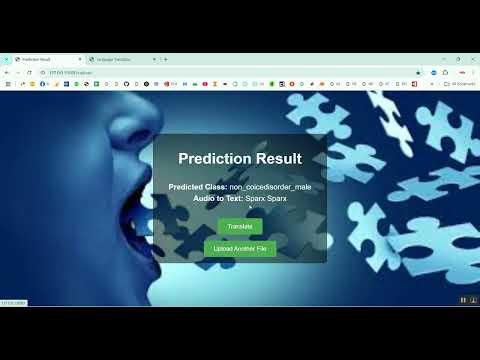
Voice Disorder Prediction using Audio Dataset in Python Projects
Voice Disorder Prediction using Audio Dataset in Python Projects
र 1000
AI & ML Models
Vitamin Deficiency Detection Using Image Processing in Python Projects
Vitamin Deficiency Detection Using Image Processing in Python Projects
र 1000