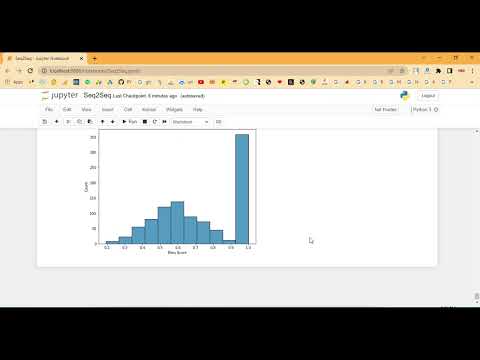
AI & ML Models
0.0 (0 reviews) • 0 downloads
SEQ2SEQ Just Data Analysis in Python Projects
र 1000
SEQ2SEQ Just Data Analysis in Python Projects
Technical Details
Domain : Python
Database : Sqlite
Tools : Anaconda
Run Tools: VS Code
Database : Sqlite
Tools : Anaconda
Run Tools: VS Code
Secure Payment
Instant Download
GST Invoice
24/7 Support
About This Product
SEQ2SEQ Just Data Analysis in Python Projects
Abstract
The SEQ2SEQ Just Data Analysis Project is a Python-based system designed to analyze sequential data using Sequence-to-Sequence (SEQ2SEQ) models, a type of neural network architecture widely used in tasks such as machine translation, text summarization, and time-series prediction. The project focuses on understanding patterns and relationships within sequential datasets by transforming an input sequence into a corresponding output sequence. Python libraries such as TensorFlow/Keras, NumPy, Pandas, Matplotlib, and Seaborn are utilized for data preprocessing, model development, training, evaluation, and visualization. This project provides insights into sequence modeling, improving prediction accuracy and facilitating advanced data analysis in domains like natural language processing, finance, and sensor data analytics.
Existing System
Traditional approaches to sequential data analysis rely on statistical methods such as ARIMA, Hidden Markov Models, or basic feedforward neural networks. While these methods can capture linear dependencies, they struggle with complex, long-term relationships within sequences. Early machine learning models also require extensive feature engineering and are limited in handling variable-length sequences. Existing systems often fail to generalize across different types of sequential data, limiting their effectiveness in real-world applications such as language translation, speech recognition, or multivariate time-series forecasting.
Proposed System
The proposed system uses a SEQ2SEQ neural network framework to handle sequential data effectively. The input sequences are preprocessed through normalization, tokenization (for textual data), or feature scaling (for numerical sequences). The SEQ2SEQ model typically consists of an encoder that compresses the input sequence into a fixed-size context vector and a decoder that generates the output sequence step by step. Python libraries like TensorFlow/Keras facilitate model construction, training, and inference, while Matplotlib/Seaborn visualize the model’s performance, loss curves, and sequence prediction accuracy. This approach captures long-term dependencies in sequential data, supports variable-length inputs and outputs, and improves predictive performance for tasks in NLP, time-series forecasting, and other sequential data applications.
Abstract
The SEQ2SEQ Just Data Analysis Project is a Python-based system designed to analyze sequential data using Sequence-to-Sequence (SEQ2SEQ) models, a type of neural network architecture widely used in tasks such as machine translation, text summarization, and time-series prediction. The project focuses on understanding patterns and relationships within sequential datasets by transforming an input sequence into a corresponding output sequence. Python libraries such as TensorFlow/Keras, NumPy, Pandas, Matplotlib, and Seaborn are utilized for data preprocessing, model development, training, evaluation, and visualization. This project provides insights into sequence modeling, improving prediction accuracy and facilitating advanced data analysis in domains like natural language processing, finance, and sensor data analytics.
Existing System
Traditional approaches to sequential data analysis rely on statistical methods such as ARIMA, Hidden Markov Models, or basic feedforward neural networks. While these methods can capture linear dependencies, they struggle with complex, long-term relationships within sequences. Early machine learning models also require extensive feature engineering and are limited in handling variable-length sequences. Existing systems often fail to generalize across different types of sequential data, limiting their effectiveness in real-world applications such as language translation, speech recognition, or multivariate time-series forecasting.
Proposed System
The proposed system uses a SEQ2SEQ neural network framework to handle sequential data effectively. The input sequences are preprocessed through normalization, tokenization (for textual data), or feature scaling (for numerical sequences). The SEQ2SEQ model typically consists of an encoder that compresses the input sequence into a fixed-size context vector and a decoder that generates the output sequence step by step. Python libraries like TensorFlow/Keras facilitate model construction, training, and inference, while Matplotlib/Seaborn visualize the model’s performance, loss curves, and sequence prediction accuracy. This approach captures long-term dependencies in sequential data, supports variable-length inputs and outputs, and improves predictive performance for tasks in NLP, time-series forecasting, and other sequential data applications.
Customer Reviews (0)
No reviews yet. Be the first!
Related Products
⭐ Featured
AI & ML Models
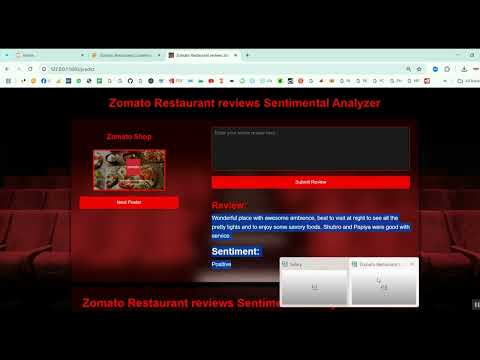
Zomato Restaurant Reviews Sentimental Analyzer in Python Projects
Zomato Restaurant Reviews Sentimental Analyzer in Python Projects
र 1000
⭐ Featured
⭐ Featured
AI & ML Models
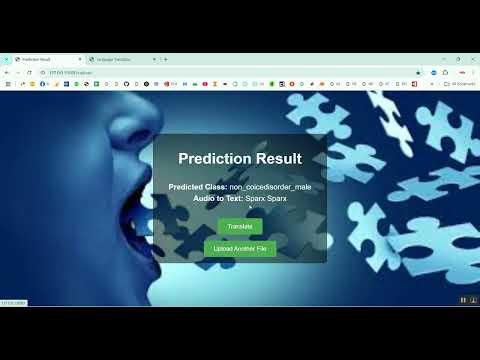
Voice Disorder Prediction using Audio Dataset in Python Projects
Voice Disorder Prediction using Audio Dataset in Python Projects
र 1000
AI & ML Models
Vitamin Deficiency Detection Using Image Processing in Python Projects
Vitamin Deficiency Detection Using Image Processing in Python Projects
र 1000