AI & ML Models
0.0 (0 reviews) • 0 downloads
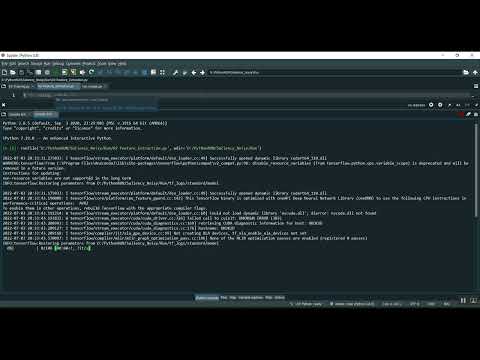
Saliency Noisy Image Analysis in Python Projects
र 1000
Saliency Noisy Image Analysis in Python Projects
Technical Details
Domain : Python
Database : Sqlite
Tools : Anaconda
Run Tools: VS Code
Database : Sqlite
Tools : Anaconda
Run Tools: VS Code
Secure Payment
Instant Download
GST Invoice
24/7 Support
About This Product
Saliency Noisy Image Analysis in Python Projects
Abstract
The Saliency Noisy Image Analysis Project is a Python-based system designed to detect and analyze salient regions in noisy or degraded images. Saliency detection highlights the most important or visually distinctive areas in an image, which is critical for applications such as object recognition, image segmentation, and computer vision tasks. This project leverages image processing techniques, noise reduction algorithms, and deep learning models such as Convolutional Neural Networks (CNNs) to identify salient regions accurately despite the presence of noise. Python libraries like OpenCV, NumPy, SciPy, TensorFlow/Keras, and Matplotlib are used for image preprocessing, noise filtering, saliency map generation, and visualization. The system enhances image analysis tasks by improving feature extraction from noisy images for various real-world applications.
Existing System
Traditional saliency detection methods rely on contrast-based or frequency-domain approaches that assume clean, noise-free images. Techniques such as global contrast, center-surround difference, and graph-based visual saliency can perform well under ideal conditions but degrade significantly in noisy environments. Noise in images can obscure key features, reduce detection accuracy, and introduce false positives in saliency maps. Existing systems also often fail to provide adaptive noise handling or integration with deep learning models, limiting their robustness for real-world image analysis tasks in low-quality or adverse imaging conditions.
Proposed System
The proposed system combines noise reduction and deep learning-based saliency detection to improve performance on noisy images. Images are first preprocessed using denoising techniques such as Gaussian filtering, median filtering, or Non-Local Means to reduce noise while preserving structural details. The preprocessed images are then input into a CNN-based model to generate saliency maps that highlight important regions of the image. Python libraries like OpenCV handle preprocessing, TensorFlow/Keras is used for model training and inference, and Matplotlib visualizes saliency maps. This framework provides accurate saliency detection even in the presence of noise, improving object recognition, segmentation, and image understanding tasks. It is scalable and adaptable for applications in medical imaging, surveillance, autonomous vehicles, and multimedia analysis.
Abstract
The Saliency Noisy Image Analysis Project is a Python-based system designed to detect and analyze salient regions in noisy or degraded images. Saliency detection highlights the most important or visually distinctive areas in an image, which is critical for applications such as object recognition, image segmentation, and computer vision tasks. This project leverages image processing techniques, noise reduction algorithms, and deep learning models such as Convolutional Neural Networks (CNNs) to identify salient regions accurately despite the presence of noise. Python libraries like OpenCV, NumPy, SciPy, TensorFlow/Keras, and Matplotlib are used for image preprocessing, noise filtering, saliency map generation, and visualization. The system enhances image analysis tasks by improving feature extraction from noisy images for various real-world applications.
Existing System
Traditional saliency detection methods rely on contrast-based or frequency-domain approaches that assume clean, noise-free images. Techniques such as global contrast, center-surround difference, and graph-based visual saliency can perform well under ideal conditions but degrade significantly in noisy environments. Noise in images can obscure key features, reduce detection accuracy, and introduce false positives in saliency maps. Existing systems also often fail to provide adaptive noise handling or integration with deep learning models, limiting their robustness for real-world image analysis tasks in low-quality or adverse imaging conditions.
Proposed System
The proposed system combines noise reduction and deep learning-based saliency detection to improve performance on noisy images. Images are first preprocessed using denoising techniques such as Gaussian filtering, median filtering, or Non-Local Means to reduce noise while preserving structural details. The preprocessed images are then input into a CNN-based model to generate saliency maps that highlight important regions of the image. Python libraries like OpenCV handle preprocessing, TensorFlow/Keras is used for model training and inference, and Matplotlib visualizes saliency maps. This framework provides accurate saliency detection even in the presence of noise, improving object recognition, segmentation, and image understanding tasks. It is scalable and adaptable for applications in medical imaging, surveillance, autonomous vehicles, and multimedia analysis.
Customer Reviews (0)
No reviews yet. Be the first!
Related Products
⭐ Featured

AI & ML Models
Zomato Restaurant Reviews Sentimental Analyzer in Python Projects
Zomato Restaurant Reviews Sentimental Analyzer in Python Projects
र 1000
⭐ Featured
⭐ Featured

AI & ML Models
Voice Disorder Prediction using Audio Dataset in Python Projects
Voice Disorder Prediction using Audio Dataset in Python Projects
र 1000
AI & ML Models
Vitamin Deficiency Detection Using Image Processing in Python Projects
Vitamin Deficiency Detection Using Image Processing in Python Projects
र 1000