AI & ML Models
0.0 (0 reviews) • 0 downloads
Retinal Vessel Image Analysis Jupyter Flask App in Python Projects
र 1000
Retinal Vessel Image Analysis Jupyter Flask App in Python Projects
Technical Details
Domain : Python
Database : Sqlite
Tools : Anaconda
Run Tools: VS Code
Database : Sqlite
Tools : Anaconda
Run Tools: VS Code
Secure Payment
Instant Download
GST Invoice
24/7 Support
About This Product
Retinal Vessel Image Analysis Jupyter Flask App in Python Projects
Abstract
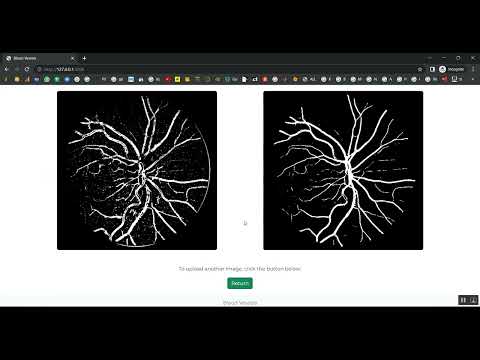
The Retinal Vessel Image Analysis Jupyter Flask App Project is a Python-based medical imaging system designed to analyze retinal blood vessels for early detection of ocular diseases such as diabetic retinopathy, glaucoma, and hypertension-related complications. The system uses image processing and deep learning techniques, primarily Convolutional Neural Networks (CNNs), to segment and analyze retinal vessel structures from fundus images. Users can upload retinal images through a Flask web interface, and the system performs preprocessing, vessel segmentation, feature extraction, and visualization of blood vessel patterns. Python libraries such as OpenCV, TensorFlow/Keras, NumPy, Pandas, and Matplotlib are utilized for image processing, model training, and data visualization. This system provides a non-invasive, automated diagnostic tool that assists ophthalmologists in early disease detection and monitoring.
Existing System
Traditional retinal vessel analysis relies on manual examination by ophthalmologists using fundus cameras and microscopes. This process is time-consuming, subjective, and prone to inter-observer variability. Existing automated tools often use simple image processing techniques like thresholding, edge detection, or morphological operations to extract blood vessels. While these methods are computationally lightweight, they lack robustness under varying lighting conditions, image quality, and vessel complexity. Moreover, many existing systems do not provide an interactive interface for uploading images, performing analysis, and visualizing results, limiting their practical usability in real-world clinical settings.
Proposed System
The proposed system integrates deep learning-based vessel segmentation with a Flask web application for interactive retinal image analysis. Uploaded retinal images are preprocessed using contrast enhancement, noise removal, and normalization techniques to improve vessel visibility. A CNN-based model is trained to segment the retinal vasculature accurately, highlighting features such as vessel width, branching points, and tortuosity. The Flask app enables users to upload images, visualize segmented vessels, and obtain quantitative metrics for analysis. Python libraries like OpenCV handle image preprocessing, TensorFlow/Keras manage CNN training and inference, and Matplotlib is used for visualization. This system improves accuracy, reduces diagnostic time, and provides a scalable, user-friendly solution for automated retinal vessel analysis, supporting early intervention and improved patient outcomes.
Abstract
The Retinal Vessel Image Analysis Jupyter Flask App Project is a Python-based medical imaging system designed to analyze retinal blood vessels for early detection of ocular diseases such as diabetic retinopathy, glaucoma, and hypertension-related complications. The system uses image processing and deep learning techniques, primarily Convolutional Neural Networks (CNNs), to segment and analyze retinal vessel structures from fundus images. Users can upload retinal images through a Flask web interface, and the system performs preprocessing, vessel segmentation, feature extraction, and visualization of blood vessel patterns. Python libraries such as OpenCV, TensorFlow/Keras, NumPy, Pandas, and Matplotlib are utilized for image processing, model training, and data visualization. This system provides a non-invasive, automated diagnostic tool that assists ophthalmologists in early disease detection and monitoring.
Existing System
Traditional retinal vessel analysis relies on manual examination by ophthalmologists using fundus cameras and microscopes. This process is time-consuming, subjective, and prone to inter-observer variability. Existing automated tools often use simple image processing techniques like thresholding, edge detection, or morphological operations to extract blood vessels. While these methods are computationally lightweight, they lack robustness under varying lighting conditions, image quality, and vessel complexity. Moreover, many existing systems do not provide an interactive interface for uploading images, performing analysis, and visualizing results, limiting their practical usability in real-world clinical settings.
Proposed System
The proposed system integrates deep learning-based vessel segmentation with a Flask web application for interactive retinal image analysis. Uploaded retinal images are preprocessed using contrast enhancement, noise removal, and normalization techniques to improve vessel visibility. A CNN-based model is trained to segment the retinal vasculature accurately, highlighting features such as vessel width, branching points, and tortuosity. The Flask app enables users to upload images, visualize segmented vessels, and obtain quantitative metrics for analysis. Python libraries like OpenCV handle image preprocessing, TensorFlow/Keras manage CNN training and inference, and Matplotlib is used for visualization. This system improves accuracy, reduces diagnostic time, and provides a scalable, user-friendly solution for automated retinal vessel analysis, supporting early intervention and improved patient outcomes.
Customer Reviews (0)
No reviews yet. Be the first!
Related Products
⭐ Featured
AI & ML Models
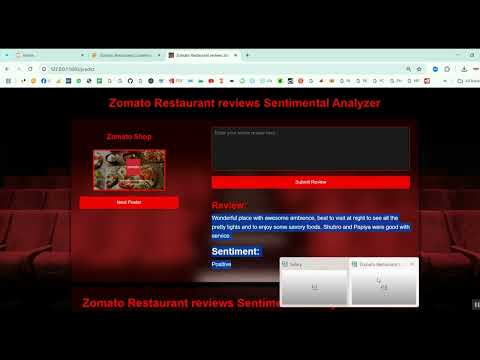
Zomato Restaurant Reviews Sentimental Analyzer in Python Projects
Zomato Restaurant Reviews Sentimental Analyzer in Python Projects
र 1000
⭐ Featured
⭐ Featured
AI & ML Models
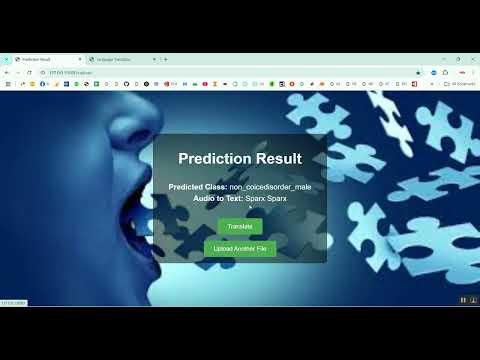
Voice Disorder Prediction using Audio Dataset in Python Projects
Voice Disorder Prediction using Audio Dataset in Python Projects
र 1000
AI & ML Models
Vitamin Deficiency Detection Using Image Processing in Python Projects
Vitamin Deficiency Detection Using Image Processing in Python Projects
र 1000