AI & ML Models
0.0 (0 reviews) • 0 downloads
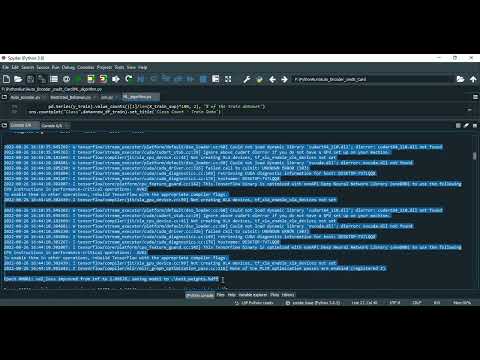
Reliability Analysis Using Credit Risk in Python Projects
र 1000
Reliability Analysis Using Credit Risk in Python Projects
Technical Details
Domain : Python
Database : Sqlite
Tools : Anaconda
Run Tools: VS Code
Database : Sqlite
Tools : Anaconda
Run Tools: VS Code
Secure Payment
Instant Download
GST Invoice
24/7 Support
About This Product
Reliability Analysis Using Credit Risk in Python Projects
Abstract
The Reliability Analysis Using Credit Risk Project is a Python-based system designed to evaluate the financial reliability of individuals or organizations by analyzing credit risk factors. The project uses historical credit data, including loan repayment history, credit utilization, income stability, and default records, to predict the likelihood of default or delayed payments. Machine learning models such as Logistic Regression, Random Forest, Gradient Boosting, or Support Vector Machines (SVM) are employed to classify users into different risk categories. Python libraries such as Pandas, NumPy, Scikit-learn, Matplotlib, and Seaborn are used for data preprocessing, feature extraction, model training, and visualization. This system helps banks, financial institutions, and lenders make informed decisions, minimize financial losses, and improve overall credit risk management strategies.
Existing System
Traditional credit risk assessment relies on manual evaluation by financial analysts or simple rule-based scoring systems. These methods consider basic metrics such as credit scores, income statements, and previous loan history but often fail to capture complex patterns in large datasets. Existing statistical models like linear regression or logistic scoring provide moderate accuracy but struggle with high-dimensional data or non-linear relationships between credit features. Additionally, traditional systems are slow and cannot handle real-time credit evaluation for modern financial platforms. This makes risk prediction less dynamic and may result in either unnecessary rejections of reliable borrowers or exposure to high-risk clients.
Proposed System
The proposed system uses machine learning techniques to perform reliability analysis and credit risk prediction automatically. Credit-related datasets are preprocessed to handle missing values, normalize numeric attributes, and encode categorical variables. Feature selection techniques identify the most influential factors affecting creditworthiness. Supervised learning models such as Random Forest, Gradient Boosting, or SVM are trained to classify borrowers into risk categories (low, medium, high). The system also generates visualizations such as feature importance plots, risk distribution charts, and probability histograms to provide actionable insights. By automating credit risk evaluation and leveraging predictive modeling, this system reduces manual errors, improves decision-making efficiency, and enhances financial reliability assessment. Python enables seamless integration of preprocessing, modeling, and visualization in a single workflow.
Abstract
The Reliability Analysis Using Credit Risk Project is a Python-based system designed to evaluate the financial reliability of individuals or organizations by analyzing credit risk factors. The project uses historical credit data, including loan repayment history, credit utilization, income stability, and default records, to predict the likelihood of default or delayed payments. Machine learning models such as Logistic Regression, Random Forest, Gradient Boosting, or Support Vector Machines (SVM) are employed to classify users into different risk categories. Python libraries such as Pandas, NumPy, Scikit-learn, Matplotlib, and Seaborn are used for data preprocessing, feature extraction, model training, and visualization. This system helps banks, financial institutions, and lenders make informed decisions, minimize financial losses, and improve overall credit risk management strategies.
Existing System
Traditional credit risk assessment relies on manual evaluation by financial analysts or simple rule-based scoring systems. These methods consider basic metrics such as credit scores, income statements, and previous loan history but often fail to capture complex patterns in large datasets. Existing statistical models like linear regression or logistic scoring provide moderate accuracy but struggle with high-dimensional data or non-linear relationships between credit features. Additionally, traditional systems are slow and cannot handle real-time credit evaluation for modern financial platforms. This makes risk prediction less dynamic and may result in either unnecessary rejections of reliable borrowers or exposure to high-risk clients.
Proposed System
The proposed system uses machine learning techniques to perform reliability analysis and credit risk prediction automatically. Credit-related datasets are preprocessed to handle missing values, normalize numeric attributes, and encode categorical variables. Feature selection techniques identify the most influential factors affecting creditworthiness. Supervised learning models such as Random Forest, Gradient Boosting, or SVM are trained to classify borrowers into risk categories (low, medium, high). The system also generates visualizations such as feature importance plots, risk distribution charts, and probability histograms to provide actionable insights. By automating credit risk evaluation and leveraging predictive modeling, this system reduces manual errors, improves decision-making efficiency, and enhances financial reliability assessment. Python enables seamless integration of preprocessing, modeling, and visualization in a single workflow.
Customer Reviews (0)
No reviews yet. Be the first!
Related Products
⭐ Featured
AI & ML Models
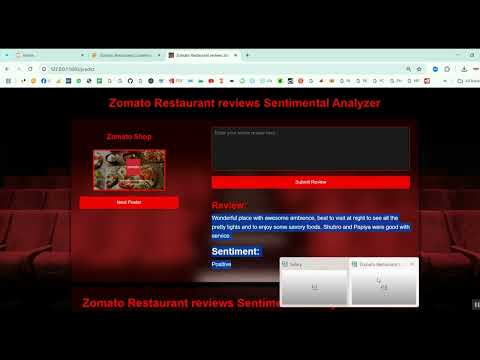
Zomato Restaurant Reviews Sentimental Analyzer in Python Projects
Zomato Restaurant Reviews Sentimental Analyzer in Python Projects
र 1000
⭐ Featured
⭐ Featured
AI & ML Models
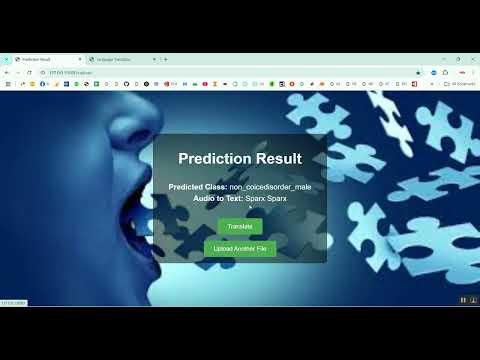
Voice Disorder Prediction using Audio Dataset in Python Projects
Voice Disorder Prediction using Audio Dataset in Python Projects
र 1000

AI & ML Models
Vitamin Deficiency Detection Using Image Processing in Python Projects
Vitamin Deficiency Detection Using Image Processing in Python Projects
र 1000