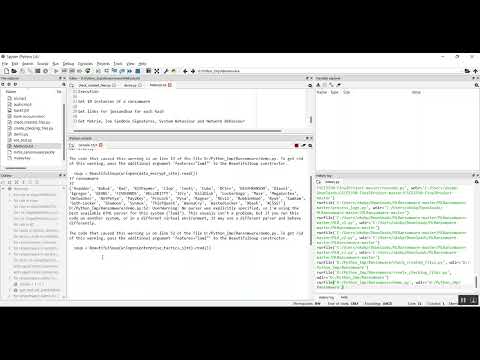
AI & ML Models
0.0 (0 reviews) • 0 downloads
Ransom ware Data Train Analysis in Python Projects
र 1000
Ransom ware Data Train Analysis in Python Projects
Technical Details
Domain : Python
Database : Sqlite
Tools : Anaconda
Run Tools: VS Code
Database : Sqlite
Tools : Anaconda
Run Tools: VS Code
Secure Payment
Instant Download
GST Invoice
24/7 Support
About This Product
Ransom ware Data Train Analysis in Python Projects
Abstract
The Ransomware Data Train Analysis Project is a Python-based system designed to detect, classify, and analyze ransomware attacks using machine learning techniques. Ransomware is a type of malware that encrypts files or blocks access to systems until a ransom is paid, posing a significant cybersecurity threat to organizations and individuals. This project collects ransomware samples and system behavior data, including file access patterns, process activities, and network traffic logs, to train machine learning models for accurate detection. Algorithms such as Random Forest, Support Vector Machine (SVM), and Artificial Neural Networks (ANN) are used to classify benign and malicious activities. Python libraries like Pandas, NumPy, Scikit-learn, Matplotlib, and Seaborn are employed for data preprocessing, feature extraction, model training, and visualization. The system supports proactive ransomware detection, helping cybersecurity teams mitigate attacks efficiently.
Existing System
Existing ransomware detection methods primarily rely on signature-based antivirus solutions, which identify malware by comparing files against a database of known ransomware signatures. While effective against previously identified threats, these systems fail to detect new or obfuscated ransomware variants. Some heuristic or behavior-based systems analyze system activities to detect anomalies but often produce high false positive rates due to unpredictable system behavior. Additionally, existing solutions often lack the capability to analyze large-scale ransomware datasets efficiently or provide predictive insights for unseen ransomware types, leaving systems vulnerable to novel attacks.
Proposed System
The proposed system introduces a machine learning-based framework for ransomware detection and analysis using Python. System logs, file operations, and network data are preprocessed to extract relevant features such as file read/write frequency, encryption patterns, and suspicious process activities. These features are used to train supervised models like Random Forest, SVM, or ANN, enabling classification of normal versus ransomware activity. The model is validated using cross-validation techniques to ensure reliability and generalization to unseen data. Visualization tools such as Matplotlib and Seaborn display ransomware trends, feature importance, and detection accuracy. By leveraging machine learning, this system offers improved detection rates, reduced reliance on predefined signatures, and early warning capabilities for emerging ransomware attacks, thereby enhancing cybersecurity measures.
Abstract
The Ransomware Data Train Analysis Project is a Python-based system designed to detect, classify, and analyze ransomware attacks using machine learning techniques. Ransomware is a type of malware that encrypts files or blocks access to systems until a ransom is paid, posing a significant cybersecurity threat to organizations and individuals. This project collects ransomware samples and system behavior data, including file access patterns, process activities, and network traffic logs, to train machine learning models for accurate detection. Algorithms such as Random Forest, Support Vector Machine (SVM), and Artificial Neural Networks (ANN) are used to classify benign and malicious activities. Python libraries like Pandas, NumPy, Scikit-learn, Matplotlib, and Seaborn are employed for data preprocessing, feature extraction, model training, and visualization. The system supports proactive ransomware detection, helping cybersecurity teams mitigate attacks efficiently.
Existing System
Existing ransomware detection methods primarily rely on signature-based antivirus solutions, which identify malware by comparing files against a database of known ransomware signatures. While effective against previously identified threats, these systems fail to detect new or obfuscated ransomware variants. Some heuristic or behavior-based systems analyze system activities to detect anomalies but often produce high false positive rates due to unpredictable system behavior. Additionally, existing solutions often lack the capability to analyze large-scale ransomware datasets efficiently or provide predictive insights for unseen ransomware types, leaving systems vulnerable to novel attacks.
Proposed System
The proposed system introduces a machine learning-based framework for ransomware detection and analysis using Python. System logs, file operations, and network data are preprocessed to extract relevant features such as file read/write frequency, encryption patterns, and suspicious process activities. These features are used to train supervised models like Random Forest, SVM, or ANN, enabling classification of normal versus ransomware activity. The model is validated using cross-validation techniques to ensure reliability and generalization to unseen data. Visualization tools such as Matplotlib and Seaborn display ransomware trends, feature importance, and detection accuracy. By leveraging machine learning, this system offers improved detection rates, reduced reliance on predefined signatures, and early warning capabilities for emerging ransomware attacks, thereby enhancing cybersecurity measures.
Customer Reviews (0)
No reviews yet. Be the first!
Related Products
⭐ Featured
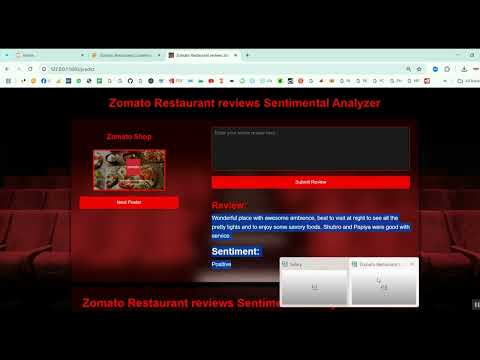
AI & ML Models
Zomato Restaurant Reviews Sentimental Analyzer in Python Projects
Zomato Restaurant Reviews Sentimental Analyzer in Python Projects
र 1000
⭐ Featured
⭐ Featured

AI & ML Models
Voice Disorder Prediction using Audio Dataset in Python Projects
Voice Disorder Prediction using Audio Dataset in Python Projects
र 1000

AI & ML Models
Vitamin Deficiency Detection Using Image Processing in Python Projects
Vitamin Deficiency Detection Using Image Processing in Python Projects
र 1000