AI & ML Models
0.0 (0 reviews) • 0 downloads
Programmable Met surfaces in Python Projects
र 1000
Programmable Met surfaces in Python Projects
Technical Details
Domain : Python
Database : Sqlite
Tools : Anaconda
Run Tools: VS Code
Database : Sqlite
Tools : Anaconda
Run Tools: VS Code
Secure Payment
Instant Download
GST Invoice
24/7 Support
About This Product
Programmable Met surfaces in Python Projects
Abstract
The Programmable Metasurfaces in Python Project explores the development and simulation of reconfigurable electromagnetic metasurfaces using Python-based computational tools. Metasurfaces are artificially engineered 2D materials composed of sub-wavelength unit cells that can manipulate electromagnetic waves in a controlled manner. Programmable metasurfaces allow dynamic control of wave properties such as reflection, absorption, and beam steering through software-defined configurations. This project uses Python libraries such as NumPy, SciPy, Matplotlib, and electromagnetic simulation tools to model and analyze metasurface behavior. The objective is to design programmable metasurface architectures and simulate their performance for applications in wireless communication, radar imaging, beamforming, and 6G intelligent surfaces. The project provides a foundation for implementing intelligent reconfigurable surfaces that can enhance signal strength and wireless coverage in modern communication systems.
Existing System
Traditional passive metasurfaces have fixed electromagnetic properties determined during fabrication and cannot adapt to changes in the environment or signal requirements. These static designs limit flexibility and are unsuitable for dynamic wireless communication scenarios such as beam steering, signal focusing, or interference cancellation. Existing systems rely on manual reconfiguration using mechanical adjustments or hardware rewiring, which is inefficient and impractical. Additionally, conventional electromagnetic simulation platforms are hardware-dependent and costly, limiting academic and research accessibility. This creates a need for programmable, software-controlled metasurfaces that enable real-time wave manipulation with reduced computational complexity and cost.
Proposed System
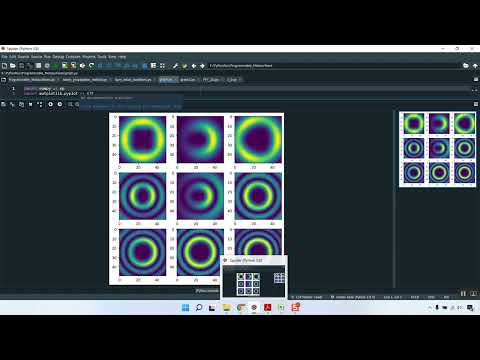
The proposed system introduces a programmable metasurface simulation framework using Python to dynamically control electromagnetic surface responses. The metasurface is represented as a grid of tunable unit cells, each capable of altering its phase or amplitude response under software control. Python-based numerical methods are used to compute electromagnetic field propagation and reflection coefficients based on unit cell configurations. Control algorithms are implemented to achieve desired functionalities such as beam steering, wave absorption, anomalous reflection, and focusing. The system supports integration with optimization techniques and machine learning models to auto-tune metasurface behavior. Results are visualized using Python plotting libraries to analyze field distribution and surface response patterns. This simulation environment enables researchers and engineers to design intelligent metasurfaces cost-effectively and bridge electromagnetic theory with real-world reconfigurable surface applications.
Abstract
The Programmable Metasurfaces in Python Project explores the development and simulation of reconfigurable electromagnetic metasurfaces using Python-based computational tools. Metasurfaces are artificially engineered 2D materials composed of sub-wavelength unit cells that can manipulate electromagnetic waves in a controlled manner. Programmable metasurfaces allow dynamic control of wave properties such as reflection, absorption, and beam steering through software-defined configurations. This project uses Python libraries such as NumPy, SciPy, Matplotlib, and electromagnetic simulation tools to model and analyze metasurface behavior. The objective is to design programmable metasurface architectures and simulate their performance for applications in wireless communication, radar imaging, beamforming, and 6G intelligent surfaces. The project provides a foundation for implementing intelligent reconfigurable surfaces that can enhance signal strength and wireless coverage in modern communication systems.
Existing System
Traditional passive metasurfaces have fixed electromagnetic properties determined during fabrication and cannot adapt to changes in the environment or signal requirements. These static designs limit flexibility and are unsuitable for dynamic wireless communication scenarios such as beam steering, signal focusing, or interference cancellation. Existing systems rely on manual reconfiguration using mechanical adjustments or hardware rewiring, which is inefficient and impractical. Additionally, conventional electromagnetic simulation platforms are hardware-dependent and costly, limiting academic and research accessibility. This creates a need for programmable, software-controlled metasurfaces that enable real-time wave manipulation with reduced computational complexity and cost.
Proposed System
The proposed system introduces a programmable metasurface simulation framework using Python to dynamically control electromagnetic surface responses. The metasurface is represented as a grid of tunable unit cells, each capable of altering its phase or amplitude response under software control. Python-based numerical methods are used to compute electromagnetic field propagation and reflection coefficients based on unit cell configurations. Control algorithms are implemented to achieve desired functionalities such as beam steering, wave absorption, anomalous reflection, and focusing. The system supports integration with optimization techniques and machine learning models to auto-tune metasurface behavior. Results are visualized using Python plotting libraries to analyze field distribution and surface response patterns. This simulation environment enables researchers and engineers to design intelligent metasurfaces cost-effectively and bridge electromagnetic theory with real-world reconfigurable surface applications.
Customer Reviews (0)
No reviews yet. Be the first!
Related Products
⭐ Featured

AI & ML Models
Zomato Restaurant Reviews Sentimental Analyzer in Python Projects
Zomato Restaurant Reviews Sentimental Analyzer in Python Projects
र 1000
⭐ Featured
⭐ Featured

AI & ML Models
Voice Disorder Prediction using Audio Dataset in Python Projects
Voice Disorder Prediction using Audio Dataset in Python Projects
र 1000
AI & ML Models
Vitamin Deficiency Detection Using Image Processing in Python Projects
Vitamin Deficiency Detection Using Image Processing in Python Projects
र 1000