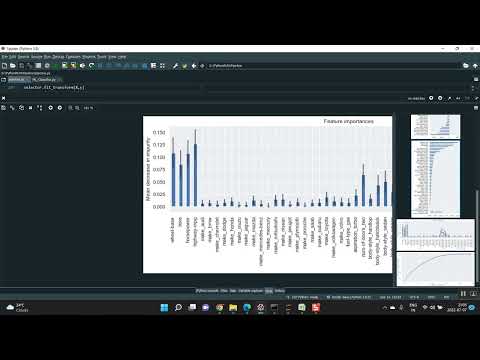
AI & ML Models
0.0 (0 reviews) • 0 downloads
Predicting Machine Learning Pipeline Runtimes in Python Projects
र 1000
Predicting Machine Learning Pipeline Runtimes in Python Projects
Technical Details
Domain : Python
Database : Sqlite
Tools : Anaconda
Run Tools: VS Code
Database : Sqlite
Tools : Anaconda
Run Tools: VS Code
Secure Payment
Instant Download
GST Invoice
24/7 Support
About This Product
Predicting Machine Learning Pipeline Runtimes in Python Projects
Abstract
The Predicting Machine Learning Pipeline Runtimes Project is a Python-based system designed to estimate the execution time of machine learning workflows before actual training and testing. In real-world data science and AutoML environments, pipeline runtime prediction is essential for resource planning, cost management, model scheduling, and performance optimization. This system analyzes various stages of machine learning pipelines such as data preprocessing, feature engineering, model training, and hyperparameter tuning. Using historical runtime metadata and pipeline configurations, a regression-based prediction model is developed to estimate total runtime. Python libraries such as Scikit-learn, Pandas, NumPy, Joblib, and Matplotlib are used for building and evaluating the runtime prediction model. The system helps practitioners choose efficient pipelines, avoid long-running configurations, and allocate GPU or CPU resources intelligently.
Existing System
In the existing approach, machine learning pipelines are executed without prior knowledge of computation time, which often leads to inefficient experimentation and wastage of computational resources. Researchers and data scientists must rely on trial-and-error to identify time-efficient models, especially when using complex algorithms such as Random Forest, XGBoost, SVM, or neural networks. AutoML frameworks like Auto-sklearn and H2O AutoML generate effective pipelines but do not provide accurate runtime forecasting before execution. This lack of runtime awareness delays model development cycles, increases cloud computation costs, and creates scheduling bottlenecks in multi-user environments.
Proposed System
The proposed system introduces a runtime prediction framework that anticipates the total execution time of a machine learning pipeline based on pipeline structure and data properties. The system collects features such as dataset size, number of features, data sparsity, algorithm complexity, number of estimators, and hyperparameters to build a meta-learning model that predicts runtime. Regression algorithms like Linear Regression, Random Forest Regressor, Gradient Boosting, or XGBoost Regressor are used to generate accurate runtime predictions. The system enables users to input pipeline settings and immediately view an estimated runtime, helping them optimize decisions. It is implemented using Python with Scikit-learn for modeling, Pandas/NumPy for data handling, and Matplotlib/Seaborn for result visualization. This intelligent prediction approach improves resource allocation, reduces computation costs, and accelerates machine learning experimentation.
Abstract
The Predicting Machine Learning Pipeline Runtimes Project is a Python-based system designed to estimate the execution time of machine learning workflows before actual training and testing. In real-world data science and AutoML environments, pipeline runtime prediction is essential for resource planning, cost management, model scheduling, and performance optimization. This system analyzes various stages of machine learning pipelines such as data preprocessing, feature engineering, model training, and hyperparameter tuning. Using historical runtime metadata and pipeline configurations, a regression-based prediction model is developed to estimate total runtime. Python libraries such as Scikit-learn, Pandas, NumPy, Joblib, and Matplotlib are used for building and evaluating the runtime prediction model. The system helps practitioners choose efficient pipelines, avoid long-running configurations, and allocate GPU or CPU resources intelligently.
Existing System
In the existing approach, machine learning pipelines are executed without prior knowledge of computation time, which often leads to inefficient experimentation and wastage of computational resources. Researchers and data scientists must rely on trial-and-error to identify time-efficient models, especially when using complex algorithms such as Random Forest, XGBoost, SVM, or neural networks. AutoML frameworks like Auto-sklearn and H2O AutoML generate effective pipelines but do not provide accurate runtime forecasting before execution. This lack of runtime awareness delays model development cycles, increases cloud computation costs, and creates scheduling bottlenecks in multi-user environments.
Proposed System
The proposed system introduces a runtime prediction framework that anticipates the total execution time of a machine learning pipeline based on pipeline structure and data properties. The system collects features such as dataset size, number of features, data sparsity, algorithm complexity, number of estimators, and hyperparameters to build a meta-learning model that predicts runtime. Regression algorithms like Linear Regression, Random Forest Regressor, Gradient Boosting, or XGBoost Regressor are used to generate accurate runtime predictions. The system enables users to input pipeline settings and immediately view an estimated runtime, helping them optimize decisions. It is implemented using Python with Scikit-learn for modeling, Pandas/NumPy for data handling, and Matplotlib/Seaborn for result visualization. This intelligent prediction approach improves resource allocation, reduces computation costs, and accelerates machine learning experimentation.
Customer Reviews (0)
No reviews yet. Be the first!
Related Products
⭐ Featured
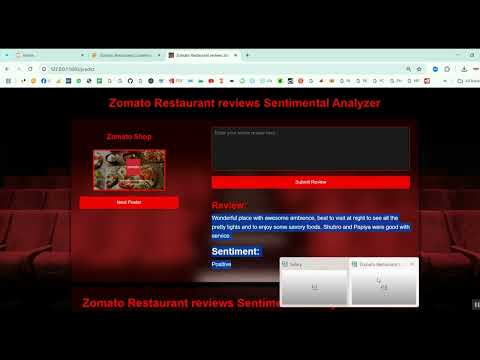
AI & ML Models
Zomato Restaurant Reviews Sentimental Analyzer in Python Projects
Zomato Restaurant Reviews Sentimental Analyzer in Python Projects
र 1000
⭐ Featured
⭐ Featured
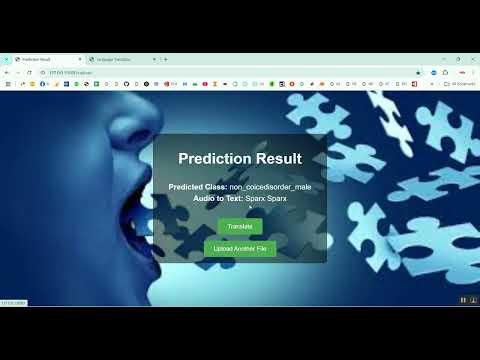
AI & ML Models
Voice Disorder Prediction using Audio Dataset in Python Projects
Voice Disorder Prediction using Audio Dataset in Python Projects
र 1000
AI & ML Models
Vitamin Deficiency Detection Using Image Processing in Python Projects
Vitamin Deficiency Detection Using Image Processing in Python Projects
र 1000