
AI & ML Models
0.0 (0 reviews) • 0 downloads
Phishing ML Classification Flask App in Python Projects
र 1000
Phishing ML Classification Flask App in Python Projects
Technical Details
Domain : Python
Database : Sqlite
Tools : Anaconda
Run Tools: VS Code
Database : Sqlite
Tools : Anaconda
Run Tools: VS Code
Secure Payment
Instant Download
GST Invoice
24/7 Support
About This Product
Phishing ML Classification Flask App in Python Projects
Abstract
The Phishing ML Classification Flask App Project is a Python-based system designed to detect and prevent phishing attacks by analyzing URLs, email content, and webpage features. Phishing is a major cybersecurity threat where attackers deceive users into revealing sensitive information, such as passwords, credit card numbers, or personal data. This project implements machine learning models to classify inputs as phishing or legitimate, using features like URL length, domain age, presence of special characters, SSL certificate status, and textual content. The trained model is deployed in a Flask web application, allowing users to input URLs or text and receive real-time classification results with probability scores. Python libraries such as Pandas, NumPy, Scikit-learn, Requests, BeautifulSoup, and Flask are used for data processing, model training, feature extraction, and web interface development. This system enables faster, automated phishing detection and supports proactive cybersecurity measures.
Existing System
Traditional phishing detection methods rely on blacklists, heuristic rules, and manual inspection, which are often reactive and inefficient against rapidly evolving phishing techniques. Blacklists can only block known malicious URLs, while heuristic rules frequently generate false positives or fail to catch subtle variations in attack patterns. Manual inspection is time-consuming and not scalable for large organizations handling thousands of emails or website visits daily. Existing machine learning solutions may focus only on URL features or email content without providing a user-friendly interface, limiting practical adoption.
Proposed System
The proposed system integrates a machine learning classification model with a Flask web application to create a real-time phishing detection tool. Input URLs or email text are first preprocessed, and key features are extracted, including lexical, host-based, and content-based attributes. The ML model—trained using algorithms such as Random Forest, Logistic Regression, or Gradient Boosting—classifies each input as phishing or legitimate. The Flask interface provides an interactive platform for users to enter data, view classification results, and understand contributing features, enhancing transparency and usability. Python libraries like OpenCV and BeautifulSoup are used for web scraping and feature extraction, while Scikit-learn handles model training and prediction. The system also includes logging and retraining mechanisms to improve accuracy over time. By combining accurate detection, real-time feedback, and user-friendly deployment, this project offers an effective tool for preventing phishing attacks and protecting users’ digital security.
Abstract
The Phishing ML Classification Flask App Project is a Python-based system designed to detect and prevent phishing attacks by analyzing URLs, email content, and webpage features. Phishing is a major cybersecurity threat where attackers deceive users into revealing sensitive information, such as passwords, credit card numbers, or personal data. This project implements machine learning models to classify inputs as phishing or legitimate, using features like URL length, domain age, presence of special characters, SSL certificate status, and textual content. The trained model is deployed in a Flask web application, allowing users to input URLs or text and receive real-time classification results with probability scores. Python libraries such as Pandas, NumPy, Scikit-learn, Requests, BeautifulSoup, and Flask are used for data processing, model training, feature extraction, and web interface development. This system enables faster, automated phishing detection and supports proactive cybersecurity measures.
Existing System
Traditional phishing detection methods rely on blacklists, heuristic rules, and manual inspection, which are often reactive and inefficient against rapidly evolving phishing techniques. Blacklists can only block known malicious URLs, while heuristic rules frequently generate false positives or fail to catch subtle variations in attack patterns. Manual inspection is time-consuming and not scalable for large organizations handling thousands of emails or website visits daily. Existing machine learning solutions may focus only on URL features or email content without providing a user-friendly interface, limiting practical adoption.
Proposed System
The proposed system integrates a machine learning classification model with a Flask web application to create a real-time phishing detection tool. Input URLs or email text are first preprocessed, and key features are extracted, including lexical, host-based, and content-based attributes. The ML model—trained using algorithms such as Random Forest, Logistic Regression, or Gradient Boosting—classifies each input as phishing or legitimate. The Flask interface provides an interactive platform for users to enter data, view classification results, and understand contributing features, enhancing transparency and usability. Python libraries like OpenCV and BeautifulSoup are used for web scraping and feature extraction, while Scikit-learn handles model training and prediction. The system also includes logging and retraining mechanisms to improve accuracy over time. By combining accurate detection, real-time feedback, and user-friendly deployment, this project offers an effective tool for preventing phishing attacks and protecting users’ digital security.
Customer Reviews (0)
No reviews yet. Be the first!
Related Products
⭐ Featured
AI & ML Models
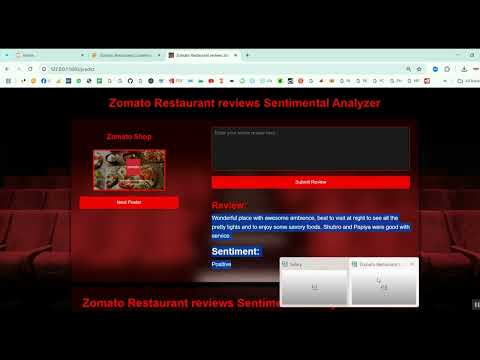
Zomato Restaurant Reviews Sentimental Analyzer in Python Projects
Zomato Restaurant Reviews Sentimental Analyzer in Python Projects
र 1000
⭐ Featured
⭐ Featured
AI & ML Models
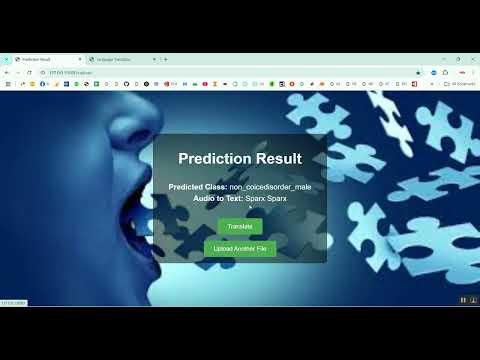
Voice Disorder Prediction using Audio Dataset in Python Projects
Voice Disorder Prediction using Audio Dataset in Python Projects
र 1000
AI & ML Models
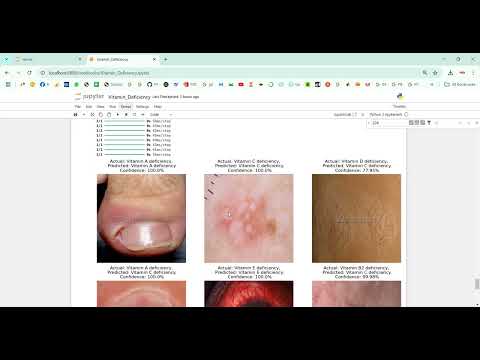
Vitamin Deficiency Detection Using Image Processing in Python Projects
Vitamin Deficiency Detection Using Image Processing in Python Projects
र 1000