AI & ML Models
0.0 (0 reviews) • 0 downloads
People Crowd Count Application in Python Projects
र 1000
People Crowd Count Application in Python Projects
Technical Details
Domain : Python
Database : Sqlite
Tools : Anaconda
Run Tools: VS Code
Database : Sqlite
Tools : Anaconda
Run Tools: VS Code
Secure Payment
Instant Download
GST Invoice
24/7 Support
About This Product
People Crowd Count Application in Python Projects
Abstract
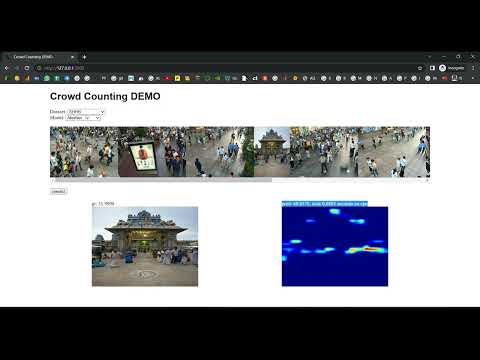
The People Crowd Count Application Project is a Python-based system designed to estimate and monitor the number of people in a given area using computer vision and deep learning techniques. The system utilizes Convolutional Neural Networks (CNNs), YOLO (You Only Look Once), or SSD (Single Shot MultiBox Detector) models to detect and count individuals in images or real-time video streams. Implemented using Python libraries such as OpenCV, TensorFlow/Keras, NumPy, and Pandas, the project can analyze crowd density, generate heatmaps, and provide real-time monitoring for public spaces. This application is particularly useful for event management, public safety, smart city planning, and surveillance, allowing authorities to monitor crowd behavior and prevent overcrowding incidents efficiently.
Existing System
Existing crowd counting systems typically rely on manual observation, simple motion sensors, or traditional image processing methods. These approaches are often inaccurate in dense crowds, struggle with occlusions, and fail under varying lighting or camera angles. Manual counting is time-consuming and prone to human error, while basic automated systems cannot scale to handle real-time video feeds effectively. These limitations reduce the effectiveness of conventional methods in ensuring public safety or gathering reliable crowd analytics.
Proposed System
The proposed system introduces a robust deep learning-based crowd counting framework capable of real-time detection and analysis. The system preprocesses images or video frames to enhance visibility and reduce noise, then applies CNN or YOLO-based object detection to identify individual people. Each detection is used to calculate crowd density, generate heatmaps, and track movement patterns. Python libraries such as OpenCV handle video capture and processing, TensorFlow/Keras manage model inference, and NumPy/Pandas support data analysis and storage. The system provides interactive visualization of crowd data and alerts in cases of overcrowding or unusual density patterns. By combining accuracy, scalability, and real-time processing, this project offers an intelligent solution for monitoring and managing crowds in public spaces.
Abstract
The People Crowd Count Application Project is a Python-based system designed to estimate and monitor the number of people in a given area using computer vision and deep learning techniques. The system utilizes Convolutional Neural Networks (CNNs), YOLO (You Only Look Once), or SSD (Single Shot MultiBox Detector) models to detect and count individuals in images or real-time video streams. Implemented using Python libraries such as OpenCV, TensorFlow/Keras, NumPy, and Pandas, the project can analyze crowd density, generate heatmaps, and provide real-time monitoring for public spaces. This application is particularly useful for event management, public safety, smart city planning, and surveillance, allowing authorities to monitor crowd behavior and prevent overcrowding incidents efficiently.
Existing System
Existing crowd counting systems typically rely on manual observation, simple motion sensors, or traditional image processing methods. These approaches are often inaccurate in dense crowds, struggle with occlusions, and fail under varying lighting or camera angles. Manual counting is time-consuming and prone to human error, while basic automated systems cannot scale to handle real-time video feeds effectively. These limitations reduce the effectiveness of conventional methods in ensuring public safety or gathering reliable crowd analytics.
Proposed System
The proposed system introduces a robust deep learning-based crowd counting framework capable of real-time detection and analysis. The system preprocesses images or video frames to enhance visibility and reduce noise, then applies CNN or YOLO-based object detection to identify individual people. Each detection is used to calculate crowd density, generate heatmaps, and track movement patterns. Python libraries such as OpenCV handle video capture and processing, TensorFlow/Keras manage model inference, and NumPy/Pandas support data analysis and storage. The system provides interactive visualization of crowd data and alerts in cases of overcrowding or unusual density patterns. By combining accuracy, scalability, and real-time processing, this project offers an intelligent solution for monitoring and managing crowds in public spaces.
Customer Reviews (0)
No reviews yet. Be the first!
Related Products
⭐ Featured

AI & ML Models
Zomato Restaurant Reviews Sentimental Analyzer in Python Projects
Zomato Restaurant Reviews Sentimental Analyzer in Python Projects
र 1000
⭐ Featured
⭐ Featured

AI & ML Models
Voice Disorder Prediction using Audio Dataset in Python Projects
Voice Disorder Prediction using Audio Dataset in Python Projects
र 1000
AI & ML Models
Vitamin Deficiency Detection Using Image Processing in Python Projects
Vitamin Deficiency Detection Using Image Processing in Python Projects
र 1000