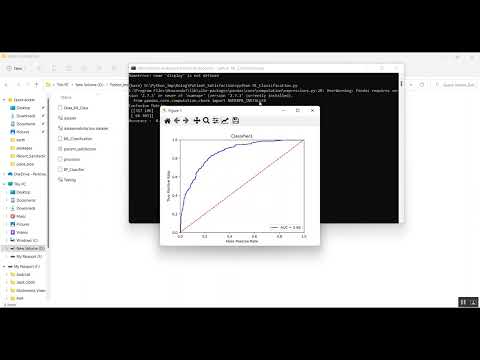
AI & ML Models
0.0 (0 reviews) • 0 downloads
Patient Satisfaction ML Classification in Python Projects
र 1000
Patient Satisfaction ML Classification in Python Projects
Technical Details
Domain : Python
Database : Sqlite
Tools : Anaconda
Run Tools: VS Code
Database : Sqlite
Tools : Anaconda
Run Tools: VS Code
Secure Payment
Instant Download
GST Invoice
24/7 Support
About This Product
Patient Satisfaction ML Classification in Python Projects
Abstract
The Patient Satisfaction ML Classification Project is a Python-based system designed to evaluate and predict patient satisfaction levels using historical healthcare data and machine learning algorithms. The system helps healthcare providers understand patient feedback, optimize services, and improve overall patient care. Using Python libraries such as scikit-learn, Pandas, NumPy, and TensorFlow/Keras, the system preprocesses survey responses, hospital records, and other patient data to extract meaningful features. Machine learning models like Random Forest, Support Vector Machines (SVM), and Artificial Neural Networks (ANN) are trained to classify patients into satisfaction categories such as satisfied, neutral, or dissatisfied. This predictive system enables hospitals to identify areas of improvement, enhance patient experience, and support data-driven decision-making.
Existing System
Traditional approaches to measuring patient satisfaction rely on manual surveys, paper-based feedback, or basic statistical analysis. These methods are time-consuming, often incomplete, and prone to subjective bias. Existing automated systems, if any, may use simple rule-based analytics without leveraging advanced machine learning models, resulting in limited predictive accuracy and inadequate insights. Additionally, conventional methods struggle to handle large volumes of data or extract actionable patterns from complex, multi-dimensional datasets.
Proposed System
The proposed system implements an intelligent ML-based classification framework for predicting patient satisfaction. The system begins with data collection and preprocessing, including handling missing values, normalizing responses, and encoding categorical variables. Relevant features, such as wait time, quality of service, staff behavior, treatment effectiveness, and facility conditions, are extracted for analysis. Machine learning models like Random Forest, SVM, or ANN are trained on the processed dataset to classify patients based on their satisfaction levels. The system provides predictions with confidence scores, and visualizations using Matplotlib or Seaborn help administrators understand trends and patterns. Implemented in Python, the system is scalable, efficient, and supports healthcare providers in proactive service improvement strategies, ensuring higher patient satisfaction and better healthcare outcomes.
Abstract
The Patient Satisfaction ML Classification Project is a Python-based system designed to evaluate and predict patient satisfaction levels using historical healthcare data and machine learning algorithms. The system helps healthcare providers understand patient feedback, optimize services, and improve overall patient care. Using Python libraries such as scikit-learn, Pandas, NumPy, and TensorFlow/Keras, the system preprocesses survey responses, hospital records, and other patient data to extract meaningful features. Machine learning models like Random Forest, Support Vector Machines (SVM), and Artificial Neural Networks (ANN) are trained to classify patients into satisfaction categories such as satisfied, neutral, or dissatisfied. This predictive system enables hospitals to identify areas of improvement, enhance patient experience, and support data-driven decision-making.
Existing System
Traditional approaches to measuring patient satisfaction rely on manual surveys, paper-based feedback, or basic statistical analysis. These methods are time-consuming, often incomplete, and prone to subjective bias. Existing automated systems, if any, may use simple rule-based analytics without leveraging advanced machine learning models, resulting in limited predictive accuracy and inadequate insights. Additionally, conventional methods struggle to handle large volumes of data or extract actionable patterns from complex, multi-dimensional datasets.
Proposed System
The proposed system implements an intelligent ML-based classification framework for predicting patient satisfaction. The system begins with data collection and preprocessing, including handling missing values, normalizing responses, and encoding categorical variables. Relevant features, such as wait time, quality of service, staff behavior, treatment effectiveness, and facility conditions, are extracted for analysis. Machine learning models like Random Forest, SVM, or ANN are trained on the processed dataset to classify patients based on their satisfaction levels. The system provides predictions with confidence scores, and visualizations using Matplotlib or Seaborn help administrators understand trends and patterns. Implemented in Python, the system is scalable, efficient, and supports healthcare providers in proactive service improvement strategies, ensuring higher patient satisfaction and better healthcare outcomes.
Customer Reviews (0)
No reviews yet. Be the first!
Related Products
⭐ Featured
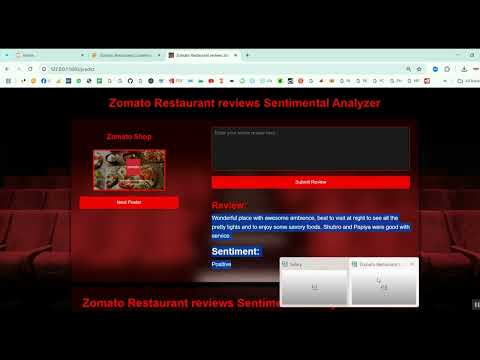
AI & ML Models
Zomato Restaurant Reviews Sentimental Analyzer in Python Projects
Zomato Restaurant Reviews Sentimental Analyzer in Python Projects
र 1000
⭐ Featured
⭐ Featured
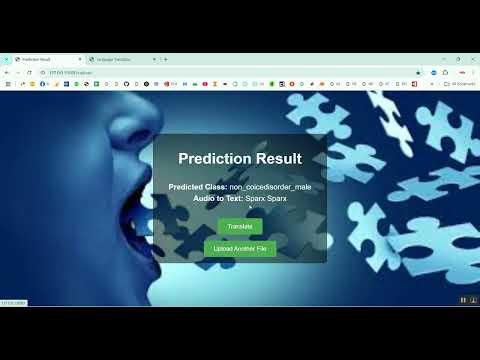
AI & ML Models
Voice Disorder Prediction using Audio Dataset in Python Projects
Voice Disorder Prediction using Audio Dataset in Python Projects
र 1000

AI & ML Models
Vitamin Deficiency Detection Using Image Processing in Python Projects
Vitamin Deficiency Detection Using Image Processing in Python Projects
र 1000