AI & ML Models
0.0 (0 reviews) • 0 downloads
Patient Discharge ML Classification in Python Projects
र 1000
Patient Discharge ML Classification in Python Projects
Technical Details
Domain : Python
Database : Sqlite
Tools : Anaconda
Run Tools: VS Code
Database : Sqlite
Tools : Anaconda
Run Tools: VS Code
Secure Payment
Instant Download
GST Invoice
24/7 Support
About This Product
Patient Discharge ML Classification in Python Projects
Abstract
The Patient Discharge ML Classification Project is a Python-based system designed to predict patient discharge outcomes using historical healthcare data and machine learning techniques. The project aims to assist hospitals and medical professionals in making data-driven decisions regarding patient discharge timing, reducing hospital congestion, and optimizing resource management. Using Python libraries such as scikit-learn, Pandas, NumPy, and TensorFlow/Keras, the system preprocesses patient data, extracts relevant features such as age, medical history, treatment progress, and vital signs, and trains machine learning models like Random Forest, Logistic Regression, and Support Vector Machines (SVM) to classify patients based on their readiness for discharge. The model outputs predictions that help in efficient hospital workflow management and improve patient care planning.
Existing System
Traditional hospital discharge systems largely rely on manual evaluation by healthcare staff, which can be subjective, inconsistent, and prone to errors. Manual methods are often time-consuming, particularly in busy hospitals, leading to delayed discharges and inefficient bed management. Existing automated approaches, if any, often do not leverage advanced machine learning algorithms for predictive analysis or fail to incorporate multiple patient-specific factors, limiting their accuracy and reliability in real-world scenarios.
Proposed System
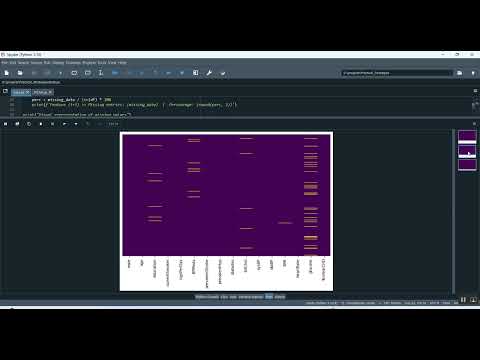
The proposed system implements an ML-based predictive framework to automate patient discharge classification. Patient records are first cleaned and preprocessed, including handling missing values, normalization, and feature selection. Key patient attributes such as treatment duration, lab results, vital signs, and medical history are extracted to train models using Random Forest, SVM, or ANN for accurate discharge prediction. The system provides an interface to input new patient data, runs the classification model, and outputs the likelihood of discharge readiness along with actionable insights. Implemented in Python, the project integrates Pandas and NumPy for data management, scikit-learn for model building, and Matplotlib/Seaborn for visualization of predictive results. This intelligent approach enhances decision-making, reduces patient wait times, and supports better hospital resource allocation.
Abstract
The Patient Discharge ML Classification Project is a Python-based system designed to predict patient discharge outcomes using historical healthcare data and machine learning techniques. The project aims to assist hospitals and medical professionals in making data-driven decisions regarding patient discharge timing, reducing hospital congestion, and optimizing resource management. Using Python libraries such as scikit-learn, Pandas, NumPy, and TensorFlow/Keras, the system preprocesses patient data, extracts relevant features such as age, medical history, treatment progress, and vital signs, and trains machine learning models like Random Forest, Logistic Regression, and Support Vector Machines (SVM) to classify patients based on their readiness for discharge. The model outputs predictions that help in efficient hospital workflow management and improve patient care planning.
Existing System
Traditional hospital discharge systems largely rely on manual evaluation by healthcare staff, which can be subjective, inconsistent, and prone to errors. Manual methods are often time-consuming, particularly in busy hospitals, leading to delayed discharges and inefficient bed management. Existing automated approaches, if any, often do not leverage advanced machine learning algorithms for predictive analysis or fail to incorporate multiple patient-specific factors, limiting their accuracy and reliability in real-world scenarios.
Proposed System
The proposed system implements an ML-based predictive framework to automate patient discharge classification. Patient records are first cleaned and preprocessed, including handling missing values, normalization, and feature selection. Key patient attributes such as treatment duration, lab results, vital signs, and medical history are extracted to train models using Random Forest, SVM, or ANN for accurate discharge prediction. The system provides an interface to input new patient data, runs the classification model, and outputs the likelihood of discharge readiness along with actionable insights. Implemented in Python, the project integrates Pandas and NumPy for data management, scikit-learn for model building, and Matplotlib/Seaborn for visualization of predictive results. This intelligent approach enhances decision-making, reduces patient wait times, and supports better hospital resource allocation.
Customer Reviews (0)
No reviews yet. Be the first!
Related Products
⭐ Featured
AI & ML Models
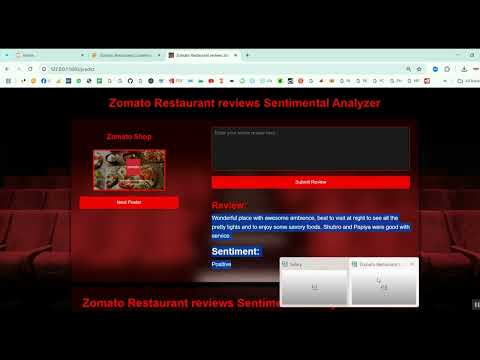
Zomato Restaurant Reviews Sentimental Analyzer in Python Projects
Zomato Restaurant Reviews Sentimental Analyzer in Python Projects
र 1000
⭐ Featured
⭐ Featured
AI & ML Models
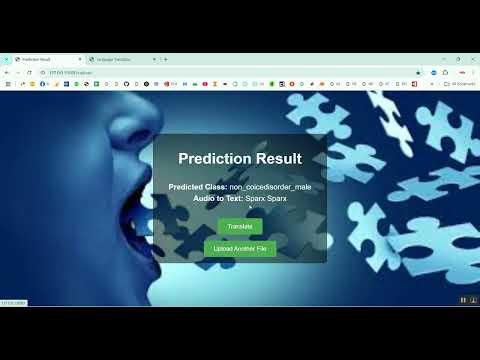
Voice Disorder Prediction using Audio Dataset in Python Projects
Voice Disorder Prediction using Audio Dataset in Python Projects
र 1000
AI & ML Models
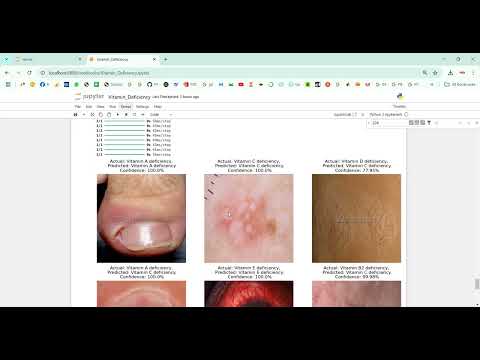
Vitamin Deficiency Detection Using Image Processing in Python Projects
Vitamin Deficiency Detection Using Image Processing in Python Projects
र 1000