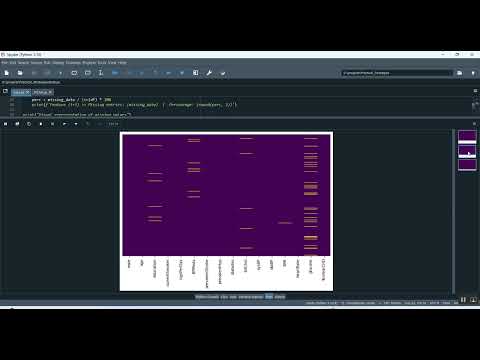
AI & ML Models
0.0 (0 reviews) • 0 downloads
Partial Strategies Train Data in Python Projects
र 1000
Partial Strategies Train Data in Python Projects
Technical Details
Domain : Python
Database : Sqlite
Tools : Anaconda
Run Tools: VS Code
Database : Sqlite
Tools : Anaconda
Run Tools: VS Code
Secure Payment
Instant Download
GST Invoice
24/7 Support
About This Product
Partial Strategies Train Data in Python Projects
Abstract
The Partial Strategies Train Data Project is a Python-based system designed to optimize predictive modeling and data analysis by implementing partial strategy approaches on training datasets. The project focuses on dividing datasets into strategic segments to enhance learning efficiency, reduce computational load, and improve model generalization. Using machine learning algorithms such as Decision Trees, Random Forest, or Gradient Boosting, the system applies partial strategies to select subsets of data that contribute most effectively to training. Python libraries like scikit-learn, Pandas, NumPy, and Matplotlib are used for data preprocessing, segmentation, model training, and visualization. This approach is particularly useful in scenarios with large datasets or when resources are limited, enabling faster training while maintaining high prediction accuracy.
Existing System
Existing machine learning systems typically train models using the entire dataset, which can be computationally expensive and time-consuming, especially with large-scale data. Full-dataset training often introduces redundancy, noise, and irrelevant data points, leading to overfitting or reduced model performance. Traditional methods also lack strategies for prioritizing the most informative samples, resulting in inefficient learning and slower convergence. These limitations make conventional systems less effective for resource-constrained environments or for applications requiring rapid model updates.
Proposed System
The proposed system introduces a partial strategy training framework that intelligently selects subsets of the dataset based on their significance, diversity, and contribution to model learning. Data is first preprocessed through normalization, missing value handling, and feature selection. Then, partial strategies such as sampling high-variance samples, stratified selection, or active learning-based selection are applied to generate an optimized training set. Machine learning models like Random Forest, Gradient Boosting, or Support Vector Machines (SVM) are trained on these subsets, which improves learning efficiency and reduces computational time. The system is implemented in Python, utilizing scikit-learn for model building, NumPy and Pandas for data management, and Matplotlib for result visualization. By training on carefully selected data segments rather than the full dataset, the system achieves faster convergence, better generalization, and improved accuracy, making it suitable for large-scale data analysis and real-time applications.
Abstract
The Partial Strategies Train Data Project is a Python-based system designed to optimize predictive modeling and data analysis by implementing partial strategy approaches on training datasets. The project focuses on dividing datasets into strategic segments to enhance learning efficiency, reduce computational load, and improve model generalization. Using machine learning algorithms such as Decision Trees, Random Forest, or Gradient Boosting, the system applies partial strategies to select subsets of data that contribute most effectively to training. Python libraries like scikit-learn, Pandas, NumPy, and Matplotlib are used for data preprocessing, segmentation, model training, and visualization. This approach is particularly useful in scenarios with large datasets or when resources are limited, enabling faster training while maintaining high prediction accuracy.
Existing System
Existing machine learning systems typically train models using the entire dataset, which can be computationally expensive and time-consuming, especially with large-scale data. Full-dataset training often introduces redundancy, noise, and irrelevant data points, leading to overfitting or reduced model performance. Traditional methods also lack strategies for prioritizing the most informative samples, resulting in inefficient learning and slower convergence. These limitations make conventional systems less effective for resource-constrained environments or for applications requiring rapid model updates.
Proposed System
The proposed system introduces a partial strategy training framework that intelligently selects subsets of the dataset based on their significance, diversity, and contribution to model learning. Data is first preprocessed through normalization, missing value handling, and feature selection. Then, partial strategies such as sampling high-variance samples, stratified selection, or active learning-based selection are applied to generate an optimized training set. Machine learning models like Random Forest, Gradient Boosting, or Support Vector Machines (SVM) are trained on these subsets, which improves learning efficiency and reduces computational time. The system is implemented in Python, utilizing scikit-learn for model building, NumPy and Pandas for data management, and Matplotlib for result visualization. By training on carefully selected data segments rather than the full dataset, the system achieves faster convergence, better generalization, and improved accuracy, making it suitable for large-scale data analysis and real-time applications.
Customer Reviews (0)
No reviews yet. Be the first!
Related Products
⭐ Featured
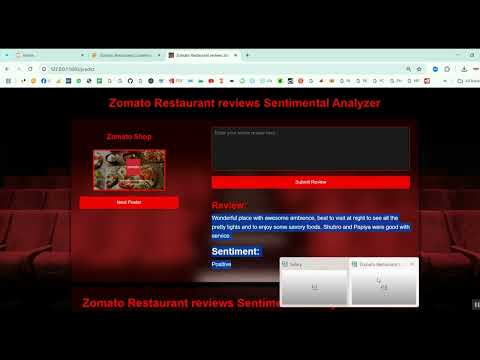
AI & ML Models
Zomato Restaurant Reviews Sentimental Analyzer in Python Projects
Zomato Restaurant Reviews Sentimental Analyzer in Python Projects
र 1000
⭐ Featured
⭐ Featured
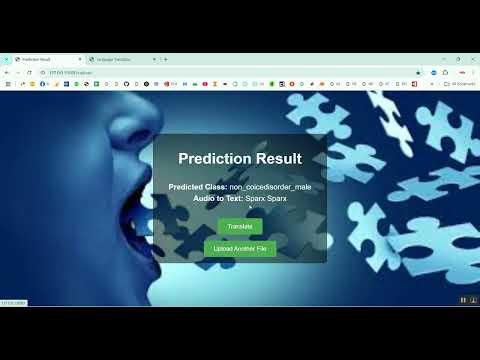
AI & ML Models
Voice Disorder Prediction using Audio Dataset in Python Projects
Voice Disorder Prediction using Audio Dataset in Python Projects
र 1000

AI & ML Models
Vitamin Deficiency Detection Using Image Processing in Python Projects
Vitamin Deficiency Detection Using Image Processing in Python Projects
र 1000