AI & ML Models
0.0 (0 reviews) • 0 downloads
Parkinson Detection using EEG Dataset in Python Projects
र 1000
Parkinson Detection using EEG Dataset in Python Projects
Technical Details
Domain : Python
Database : Sqlite
Tools : Anaconda
Run Tools: VS Code
Database : Sqlite
Tools : Anaconda
Run Tools: VS Code
Secure Payment
Instant Download
GST Invoice
24/7 Support
About This Product
Parkinson Detection using EEG Dataset in Python Projects
Abstract
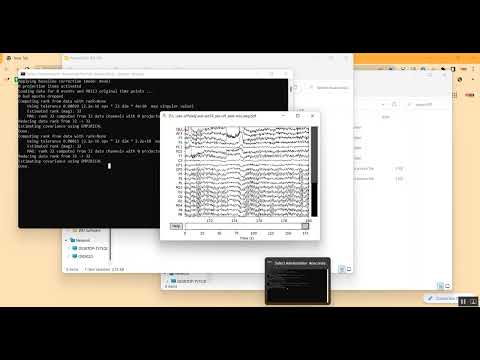
The Parkinson Detection using EEG Dataset in Python Project aims to develop a machine learning-based system capable of detecting Parkinson’s disease through analysis of electroencephalogram (EEG) signals. Parkinson’s disease is a progressive neurodegenerative disorder that affects motor control, and early detection is crucial for improving treatment outcomes. This project leverages EEG data, which captures brainwave activity, to identify distinctive neurological patterns associated with the disease. Using Python and machine learning frameworks such as scikit-learn, TensorFlow, and NumPy, the system preprocesses EEG signals, extracts meaningful features (such as frequency and entropy measures), and trains classifiers like Support Vector Machine (SVM) or Convolutional Neural Networks (CNN) to differentiate between healthy and Parkinson-affected individuals. The model outputs a prediction that can assist neurologists in early diagnosis and monitoring of disease progression.
Existing System
Existing systems for Parkinson’s detection primarily rely on clinical evaluations, motor symptom assessments, and imaging techniques such as MRI or PET scans. These approaches are often expensive, time-consuming, and dependent on advanced equipment or expert interpretation. Additionally, conventional signal-based systems using raw EEG data lack efficient preprocessing and robust classification techniques, leading to lower diagnostic accuracy. Many earlier systems also fail to detect subtle neural abnormalities in early stages, reducing their effectiveness for preventive or assistive medical applications.
Proposed System
The proposed system introduces an advanced machine learning model that uses EEG-based biomarkers to detect Parkinson’s disease more efficiently. The EEG signals are first preprocessed using Fast Fourier Transform (FFT) and band-pass filtering to remove noise and extract useful brainwave components such as alpha, beta, and gamma rhythms. Feature extraction techniques like Wavelet Transform, Power Spectral Density (PSD), or Statistical Moments are applied to capture distinct neurological patterns. These features are then input into optimized ML models like Random Forest, SVM, or deep CNNs, which classify the EEG signals as normal or Parkinson-affected. The system, developed in Python, provides visualizations of EEG signal patterns and classification reports for better interpretability. This intelligent framework enhances diagnostic precision, supports early intervention, and offers a non-invasive, cost-effective tool for clinical research and patient care.
Abstract
The Parkinson Detection using EEG Dataset in Python Project aims to develop a machine learning-based system capable of detecting Parkinson’s disease through analysis of electroencephalogram (EEG) signals. Parkinson’s disease is a progressive neurodegenerative disorder that affects motor control, and early detection is crucial for improving treatment outcomes. This project leverages EEG data, which captures brainwave activity, to identify distinctive neurological patterns associated with the disease. Using Python and machine learning frameworks such as scikit-learn, TensorFlow, and NumPy, the system preprocesses EEG signals, extracts meaningful features (such as frequency and entropy measures), and trains classifiers like Support Vector Machine (SVM) or Convolutional Neural Networks (CNN) to differentiate between healthy and Parkinson-affected individuals. The model outputs a prediction that can assist neurologists in early diagnosis and monitoring of disease progression.
Existing System
Existing systems for Parkinson’s detection primarily rely on clinical evaluations, motor symptom assessments, and imaging techniques such as MRI or PET scans. These approaches are often expensive, time-consuming, and dependent on advanced equipment or expert interpretation. Additionally, conventional signal-based systems using raw EEG data lack efficient preprocessing and robust classification techniques, leading to lower diagnostic accuracy. Many earlier systems also fail to detect subtle neural abnormalities in early stages, reducing their effectiveness for preventive or assistive medical applications.
Proposed System
The proposed system introduces an advanced machine learning model that uses EEG-based biomarkers to detect Parkinson’s disease more efficiently. The EEG signals are first preprocessed using Fast Fourier Transform (FFT) and band-pass filtering to remove noise and extract useful brainwave components such as alpha, beta, and gamma rhythms. Feature extraction techniques like Wavelet Transform, Power Spectral Density (PSD), or Statistical Moments are applied to capture distinct neurological patterns. These features are then input into optimized ML models like Random Forest, SVM, or deep CNNs, which classify the EEG signals as normal or Parkinson-affected. The system, developed in Python, provides visualizations of EEG signal patterns and classification reports for better interpretability. This intelligent framework enhances diagnostic precision, supports early intervention, and offers a non-invasive, cost-effective tool for clinical research and patient care.
Customer Reviews (0)
No reviews yet. Be the first!
Related Products
⭐ Featured

AI & ML Models
Zomato Restaurant Reviews Sentimental Analyzer in Python Projects
Zomato Restaurant Reviews Sentimental Analyzer in Python Projects
र 1000
⭐ Featured
⭐ Featured

AI & ML Models
Voice Disorder Prediction using Audio Dataset in Python Projects
Voice Disorder Prediction using Audio Dataset in Python Projects
र 1000

AI & ML Models
Vitamin Deficiency Detection Using Image Processing in Python Projects
Vitamin Deficiency Detection Using Image Processing in Python Projects
र 1000