AI & ML Models
0.0 (0 reviews) • 0 downloads
Old Image to New Image Google Colab in Python Projects
र 1000
Old Image to New Image Google Colab in Python Projects
Technical Details
Domain : Python
Database : Sqlite
Tools : Anaconda
Run Tools: VS Code
Database : Sqlite
Tools : Anaconda
Run Tools: VS Code
Secure Payment
Instant Download
GST Invoice
24/7 Support
About This Product
Old Image to New Image Google Colab in Python Projects
Abstract
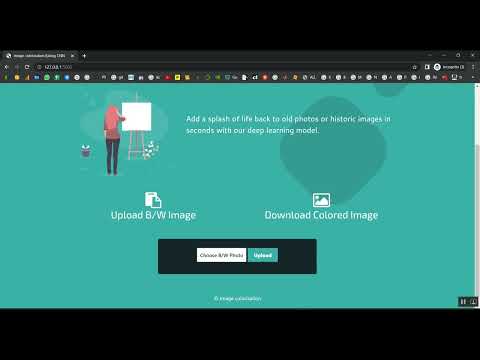
The Old Image to New Image Google Colab Project focuses on restoring and enhancing aged or damaged photographs using deep learning and image processing techniques implemented in Python. The system utilizes Convolutional Neural Networks (CNNs) and Generative Adversarial Networks (GANs) to automatically remove noise, scratches, and discoloration while improving image clarity and colorization. By using Google Colab, users can efficiently train and test the restoration model on GPU-enabled environments without complex local setup. The project takes an old or degraded image as input and outputs a restored, sharp, and visually enhanced version. This application is especially useful for historical image restoration, archival digitalization, and photo enhancement in personal and professional contexts.
Existing System
Existing systems for old photo restoration rely heavily on manual retouching using software like Photoshop or GIMP. These traditional methods are time-consuming, require expert skills, and are not scalable for large datasets. Additionally, some automated filters only apply surface-level enhancement without addressing deep-level damage such as missing textures, faded areas, or structural noise. As a result, the restored images often lack natural color tones, sharpness, and detail consistency.
Proposed System
The proposed system automates the process of restoring old and damaged images using a deep learning-based enhancement model. A pre-trained GAN architecture, such as Pix2Pix, CycleGAN, or DeOldify, is used to colorize grayscale images and reconstruct missing or corrupted details. The system processes images through multiple stages—denoising, contrast correction, color restoration, and fine-tuning—to produce a visually realistic and high-quality output. The model is executed on Google Colab, enabling easy access to GPU acceleration and integration with OpenCV, TensorFlow, and Keras. The project supports drag-and-drop image upload, automatic preprocessing, and output visualization, making it accessible even for non-technical users. This system significantly improves restoration accuracy and efficiency compared to manual or traditional enhancement methods.
Abstract
The Old Image to New Image Google Colab Project focuses on restoring and enhancing aged or damaged photographs using deep learning and image processing techniques implemented in Python. The system utilizes Convolutional Neural Networks (CNNs) and Generative Adversarial Networks (GANs) to automatically remove noise, scratches, and discoloration while improving image clarity and colorization. By using Google Colab, users can efficiently train and test the restoration model on GPU-enabled environments without complex local setup. The project takes an old or degraded image as input and outputs a restored, sharp, and visually enhanced version. This application is especially useful for historical image restoration, archival digitalization, and photo enhancement in personal and professional contexts.
Existing System
Existing systems for old photo restoration rely heavily on manual retouching using software like Photoshop or GIMP. These traditional methods are time-consuming, require expert skills, and are not scalable for large datasets. Additionally, some automated filters only apply surface-level enhancement without addressing deep-level damage such as missing textures, faded areas, or structural noise. As a result, the restored images often lack natural color tones, sharpness, and detail consistency.
Proposed System
The proposed system automates the process of restoring old and damaged images using a deep learning-based enhancement model. A pre-trained GAN architecture, such as Pix2Pix, CycleGAN, or DeOldify, is used to colorize grayscale images and reconstruct missing or corrupted details. The system processes images through multiple stages—denoising, contrast correction, color restoration, and fine-tuning—to produce a visually realistic and high-quality output. The model is executed on Google Colab, enabling easy access to GPU acceleration and integration with OpenCV, TensorFlow, and Keras. The project supports drag-and-drop image upload, automatic preprocessing, and output visualization, making it accessible even for non-technical users. This system significantly improves restoration accuracy and efficiency compared to manual or traditional enhancement methods.
Customer Reviews (0)
No reviews yet. Be the first!
Related Products
⭐ Featured

AI & ML Models
Zomato Restaurant Reviews Sentimental Analyzer in Python Projects
Zomato Restaurant Reviews Sentimental Analyzer in Python Projects
र 1000
⭐ Featured
⭐ Featured
AI & ML Models
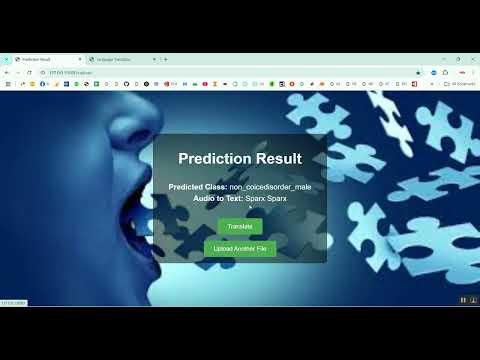
Voice Disorder Prediction using Audio Dataset in Python Projects
Voice Disorder Prediction using Audio Dataset in Python Projects
र 1000
AI & ML Models
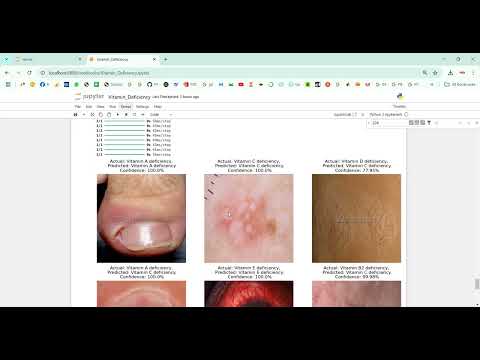
Vitamin Deficiency Detection Using Image Processing in Python Projects
Vitamin Deficiency Detection Using Image Processing in Python Projects
र 1000