AI & ML Models
0.0 (0 reviews) • 0 downloads
Natural Language Processing Word Extractions in Python Projects
र 1000
Natural Language Processing Word Extractions in Python Projects
Technical Details
Domain : Python
Database : Sqlite
Tools : Anaconda
Run Tools: VS Code
Database : Sqlite
Tools : Anaconda
Run Tools: VS Code
Secure Payment
Instant Download
GST Invoice
24/7 Support
About This Product
Natural Language Processing Word Extractions in Python Projects
Abstract
The Natural Language Processing (NLP) Word Extractions Project is a Python-based system designed to automatically extract meaningful words, keywords, and phrases from unstructured text data. The project leverages NLP techniques such as tokenization, part-of-speech tagging, stemming, lemmatization, and named entity recognition (NER) to identify relevant terms for text analysis, summarization, or search optimization. Implemented using Python libraries like NLTK, SpaCy, Pandas, and Scikit-learn, the system can process large datasets of documents, articles, or social media text, extracting essential information efficiently. This project is valuable for applications in text mining, sentiment analysis, content recommendation, and building search engines, helping users to quickly derive insights from vast textual data.
Existing System
Traditional word extraction systems often rely on simple methods such as manual keyword selection or basic frequency analysis, which are labor-intensive and prone to missing contextually important words. Many existing automated tools use only statistical approaches, like TF-IDF, without considering the syntactic or semantic context of words, leading to incomplete or irrelevant extractions. Additionally, most prior systems do not support large-scale or real-time text processing, limiting their effectiveness for applications like social media analysis, content summarization, or intelligent search.
Proposed System
The proposed NLP Word Extractions system introduces a more intelligent and context-aware approach for extracting meaningful words from unstructured text. The system preprocesses input text through tokenization, lowercasing, punctuation removal, and stopword elimination. Advanced NLP techniques such as POS tagging, lemmatization, and NER are applied to identify relevant nouns, verbs, named entities, and key phrases. The extracted words can then be ranked or filtered using TF-IDF or embedding-based similarity metrics to highlight the most informative terms. Python libraries like NLTK and SpaCy handle text preprocessing and feature extraction, while Pandas and NumPy manage dataset operations. The system can also integrate with machine learning models to perform downstream tasks such as text classification, clustering, or topic modeling. By automating and enhancing word extraction, this project provides an efficient and scalable solution for analyzing large-scale textual datasets in real time.
Abstract
The Natural Language Processing (NLP) Word Extractions Project is a Python-based system designed to automatically extract meaningful words, keywords, and phrases from unstructured text data. The project leverages NLP techniques such as tokenization, part-of-speech tagging, stemming, lemmatization, and named entity recognition (NER) to identify relevant terms for text analysis, summarization, or search optimization. Implemented using Python libraries like NLTK, SpaCy, Pandas, and Scikit-learn, the system can process large datasets of documents, articles, or social media text, extracting essential information efficiently. This project is valuable for applications in text mining, sentiment analysis, content recommendation, and building search engines, helping users to quickly derive insights from vast textual data.
Existing System
Traditional word extraction systems often rely on simple methods such as manual keyword selection or basic frequency analysis, which are labor-intensive and prone to missing contextually important words. Many existing automated tools use only statistical approaches, like TF-IDF, without considering the syntactic or semantic context of words, leading to incomplete or irrelevant extractions. Additionally, most prior systems do not support large-scale or real-time text processing, limiting their effectiveness for applications like social media analysis, content summarization, or intelligent search.
Proposed System
The proposed NLP Word Extractions system introduces a more intelligent and context-aware approach for extracting meaningful words from unstructured text. The system preprocesses input text through tokenization, lowercasing, punctuation removal, and stopword elimination. Advanced NLP techniques such as POS tagging, lemmatization, and NER are applied to identify relevant nouns, verbs, named entities, and key phrases. The extracted words can then be ranked or filtered using TF-IDF or embedding-based similarity metrics to highlight the most informative terms. Python libraries like NLTK and SpaCy handle text preprocessing and feature extraction, while Pandas and NumPy manage dataset operations. The system can also integrate with machine learning models to perform downstream tasks such as text classification, clustering, or topic modeling. By automating and enhancing word extraction, this project provides an efficient and scalable solution for analyzing large-scale textual datasets in real time.
Customer Reviews (0)
No reviews yet. Be the first!
Related Products
⭐ Featured
AI & ML Models
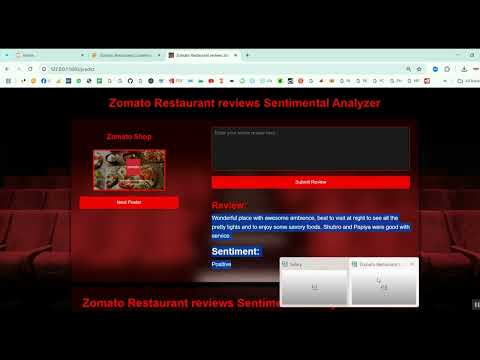
Zomato Restaurant Reviews Sentimental Analyzer in Python Projects
Zomato Restaurant Reviews Sentimental Analyzer in Python Projects
र 1000
⭐ Featured
⭐ Featured
AI & ML Models
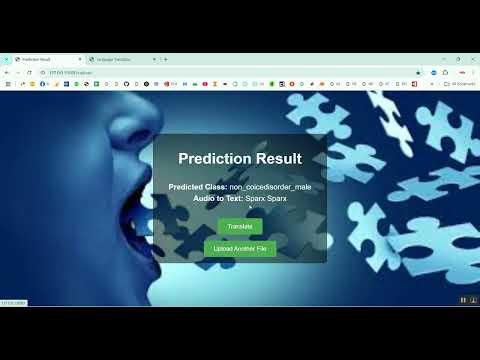
Voice Disorder Prediction using Audio Dataset in Python Projects
Voice Disorder Prediction using Audio Dataset in Python Projects
र 1000
AI & ML Models
Vitamin Deficiency Detection Using Image Processing in Python Projects
Vitamin Deficiency Detection Using Image Processing in Python Projects
र 1000