AI & ML Models
0.0 (0 reviews) • 0 downloads
Multi Source Detection Using Brain in Python Projects
र 1000
Multi Source Detection Using Brain in Python Projects
Technical Details
Domain : Python
Database : Sqlite
Tools : Anaconda
Run Tools: VS Code
Database : Sqlite
Tools : Anaconda
Run Tools: VS Code
Secure Payment
Instant Download
GST Invoice
24/7 Support
About This Product
Multi Source Detection Using Brain in Python Projects
Abstract
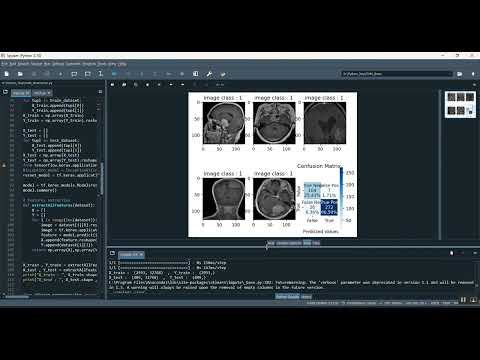
The Multi Source Detection Using Brain Project is a machine learning and signal processing–based system developed in Python to detect and classify information from multiple brain signal sources, such as EEG (electroencephalogram), fNIRS, or other neuroimaging modalities. The system aims to analyze complex brain activity patterns to detect cognitive states, emotions, or neurological anomalies by integrating signals from multiple sources for improved accuracy. Implemented using Python libraries like MNE, NumPy, SciPy, TensorFlow, and Keras, the system preprocesses raw brain signals, extracts key features, and applies deep learning models such as CNN, LSTM, or hybrid CNN-LSTM architectures for classification. This approach enhances the detection of neurological events, supports brain-computer interface (BCI) applications, and facilitates research in neuroscience, mental health, and cognitive monitoring.
Existing System
Existing brain signal detection systems often rely on single-source data analysis, such as using EEG signals alone, which limits detection accuracy due to noise, artifacts, or incomplete information. Traditional systems typically employ manual feature extraction techniques like Fourier transform or wavelet analysis, which are time-consuming and less effective for large-scale or multi-modal datasets. Many systems also lack real-time processing capabilities and cannot integrate multiple signal sources, making them unsuitable for complex applications like cognitive state prediction, emotion detection, or early diagnosis of neurological disorders.
Proposed System
The proposed Multi Source Detection Using Brain system integrates signals from multiple neuroimaging sources to provide a robust and accurate detection framework. The raw signals are first preprocessed to remove noise and artifacts using filtering, normalization, and independent component analysis (ICA). Feature extraction techniques are then applied to capture spatial, temporal, and frequency-domain patterns. The extracted features are input into deep learning models, such as CNN-LSTM hybrid networks, which capture both spatial patterns (via CNN) and temporal dependencies (via LSTM). The system classifies brain activity into categories such as attention levels, emotional states, or abnormal neurological events. Python libraries like MNE and SciPy handle signal processing, TensorFlow/Keras manage model training, and NumPy/Pandas assist in data management. By combining multi-source integration with advanced deep learning, the system achieves high accuracy, real-time processing, and scalability for neuroscience research and brain-computer interface applications.
Abstract
The Multi Source Detection Using Brain Project is a machine learning and signal processing–based system developed in Python to detect and classify information from multiple brain signal sources, such as EEG (electroencephalogram), fNIRS, or other neuroimaging modalities. The system aims to analyze complex brain activity patterns to detect cognitive states, emotions, or neurological anomalies by integrating signals from multiple sources for improved accuracy. Implemented using Python libraries like MNE, NumPy, SciPy, TensorFlow, and Keras, the system preprocesses raw brain signals, extracts key features, and applies deep learning models such as CNN, LSTM, or hybrid CNN-LSTM architectures for classification. This approach enhances the detection of neurological events, supports brain-computer interface (BCI) applications, and facilitates research in neuroscience, mental health, and cognitive monitoring.
Existing System
Existing brain signal detection systems often rely on single-source data analysis, such as using EEG signals alone, which limits detection accuracy due to noise, artifacts, or incomplete information. Traditional systems typically employ manual feature extraction techniques like Fourier transform or wavelet analysis, which are time-consuming and less effective for large-scale or multi-modal datasets. Many systems also lack real-time processing capabilities and cannot integrate multiple signal sources, making them unsuitable for complex applications like cognitive state prediction, emotion detection, or early diagnosis of neurological disorders.
Proposed System
The proposed Multi Source Detection Using Brain system integrates signals from multiple neuroimaging sources to provide a robust and accurate detection framework. The raw signals are first preprocessed to remove noise and artifacts using filtering, normalization, and independent component analysis (ICA). Feature extraction techniques are then applied to capture spatial, temporal, and frequency-domain patterns. The extracted features are input into deep learning models, such as CNN-LSTM hybrid networks, which capture both spatial patterns (via CNN) and temporal dependencies (via LSTM). The system classifies brain activity into categories such as attention levels, emotional states, or abnormal neurological events. Python libraries like MNE and SciPy handle signal processing, TensorFlow/Keras manage model training, and NumPy/Pandas assist in data management. By combining multi-source integration with advanced deep learning, the system achieves high accuracy, real-time processing, and scalability for neuroscience research and brain-computer interface applications.
Customer Reviews (0)
No reviews yet. Be the first!
Related Products
⭐ Featured

AI & ML Models
Zomato Restaurant Reviews Sentimental Analyzer in Python Projects
Zomato Restaurant Reviews Sentimental Analyzer in Python Projects
र 1000
⭐ Featured
⭐ Featured
AI & ML Models
Voice Disorder Prediction using Audio Dataset in Python Projects
Voice Disorder Prediction using Audio Dataset in Python Projects
र 1000
AI & ML Models
Vitamin Deficiency Detection Using Image Processing in Python Projects
Vitamin Deficiency Detection Using Image Processing in Python Projects
र 1000