AI & ML Models
0.0 (0 reviews) • 0 downloads
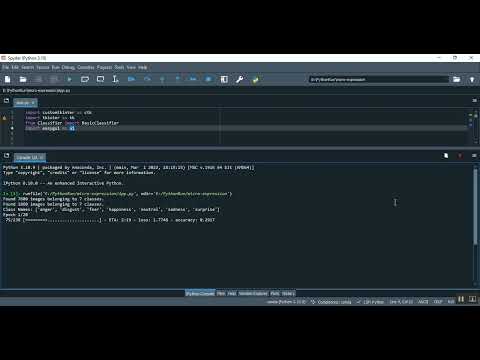
Micro Data Based expression Prediction TKinter in Python Projects
र 1000
Micro Data Based expression Prediction TKinter in Python Projects
Technical Details
Domain : Python
Database : Sqlite
Tools : Anaconda
Run Tools: VS Code
Database : Sqlite
Tools : Anaconda
Run Tools: VS Code
Secure Payment
Instant Download
GST Invoice
24/7 Support
About This Product
Micro Data Based expression Prediction TKinter in Python Projects
Abstract
The Micro Data Based Expression Prediction Tkinter Project is a machine learning-based desktop application developed in Python that predicts human emotional expressions from micro data inputs such as facial parameters, micro-expressions, or sensor-based emotional cues. The project utilizes micro-level features extracted from images or datasets to identify emotional states like happiness, sadness, anger, fear, or surprise. The system employs advanced machine learning (ML) or deep learning (DL) algorithms, including Convolutional Neural Networks (CNN) or Support Vector Machines (SVM), to analyze small-scale data variations that represent subtle emotional changes. Implemented using Tkinter, Python’s GUI library, this project provides an interactive interface where users can upload images or datasets and visualize the detected emotion in real time. This system has applications in psychology, human-computer interaction, surveillance, and emotion-aware computing environments.
Existing System
The existing emotion detection systems primarily focus on macro-level expressions, relying on large-scale facial movements or visible emotional cues. Such systems often fail to capture micro-expressions—brief, involuntary facial movements that reflect genuine emotions. Traditional methods depend heavily on manual analysis or basic image-processing techniques that lack the sensitivity to detect these subtle changes. Moreover, existing models often require complex setup or high-end computational resources, making them less suitable for real-time applications or desktop-based solutions. Additionally, most older systems lack a simple user interface, limiting accessibility for researchers and students.
Proposed System
The proposed Micro Data Based Expression Prediction system addresses these limitations by leveraging micro-expression datasets and machine learning algorithms to predict emotional states accurately. The system processes micro-level input data through feature extraction techniques such as edge detection, facial landmark identification, or pixel intensity variation analysis. The extracted features are then classified using a trained ML model, which predicts the corresponding emotion label. Developed with Tkinter, the project features an easy-to-use graphical interface where users can upload facial images, trigger real-time detection, and view results instantly. The application also visualizes prediction probabilities and performance metrics, allowing users to interpret model confidence levels. By combining ML accuracy with GUI-based interaction, this project creates an effective platform for studying and visualizing emotional recognition through micro-expressions.
Abstract
The Micro Data Based Expression Prediction Tkinter Project is a machine learning-based desktop application developed in Python that predicts human emotional expressions from micro data inputs such as facial parameters, micro-expressions, or sensor-based emotional cues. The project utilizes micro-level features extracted from images or datasets to identify emotional states like happiness, sadness, anger, fear, or surprise. The system employs advanced machine learning (ML) or deep learning (DL) algorithms, including Convolutional Neural Networks (CNN) or Support Vector Machines (SVM), to analyze small-scale data variations that represent subtle emotional changes. Implemented using Tkinter, Python’s GUI library, this project provides an interactive interface where users can upload images or datasets and visualize the detected emotion in real time. This system has applications in psychology, human-computer interaction, surveillance, and emotion-aware computing environments.
Existing System
The existing emotion detection systems primarily focus on macro-level expressions, relying on large-scale facial movements or visible emotional cues. Such systems often fail to capture micro-expressions—brief, involuntary facial movements that reflect genuine emotions. Traditional methods depend heavily on manual analysis or basic image-processing techniques that lack the sensitivity to detect these subtle changes. Moreover, existing models often require complex setup or high-end computational resources, making them less suitable for real-time applications or desktop-based solutions. Additionally, most older systems lack a simple user interface, limiting accessibility for researchers and students.
Proposed System
The proposed Micro Data Based Expression Prediction system addresses these limitations by leveraging micro-expression datasets and machine learning algorithms to predict emotional states accurately. The system processes micro-level input data through feature extraction techniques such as edge detection, facial landmark identification, or pixel intensity variation analysis. The extracted features are then classified using a trained ML model, which predicts the corresponding emotion label. Developed with Tkinter, the project features an easy-to-use graphical interface where users can upload facial images, trigger real-time detection, and view results instantly. The application also visualizes prediction probabilities and performance metrics, allowing users to interpret model confidence levels. By combining ML accuracy with GUI-based interaction, this project creates an effective platform for studying and visualizing emotional recognition through micro-expressions.
Customer Reviews (0)
No reviews yet. Be the first!
Related Products
⭐ Featured
AI & ML Models
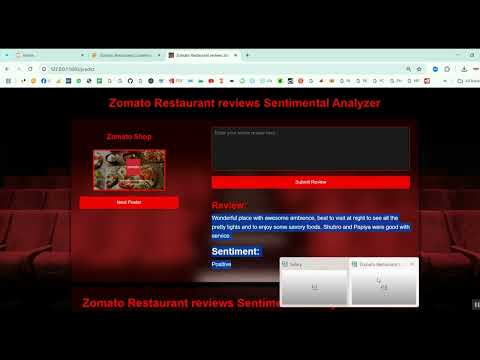
Zomato Restaurant Reviews Sentimental Analyzer in Python Projects
Zomato Restaurant Reviews Sentimental Analyzer in Python Projects
र 1000
⭐ Featured
⭐ Featured
AI & ML Models
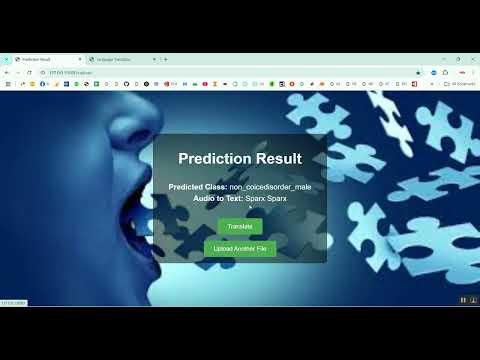
Voice Disorder Prediction using Audio Dataset in Python Projects
Voice Disorder Prediction using Audio Dataset in Python Projects
र 1000
AI & ML Models
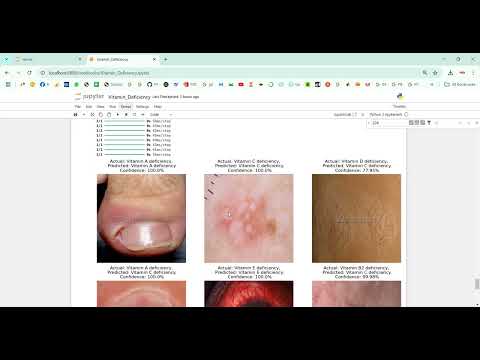
Vitamin Deficiency Detection Using Image Processing in Python Projects
Vitamin Deficiency Detection Using Image Processing in Python Projects
र 1000