AI & ML Models
0.0 (0 reviews) • 0 downloads
Micro Burst CNN BILSTM in Python Projects
र 1000
Micro Burst CNN BILSTM in Python Projects
Technical Details
Domain : Python
Database : Sqlite
Tools : Anaconda
Run Tools: VS Code
Database : Sqlite
Tools : Anaconda
Run Tools: VS Code
Secure Payment
Instant Download
GST Invoice
24/7 Support
About This Product
Micro Burst CNN BILSTM in Python Projects
Abstract
The Micro Burst CNN BiLSTM Project is a deep learning-based system developed in Python to detect and predict micro-burst events in data traffic or network environments. A micro-burst refers to a short, intense spike in data transmission that can cause network congestion, latency, and packet loss. Traditional detection methods often fail to capture these rapid fluctuations due to their short duration and high frequency. This project utilizes a hybrid deep learning architecture that combines Convolutional Neural Networks (CNN) for spatial feature extraction and Bidirectional Long Short-Term Memory (BiLSTM) networks for temporal pattern learning. The CNN component captures fine-grained patterns in data flow, while the BiLSTM analyzes sequential dependencies over time, ensuring accurate burst detection and prediction. Implemented in Python, the system processes network traffic datasets, extracts key metrics, and predicts micro-burst occurrences with improved precision and reliability.
Existing System
In the existing systems, micro-burst detection relies heavily on threshold-based or statistical analysis methods, which lack adaptability and struggle to detect short-duration, high-intensity bursts accurately. These systems often depend on predefined network rules that cannot generalize across different data rates or dynamic traffic conditions. Moreover, traditional machine learning approaches, such as linear regression or random forests, are not efficient in modeling the temporal dependencies inherent in micro-burst data. As a result, the detection accuracy remains low, and the response time to potential network disruptions is delayed, leading to performance degradation and packet loss in critical applications.
Proposed System
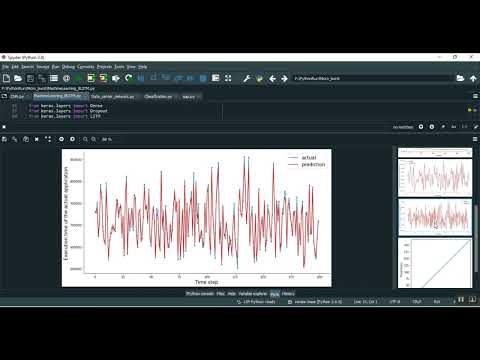
The proposed Micro Burst CNN BiLSTM system integrates both spatial and temporal learning capabilities to provide a robust, intelligent detection framework. The CNN layer extracts relevant features from high-dimensional traffic data, such as packet arrival rate, latency variation, and bandwidth usage, capturing local burst signatures. The extracted features are then passed to the BiLSTM layer, which models the sequential behavior of network data and predicts potential micro-burst events before they occur. This hybrid model enhances detection accuracy, reduces false alarms, and ensures faster response to dynamic network fluctuations. Developed in Python, the system uses libraries like TensorFlow, Keras, and Scikit-learn for training and evaluation. Visualization tools such as Matplotlib and Seaborn display real-time analysis and prediction graphs, helping network administrators make informed decisions. This approach can be extended to cloud computing, IoT, or telecommunication systems to improve overall data transmission reliability and performance.
Abstract
The Micro Burst CNN BiLSTM Project is a deep learning-based system developed in Python to detect and predict micro-burst events in data traffic or network environments. A micro-burst refers to a short, intense spike in data transmission that can cause network congestion, latency, and packet loss. Traditional detection methods often fail to capture these rapid fluctuations due to their short duration and high frequency. This project utilizes a hybrid deep learning architecture that combines Convolutional Neural Networks (CNN) for spatial feature extraction and Bidirectional Long Short-Term Memory (BiLSTM) networks for temporal pattern learning. The CNN component captures fine-grained patterns in data flow, while the BiLSTM analyzes sequential dependencies over time, ensuring accurate burst detection and prediction. Implemented in Python, the system processes network traffic datasets, extracts key metrics, and predicts micro-burst occurrences with improved precision and reliability.
Existing System
In the existing systems, micro-burst detection relies heavily on threshold-based or statistical analysis methods, which lack adaptability and struggle to detect short-duration, high-intensity bursts accurately. These systems often depend on predefined network rules that cannot generalize across different data rates or dynamic traffic conditions. Moreover, traditional machine learning approaches, such as linear regression or random forests, are not efficient in modeling the temporal dependencies inherent in micro-burst data. As a result, the detection accuracy remains low, and the response time to potential network disruptions is delayed, leading to performance degradation and packet loss in critical applications.
Proposed System
The proposed Micro Burst CNN BiLSTM system integrates both spatial and temporal learning capabilities to provide a robust, intelligent detection framework. The CNN layer extracts relevant features from high-dimensional traffic data, such as packet arrival rate, latency variation, and bandwidth usage, capturing local burst signatures. The extracted features are then passed to the BiLSTM layer, which models the sequential behavior of network data and predicts potential micro-burst events before they occur. This hybrid model enhances detection accuracy, reduces false alarms, and ensures faster response to dynamic network fluctuations. Developed in Python, the system uses libraries like TensorFlow, Keras, and Scikit-learn for training and evaluation. Visualization tools such as Matplotlib and Seaborn display real-time analysis and prediction graphs, helping network administrators make informed decisions. This approach can be extended to cloud computing, IoT, or telecommunication systems to improve overall data transmission reliability and performance.
Customer Reviews (0)
No reviews yet. Be the first!
Related Products
⭐ Featured

AI & ML Models
Zomato Restaurant Reviews Sentimental Analyzer in Python Projects
Zomato Restaurant Reviews Sentimental Analyzer in Python Projects
र 1000
⭐ Featured
⭐ Featured

AI & ML Models
Voice Disorder Prediction using Audio Dataset in Python Projects
Voice Disorder Prediction using Audio Dataset in Python Projects
र 1000

AI & ML Models
Vitamin Deficiency Detection Using Image Processing in Python Projects
Vitamin Deficiency Detection Using Image Processing in Python Projects
र 1000