
AI & ML Models
0.0 (0 reviews) • 0 downloads
Machine Language Translate Flask App in Python Projects
र 1000
Machine Language Translate Flask App in Python Projects
Technical Details
Domain : Python
Database : Sqlite
Tools : Anaconda
Run Tools: VS Code
Database : Sqlite
Tools : Anaconda
Run Tools: VS Code
Secure Payment
Instant Download
GST Invoice
24/7 Support
About This Product
Machine Language Translate Flask App in Python Projects
Abstract
The project “Machine Language Translate Flask App in Python” focuses on developing an intelligent system for translating text from one language to another using machine learning and natural language processing (NLP) techniques. The system leverages deep learning models such as sequence-to-sequence (Seq2Seq) architectures or Transformer-based models to automatically generate accurate translations. A Flask web application is integrated to provide a user-friendly interface where users can input text and receive translations in real time. Python serves as the primary development environment, utilizing libraries such as TensorFlow, Keras, NLTK, and Hugging Face Transformers for model training, preprocessing, and deployment. This project provides a scalable and interactive solution for multilingual communication, content translation, and language learning applications.
Existing System
Existing machine translation systems primarily rely on rule-based approaches or statistical machine translation (SMT) models. These methods require extensive linguistic rules, are difficult to scale, and often fail to capture contextual meaning, idiomatic expressions, or semantic nuances. Conventional models also struggle with long sentences, rare vocabulary, and low-resource languages. Furthermore, many current systems lack real-time, interactive interfaces, making them less practical for web-based applications or immediate translation needs. Accuracy and contextual understanding are often limited, reducing their effectiveness for modern applications such as chatbots, content localization, or multilingual education.
Proposed System
The proposed system introduces a deep learning–based machine translation framework integrated with a Flask web interface. Input text is first preprocessed using tokenization, normalization, and embedding techniques to convert it into a numerical format suitable for neural network processing. The model, based on Seq2Seq or Transformer architecture, learns to generate translations by capturing contextual and semantic relationships between the source and target languages. The trained model is deployed using Flask, allowing users to submit text via a web page and receive real-time translations. Python libraries such as TensorFlow/Keras handle model development and training, NLTK and Hugging Face Transformers manage preprocessing and tokenization, and Flask ensures smooth web-based interaction. This system provides an efficient, scalable, and accurate solution for multilingual translation, suitable for educational tools, global communication, and automated content generation.
Abstract
The project “Machine Language Translate Flask App in Python” focuses on developing an intelligent system for translating text from one language to another using machine learning and natural language processing (NLP) techniques. The system leverages deep learning models such as sequence-to-sequence (Seq2Seq) architectures or Transformer-based models to automatically generate accurate translations. A Flask web application is integrated to provide a user-friendly interface where users can input text and receive translations in real time. Python serves as the primary development environment, utilizing libraries such as TensorFlow, Keras, NLTK, and Hugging Face Transformers for model training, preprocessing, and deployment. This project provides a scalable and interactive solution for multilingual communication, content translation, and language learning applications.
Existing System
Existing machine translation systems primarily rely on rule-based approaches or statistical machine translation (SMT) models. These methods require extensive linguistic rules, are difficult to scale, and often fail to capture contextual meaning, idiomatic expressions, or semantic nuances. Conventional models also struggle with long sentences, rare vocabulary, and low-resource languages. Furthermore, many current systems lack real-time, interactive interfaces, making them less practical for web-based applications or immediate translation needs. Accuracy and contextual understanding are often limited, reducing their effectiveness for modern applications such as chatbots, content localization, or multilingual education.
Proposed System
The proposed system introduces a deep learning–based machine translation framework integrated with a Flask web interface. Input text is first preprocessed using tokenization, normalization, and embedding techniques to convert it into a numerical format suitable for neural network processing. The model, based on Seq2Seq or Transformer architecture, learns to generate translations by capturing contextual and semantic relationships between the source and target languages. The trained model is deployed using Flask, allowing users to submit text via a web page and receive real-time translations. Python libraries such as TensorFlow/Keras handle model development and training, NLTK and Hugging Face Transformers manage preprocessing and tokenization, and Flask ensures smooth web-based interaction. This system provides an efficient, scalable, and accurate solution for multilingual translation, suitable for educational tools, global communication, and automated content generation.
Customer Reviews (0)
No reviews yet. Be the first!
Related Products
⭐ Featured
AI & ML Models
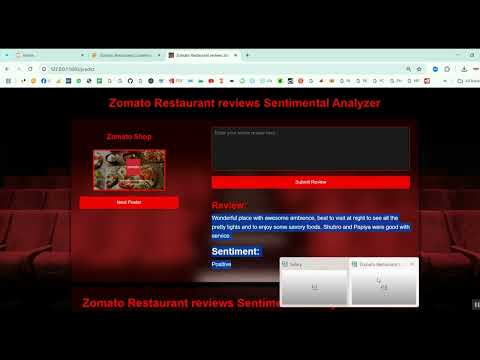
Zomato Restaurant Reviews Sentimental Analyzer in Python Projects
Zomato Restaurant Reviews Sentimental Analyzer in Python Projects
र 1000
⭐ Featured
⭐ Featured
AI & ML Models
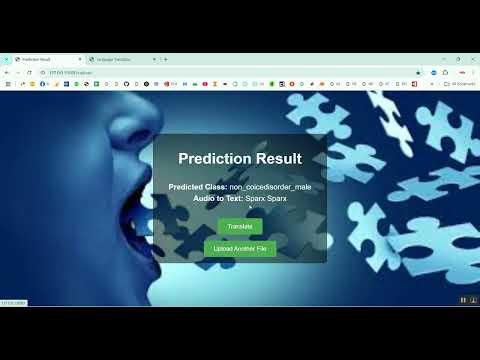
Voice Disorder Prediction using Audio Dataset in Python Projects
Voice Disorder Prediction using Audio Dataset in Python Projects
र 1000
AI & ML Models
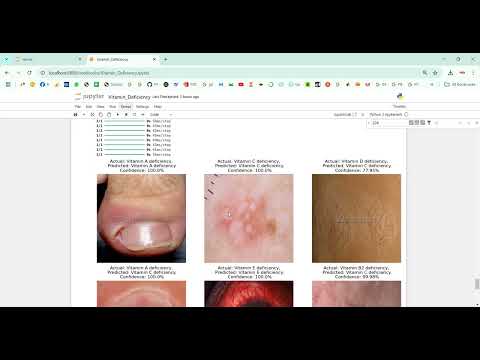
Vitamin Deficiency Detection Using Image Processing in Python Projects
Vitamin Deficiency Detection Using Image Processing in Python Projects
र 1000