AI & ML Models
0.0 (0 reviews) • 0 downloads
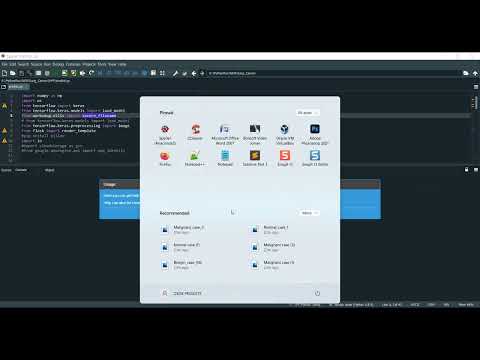
Lung Pancreatic Cancer CNN Train Flask App in Python Projects
र 1000
Lung Pancreatic Cancer CNN Train Flask App in Python Projects
Technical Details
Domain : Python
Database : Sqlite
Tools : Anaconda
Run Tools: VS Code
Database : Sqlite
Tools : Anaconda
Run Tools: VS Code
Secure Payment
Instant Download
GST Invoice
24/7 Support
About This Product
Lung Pancreatic Cancer CNN Train Flask App in Python Projects
Abstract
The project “Lung Pancreatic Cancer CNN Train Flask App in Python” aims to develop an intelligent medical diagnostic system that can detect and classify cancerous cells from lung and pancreatic image datasets using Convolutional Neural Networks (CNN). Early and accurate diagnosis of cancer significantly improves treatment outcomes, yet manual examination of medical images is time-consuming and prone to human error. This project leverages deep learning techniques to automate the cancer detection process by training a CNN model capable of identifying cancerous patterns in CT or MRI scans. The trained model is deployed as a Flask web application, allowing users to upload medical images and receive real-time classification results. Built using Python, TensorFlow/Keras, OpenCV, and Flask, the system provides an interactive interface for clinicians, researchers, and students to perform cancer detection with enhanced accuracy and efficiency.
Existing System
The existing cancer detection systems mostly depend on manual inspection by radiologists or utilize traditional image processing methods that rely on handcrafted features. These approaches often fail to capture the complex spatial features of medical images and are limited in scalability and accuracy. Conventional classifiers like SVM or logistic regression perform inadequately when dealing with high-dimensional imaging data. Moreover, most systems lack user-friendly deployment interfaces, making them difficult to integrate into real-world clinical workflows. The absence of deep learning automation and web-based accessibility in traditional methods restricts their usability in large-scale diagnostic environments.
Proposed System
The proposed system introduces a deep learning-based diagnostic model trained using CNN architecture for automated lung and pancreatic cancer classification. The workflow includes data preprocessing, image normalization, and augmentation to enhance training accuracy. The CNN model is designed to extract spatial and textural features from input medical images, followed by fully connected layers for classification into cancerous and non-cancerous categories. After model training, it is integrated into a Flask-based web interface where users can upload images and view prediction results in real time. The system employs Python libraries such as TensorFlow or Keras for model building, OpenCV for image handling, and Matplotlib for visualization. By combining CNN’s feature extraction power with Flask’s lightweight deployment capability, the system offers a reliable and accessible solution for early cancer detection and clinical decision support.
Abstract
The project “Lung Pancreatic Cancer CNN Train Flask App in Python” aims to develop an intelligent medical diagnostic system that can detect and classify cancerous cells from lung and pancreatic image datasets using Convolutional Neural Networks (CNN). Early and accurate diagnosis of cancer significantly improves treatment outcomes, yet manual examination of medical images is time-consuming and prone to human error. This project leverages deep learning techniques to automate the cancer detection process by training a CNN model capable of identifying cancerous patterns in CT or MRI scans. The trained model is deployed as a Flask web application, allowing users to upload medical images and receive real-time classification results. Built using Python, TensorFlow/Keras, OpenCV, and Flask, the system provides an interactive interface for clinicians, researchers, and students to perform cancer detection with enhanced accuracy and efficiency.
Existing System
The existing cancer detection systems mostly depend on manual inspection by radiologists or utilize traditional image processing methods that rely on handcrafted features. These approaches often fail to capture the complex spatial features of medical images and are limited in scalability and accuracy. Conventional classifiers like SVM or logistic regression perform inadequately when dealing with high-dimensional imaging data. Moreover, most systems lack user-friendly deployment interfaces, making them difficult to integrate into real-world clinical workflows. The absence of deep learning automation and web-based accessibility in traditional methods restricts their usability in large-scale diagnostic environments.
Proposed System
The proposed system introduces a deep learning-based diagnostic model trained using CNN architecture for automated lung and pancreatic cancer classification. The workflow includes data preprocessing, image normalization, and augmentation to enhance training accuracy. The CNN model is designed to extract spatial and textural features from input medical images, followed by fully connected layers for classification into cancerous and non-cancerous categories. After model training, it is integrated into a Flask-based web interface where users can upload images and view prediction results in real time. The system employs Python libraries such as TensorFlow or Keras for model building, OpenCV for image handling, and Matplotlib for visualization. By combining CNN’s feature extraction power with Flask’s lightweight deployment capability, the system offers a reliable and accessible solution for early cancer detection and clinical decision support.
Customer Reviews (0)
No reviews yet. Be the first!
Related Products
⭐ Featured
AI & ML Models
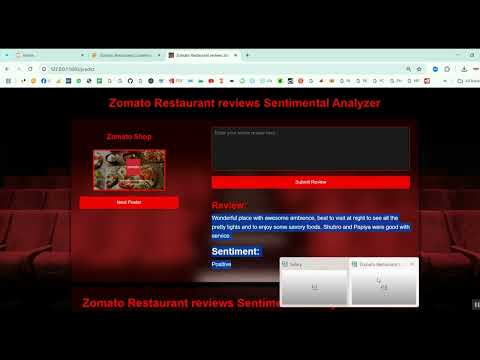
Zomato Restaurant Reviews Sentimental Analyzer in Python Projects
Zomato Restaurant Reviews Sentimental Analyzer in Python Projects
र 1000
⭐ Featured
⭐ Featured
AI & ML Models
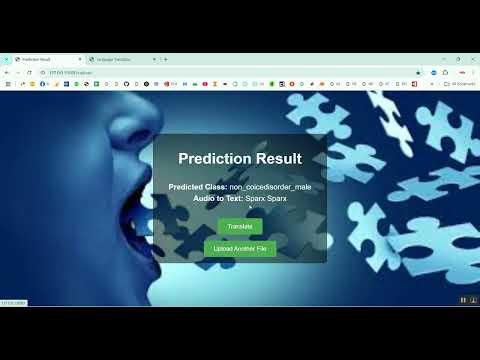
Voice Disorder Prediction using Audio Dataset in Python Projects
Voice Disorder Prediction using Audio Dataset in Python Projects
र 1000
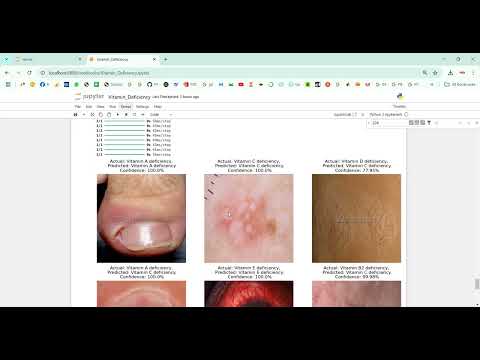
AI & ML Models
Vitamin Deficiency Detection Using Image Processing in Python Projects
Vitamin Deficiency Detection Using Image Processing in Python Projects
र 1000