AI & ML Models
0.0 (0 reviews) • 0 downloads
LSTM Offloading Train in Python Projects
र 1000
LSTM Offloading Train in Python Projects
Technical Details
Domain : Python
Database : Sqlite
Tools : Anaconda
Run Tools: VS Code
Database : Sqlite
Tools : Anaconda
Run Tools: VS Code
Secure Payment
Instant Download
GST Invoice
24/7 Support
About This Product
LSTM Offloading Train in Python Projects
Abstract
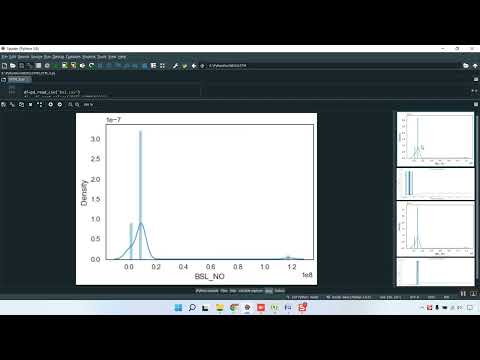
The project “LSTM Offloading Train in Python” focuses on developing an intelligent and efficient offloading framework using Long Short-Term Memory (LSTM) networks to predict and manage computational workloads between devices and cloud or edge servers. In modern computing environments such as IoT, mobile systems, and edge networks, efficient task offloading is essential to optimize resource utilization, reduce latency, and improve energy efficiency. The proposed system employs an LSTM model trained on real-time system metrics like CPU usage, memory consumption, bandwidth, and task complexity to predict the best offloading decisions dynamically. Python is used as the development environment, integrating libraries like TensorFlow, Keras, and NumPy for deep learning model training. This predictive offloading approach enhances performance and responsiveness in distributed computing environments by enabling intelligent decision-making based on temporal workload patterns.
Existing System
Traditional task offloading mechanisms rely on static or rule-based algorithms that fail to adapt to dynamic network and device conditions. These systems typically make offloading decisions based on fixed thresholds such as CPU load or bandwidth availability, which can result in inefficient resource use and increased latency. Furthermore, existing models do not effectively handle sequential dependencies in workload data, making them unsuitable for predicting future system states. The lack of temporal modeling limits the scalability and adaptability of conventional offloading strategies, often leading to higher energy consumption and degraded performance in mobile or IoT environments.
Proposed System
The proposed system introduces a machine learning-based dynamic offloading model powered by an LSTM neural network that can learn temporal relationships from sequential workload data. The LSTM model is trained using time-series datasets that include system utilization parameters and network metrics. During operation, the trained model predicts whether tasks should be executed locally or offloaded to the cloud or edge node for optimal performance. The system is developed using Python, leveraging TensorFlow or Keras for deep learning implementation, Pandas for data handling, and Matplotlib for result visualization. The model continuously learns from feedback data, making it adaptive to changing conditions. This LSTM-based offloading strategy achieves higher accuracy, reduced latency, and improved system throughput compared to conventional methods, offering an intelligent and scalable solution for distributed and mobile computing environments.
Abstract
The project “LSTM Offloading Train in Python” focuses on developing an intelligent and efficient offloading framework using Long Short-Term Memory (LSTM) networks to predict and manage computational workloads between devices and cloud or edge servers. In modern computing environments such as IoT, mobile systems, and edge networks, efficient task offloading is essential to optimize resource utilization, reduce latency, and improve energy efficiency. The proposed system employs an LSTM model trained on real-time system metrics like CPU usage, memory consumption, bandwidth, and task complexity to predict the best offloading decisions dynamically. Python is used as the development environment, integrating libraries like TensorFlow, Keras, and NumPy for deep learning model training. This predictive offloading approach enhances performance and responsiveness in distributed computing environments by enabling intelligent decision-making based on temporal workload patterns.
Existing System
Traditional task offloading mechanisms rely on static or rule-based algorithms that fail to adapt to dynamic network and device conditions. These systems typically make offloading decisions based on fixed thresholds such as CPU load or bandwidth availability, which can result in inefficient resource use and increased latency. Furthermore, existing models do not effectively handle sequential dependencies in workload data, making them unsuitable for predicting future system states. The lack of temporal modeling limits the scalability and adaptability of conventional offloading strategies, often leading to higher energy consumption and degraded performance in mobile or IoT environments.
Proposed System
The proposed system introduces a machine learning-based dynamic offloading model powered by an LSTM neural network that can learn temporal relationships from sequential workload data. The LSTM model is trained using time-series datasets that include system utilization parameters and network metrics. During operation, the trained model predicts whether tasks should be executed locally or offloaded to the cloud or edge node for optimal performance. The system is developed using Python, leveraging TensorFlow or Keras for deep learning implementation, Pandas for data handling, and Matplotlib for result visualization. The model continuously learns from feedback data, making it adaptive to changing conditions. This LSTM-based offloading strategy achieves higher accuracy, reduced latency, and improved system throughput compared to conventional methods, offering an intelligent and scalable solution for distributed and mobile computing environments.
Customer Reviews (0)
No reviews yet. Be the first!
Related Products
⭐ Featured
AI & ML Models
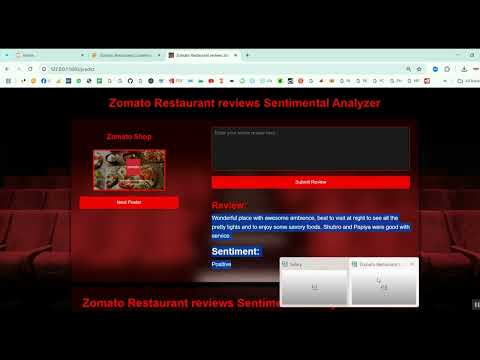
Zomato Restaurant Reviews Sentimental Analyzer in Python Projects
Zomato Restaurant Reviews Sentimental Analyzer in Python Projects
र 1000
⭐ Featured
⭐ Featured
AI & ML Models
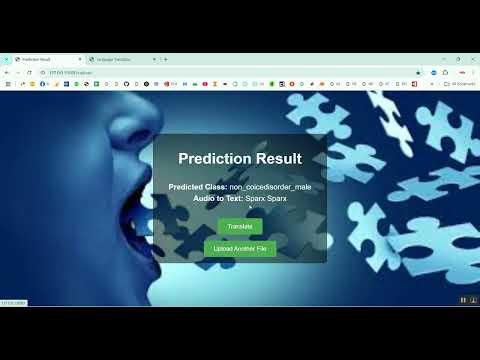
Voice Disorder Prediction using Audio Dataset in Python Projects
Voice Disorder Prediction using Audio Dataset in Python Projects
र 1000

AI & ML Models
Vitamin Deficiency Detection Using Image Processing in Python Projects
Vitamin Deficiency Detection Using Image Processing in Python Projects
र 1000