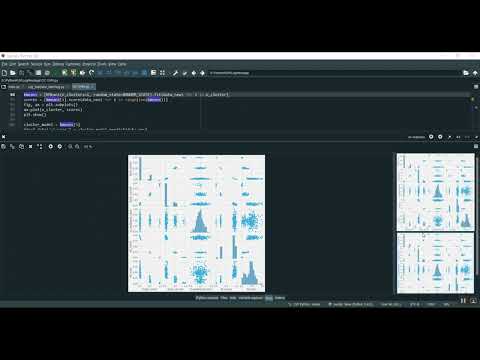
AI & ML Models
0.0 (0 reviews) • 0 downloads
Log Message Train Classification in Python Projects
र 1000
Log Message Train Classification in Python Projects
Technical Details
Domain : Python
Database : Sqlite
Tools : Anaconda
Run Tools: VS Code
Database : Sqlite
Tools : Anaconda
Run Tools: VS Code
Secure Payment
Instant Download
GST Invoice
24/7 Support
About This Product
Log Message Train Classification in Python Projects
Abstract
The project “Log Message Train Classification in Python” focuses on the automated categorization of log messages generated by software systems, servers, and applications. Log messages are crucial for understanding the operational status of a system, identifying bugs, performance bottlenecks, and potential security threats. However, manual analysis of large volumes of logs is time-consuming and error-prone. This project applies machine learning (ML) classification models to automatically train and classify log messages into meaningful categories such as error, warning, info, or debug. Python serves as the core development environment, utilizing libraries like Scikit-learn, TensorFlow, Pandas, and NumPy to handle preprocessing, model training, and evaluation. The trained classifier improves system monitoring and anomaly detection efficiency by learning patterns from log text data, enabling developers and administrators to respond to issues faster and with greater accuracy.
Existing System
The existing log analysis systems are primarily rule-based or rely on manual inspection of logs using keyword searches and filtering tools. These methods lack scalability when dealing with massive amounts of data produced by distributed systems. Traditional systems also fail to detect unseen error types or subtle log pattern variations because they are not adaptive or data-driven. The manual approach increases human workload, delays issue resolution, and often leads to missed anomalies. Moreover, rule-based systems require continuous updates and maintenance whenever log formats or application versions change, making them less efficient and error-prone in dynamic environments.
Proposed System
The proposed system introduces a machine learning-based log classification framework that automatically learns the patterns and semantics of log messages from historical data. The workflow includes text preprocessing techniques such as tokenization, stopword removal, and vectorization using TF-IDF or word embeddings to convert textual logs into numerical features. The processed data is then used to train classification models like Logistic Regression, Random Forest, or Neural Networks to categorize logs into predefined classes. The system is developed in Python, integrating libraries like Scikit-learn for ML algorithms, Pandas for data manipulation, and Matplotlib for visualization. The trained model can detect anomalies, classify new log entries in real-time, and enhance the observability of system operations. This intelligent approach improves reliability, automates diagnostics, and supports proactive maintenance in complex software infrastructures.
Abstract
The project “Log Message Train Classification in Python” focuses on the automated categorization of log messages generated by software systems, servers, and applications. Log messages are crucial for understanding the operational status of a system, identifying bugs, performance bottlenecks, and potential security threats. However, manual analysis of large volumes of logs is time-consuming and error-prone. This project applies machine learning (ML) classification models to automatically train and classify log messages into meaningful categories such as error, warning, info, or debug. Python serves as the core development environment, utilizing libraries like Scikit-learn, TensorFlow, Pandas, and NumPy to handle preprocessing, model training, and evaluation. The trained classifier improves system monitoring and anomaly detection efficiency by learning patterns from log text data, enabling developers and administrators to respond to issues faster and with greater accuracy.
Existing System
The existing log analysis systems are primarily rule-based or rely on manual inspection of logs using keyword searches and filtering tools. These methods lack scalability when dealing with massive amounts of data produced by distributed systems. Traditional systems also fail to detect unseen error types or subtle log pattern variations because they are not adaptive or data-driven. The manual approach increases human workload, delays issue resolution, and often leads to missed anomalies. Moreover, rule-based systems require continuous updates and maintenance whenever log formats or application versions change, making them less efficient and error-prone in dynamic environments.
Proposed System
The proposed system introduces a machine learning-based log classification framework that automatically learns the patterns and semantics of log messages from historical data. The workflow includes text preprocessing techniques such as tokenization, stopword removal, and vectorization using TF-IDF or word embeddings to convert textual logs into numerical features. The processed data is then used to train classification models like Logistic Regression, Random Forest, or Neural Networks to categorize logs into predefined classes. The system is developed in Python, integrating libraries like Scikit-learn for ML algorithms, Pandas for data manipulation, and Matplotlib for visualization. The trained model can detect anomalies, classify new log entries in real-time, and enhance the observability of system operations. This intelligent approach improves reliability, automates diagnostics, and supports proactive maintenance in complex software infrastructures.
Customer Reviews (0)
No reviews yet. Be the first!
Related Products
⭐ Featured
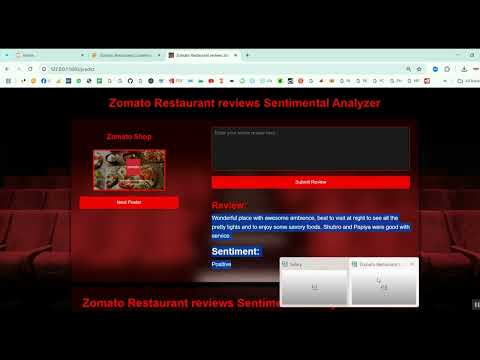
AI & ML Models
Zomato Restaurant Reviews Sentimental Analyzer in Python Projects
Zomato Restaurant Reviews Sentimental Analyzer in Python Projects
र 1000
⭐ Featured
⭐ Featured
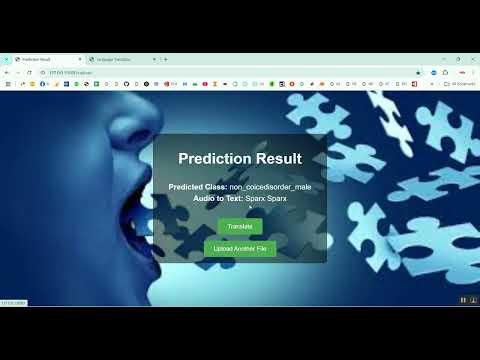
AI & ML Models
Voice Disorder Prediction using Audio Dataset in Python Projects
Voice Disorder Prediction using Audio Dataset in Python Projects
र 1000

AI & ML Models
Vitamin Deficiency Detection Using Image Processing in Python Projects
Vitamin Deficiency Detection Using Image Processing in Python Projects
र 1000