AI & ML Models
0.0 (0 reviews) • 0 downloads
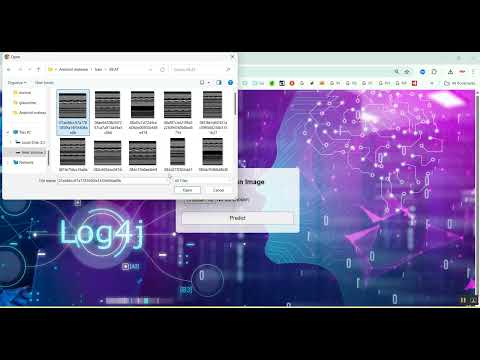
Live Android Malware Attack Detection using Image Dataset in Python Projects
र 1000
Live Android Malware Attack Detection using Image Dataset in Python Projects
Technical Details
Domain : Python
Database : Sqlite
Tools : Anaconda
Run Tools: VS Code
Database : Sqlite
Tools : Anaconda
Run Tools: VS Code
Secure Payment
Instant Download
GST Invoice
24/7 Support
About This Product
Live Android Malware Attack Detection using Image Dataset in Python Projects
Abstract
Android devices are increasingly targeted by malware due to their widespread use, making real-time malware detection critical for device security and user privacy. The project Live Android Malware Attack Detection using Image Dataset in Python Projects focuses on developing an intelligent system that converts Android application files (APKs) into image representations and detects malicious patterns using deep learning. Python is used as the development platform because of its strong libraries for image processing, machine learning, and deep learning, including OpenCV, TensorFlow, Keras, and PyTorch. By analyzing visual representations of app binaries, the system can classify apps as malicious or benign in live environments, providing automated, scalable, and rapid detection to prevent malware infections on Android devices.
Existing System
Existing Android malware detection methods primarily rely on signature-based approaches, heuristic analysis, or static code inspection. While effective for known malware, these methods struggle against new, obfuscated, or polymorphic malware, making them insufficient for live detection scenarios. Dynamic analysis systems simulate app behavior in sandboxed environments, but they are resource-intensive, slow, and unsuitable for real-time monitoring. Some research methods use machine learning on extracted features like permissions, API calls, or opcode sequences, but these approaches often require manual feature engineering and cannot fully capture hidden malicious patterns. Consequently, existing systems either lack speed, accuracy, or adaptability for evolving malware threats.
Proposed System
The proposed system introduces a Python-based live malware detection framework using image datasets generated from APK files. The system converts APK bytecode, opcode sequences, or memory dumps into grayscale or RGB images, capturing structural and behavioral patterns of apps. Preprocessing techniques such as normalization, resizing, and augmentation enhance image quality and improve model generalization. Deep learning models, including Convolutional Neural Networks (CNNs) and transfer learning architectures like ResNet or MobileNet, are trained to classify apps as benign or malicious. The system supports live monitoring by analyzing newly installed or running apps, generating real-time alerts for detected threats. Performance is evaluated using metrics such as accuracy, precision, recall, F1-score, and ROC-AUC. By integrating image-based analysis, deep learning, and live monitoring, this system provides a scalable, automated, and efficient solution to enhance Android device security and protect users from evolving malware attacks.
Abstract
Android devices are increasingly targeted by malware due to their widespread use, making real-time malware detection critical for device security and user privacy. The project Live Android Malware Attack Detection using Image Dataset in Python Projects focuses on developing an intelligent system that converts Android application files (APKs) into image representations and detects malicious patterns using deep learning. Python is used as the development platform because of its strong libraries for image processing, machine learning, and deep learning, including OpenCV, TensorFlow, Keras, and PyTorch. By analyzing visual representations of app binaries, the system can classify apps as malicious or benign in live environments, providing automated, scalable, and rapid detection to prevent malware infections on Android devices.
Existing System
Existing Android malware detection methods primarily rely on signature-based approaches, heuristic analysis, or static code inspection. While effective for known malware, these methods struggle against new, obfuscated, or polymorphic malware, making them insufficient for live detection scenarios. Dynamic analysis systems simulate app behavior in sandboxed environments, but they are resource-intensive, slow, and unsuitable for real-time monitoring. Some research methods use machine learning on extracted features like permissions, API calls, or opcode sequences, but these approaches often require manual feature engineering and cannot fully capture hidden malicious patterns. Consequently, existing systems either lack speed, accuracy, or adaptability for evolving malware threats.
Proposed System
The proposed system introduces a Python-based live malware detection framework using image datasets generated from APK files. The system converts APK bytecode, opcode sequences, or memory dumps into grayscale or RGB images, capturing structural and behavioral patterns of apps. Preprocessing techniques such as normalization, resizing, and augmentation enhance image quality and improve model generalization. Deep learning models, including Convolutional Neural Networks (CNNs) and transfer learning architectures like ResNet or MobileNet, are trained to classify apps as benign or malicious. The system supports live monitoring by analyzing newly installed or running apps, generating real-time alerts for detected threats. Performance is evaluated using metrics such as accuracy, precision, recall, F1-score, and ROC-AUC. By integrating image-based analysis, deep learning, and live monitoring, this system provides a scalable, automated, and efficient solution to enhance Android device security and protect users from evolving malware attacks.
Customer Reviews (0)
No reviews yet. Be the first!
Related Products
⭐ Featured

AI & ML Models
Zomato Restaurant Reviews Sentimental Analyzer in Python Projects
Zomato Restaurant Reviews Sentimental Analyzer in Python Projects
र 1000
⭐ Featured
⭐ Featured

AI & ML Models
Voice Disorder Prediction using Audio Dataset in Python Projects
Voice Disorder Prediction using Audio Dataset in Python Projects
र 1000
AI & ML Models
Vitamin Deficiency Detection Using Image Processing in Python Projects
Vitamin Deficiency Detection Using Image Processing in Python Projects
र 1000