AI & ML Models
0.0 (0 reviews) • 0 downloads
Light Field Image Segmentation in Python Projects
र 1000
Light Field Image Segmentation in Python Projects
Technical Details
Domain : Python
Database : Sqlite
Tools : Anaconda
Run Tools: VS Code
Database : Sqlite
Tools : Anaconda
Run Tools: VS Code
Secure Payment
Instant Download
GST Invoice
24/7 Support
About This Product
Light Field Image Segmentation in Python Projects
Abstract
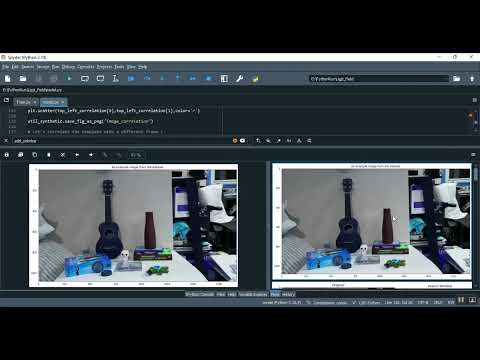
Light field image segmentation is an advanced image processing approach that leverages depth and angular information from light field data to accurately segment objects within complex visual scenes. The project “Light Field Image Segmentation in Python” aims to design a Python-based system capable of segmenting light field images into meaningful regions using machine learning and deep learning techniques. The system utilizes the multi-view and depth information contained in light field images to perform precise object boundary detection and background separation. Implemented using Python libraries such as OpenCV, NumPy, TensorFlow, and Scikit-image, this project enhances traditional image segmentation by incorporating 3D spatial cues and angular variations. The resulting model provides superior segmentation accuracy and visual quality, making it highly useful for applications in computer vision, autonomous systems, augmented reality, and computational photography.
Existing System
Existing segmentation systems generally depend on 2D image data, limiting their ability to distinguish overlapping objects or handle complex depth variations. Traditional methods such as thresholding, region growing, and clustering fail to perform well when objects have similar colors or textures but differ in depth. Moreover, most existing systems cannot fully utilize light field data’s rich spatial and angular features, leading to segmentation errors in scenes with occlusion or fine object boundaries. Computational limitations and lack of depth-aware processing further reduce accuracy and robustness, especially in dynamic or low-light environments.
Proposed System
The proposed system introduces a deep learning–based light field image segmentation framework that processes both spatial and angular dimensions of light field data for improved segmentation performance. Input images are preprocessed to extract depth maps, refocused images, or epipolar plane images (EPIs), which serve as input features for the segmentation model. A Convolutional Neural Network (CNN) or U-Net–based architecture is trained to perform pixel-wise segmentation, utilizing both color and depth information to accurately separate objects from the background. Python libraries such as TensorFlow/Keras handle the deep learning model, OpenCV and Scikit-image manage image enhancement and preprocessing, and NumPy supports numerical computation. The segmented output highlights individual object boundaries with high precision. This system demonstrates strong adaptability to complex visual environments and provides a foundation for advanced applications such as 3D object recognition, autonomous navigation, and immersive image rendering.
Abstract
Light field image segmentation is an advanced image processing approach that leverages depth and angular information from light field data to accurately segment objects within complex visual scenes. The project “Light Field Image Segmentation in Python” aims to design a Python-based system capable of segmenting light field images into meaningful regions using machine learning and deep learning techniques. The system utilizes the multi-view and depth information contained in light field images to perform precise object boundary detection and background separation. Implemented using Python libraries such as OpenCV, NumPy, TensorFlow, and Scikit-image, this project enhances traditional image segmentation by incorporating 3D spatial cues and angular variations. The resulting model provides superior segmentation accuracy and visual quality, making it highly useful for applications in computer vision, autonomous systems, augmented reality, and computational photography.
Existing System
Existing segmentation systems generally depend on 2D image data, limiting their ability to distinguish overlapping objects or handle complex depth variations. Traditional methods such as thresholding, region growing, and clustering fail to perform well when objects have similar colors or textures but differ in depth. Moreover, most existing systems cannot fully utilize light field data’s rich spatial and angular features, leading to segmentation errors in scenes with occlusion or fine object boundaries. Computational limitations and lack of depth-aware processing further reduce accuracy and robustness, especially in dynamic or low-light environments.
Proposed System
The proposed system introduces a deep learning–based light field image segmentation framework that processes both spatial and angular dimensions of light field data for improved segmentation performance. Input images are preprocessed to extract depth maps, refocused images, or epipolar plane images (EPIs), which serve as input features for the segmentation model. A Convolutional Neural Network (CNN) or U-Net–based architecture is trained to perform pixel-wise segmentation, utilizing both color and depth information to accurately separate objects from the background. Python libraries such as TensorFlow/Keras handle the deep learning model, OpenCV and Scikit-image manage image enhancement and preprocessing, and NumPy supports numerical computation. The segmented output highlights individual object boundaries with high precision. This system demonstrates strong adaptability to complex visual environments and provides a foundation for advanced applications such as 3D object recognition, autonomous navigation, and immersive image rendering.
Customer Reviews (0)
No reviews yet. Be the first!
Related Products
⭐ Featured
AI & ML Models
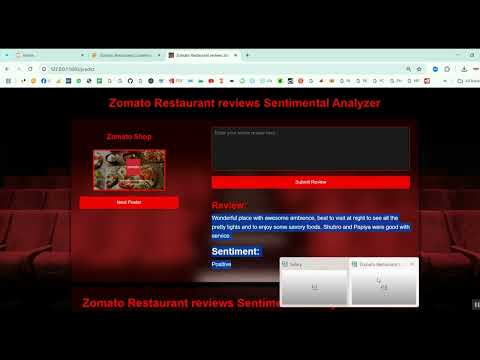
Zomato Restaurant Reviews Sentimental Analyzer in Python Projects
Zomato Restaurant Reviews Sentimental Analyzer in Python Projects
र 1000
⭐ Featured
⭐ Featured
AI & ML Models
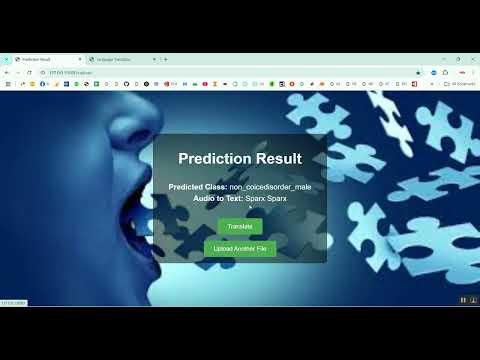
Voice Disorder Prediction using Audio Dataset in Python Projects
Voice Disorder Prediction using Audio Dataset in Python Projects
र 1000
AI & ML Models
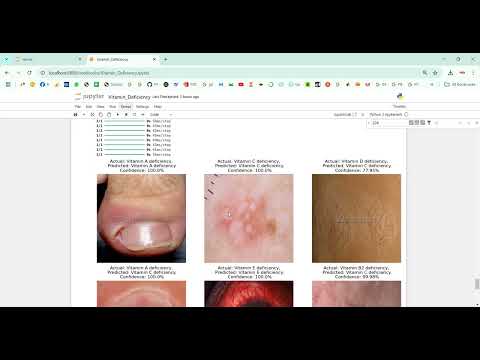
Vitamin Deficiency Detection Using Image Processing in Python Projects
Vitamin Deficiency Detection Using Image Processing in Python Projects
र 1000