AI & ML Models
0.0 (0 reviews) • 0 downloads
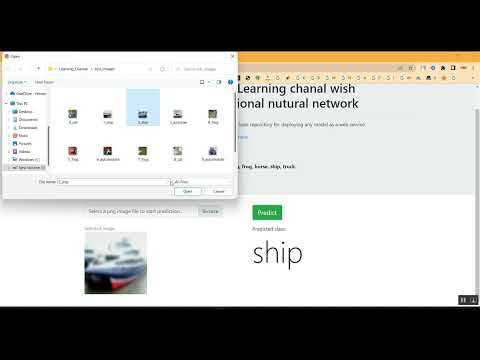
Learning Channel Small Blur Image Classification Flask App in Python Projects
र 1000
Learning Channel Small Blur Image Classification Flask App in Python Projects
Technical Details
Domain : Python
Database : Sqlite
Tools : Anaconda
Run Tools: VS Code
Database : Sqlite
Tools : Anaconda
Run Tools: VS Code
Secure Payment
Instant Download
GST Invoice
24/7 Support
About This Product
Learning Channel Small Blur Image Classification Flask App in Python Projects
Abstract
Image classification is a fundamental task in computer vision, and the presence of blur in images can significantly affect classification accuracy. The project “Learning Channel Small Blur Image Classification Flask App in Python” focuses on developing a Python-based system to classify small blurred images accurately using deep learning techniques. The system employs Convolutional Neural Networks (CNN) to automatically learn and extract robust features from blurred images, enabling accurate recognition even under challenging conditions. A Flask web application is integrated to provide an interactive platform where users can upload images and receive real-time classification results. Python libraries such as TensorFlow, Keras, OpenCV, NumPy, and Flask are used to implement image preprocessing, model training, and web deployment, making the system scalable and user-friendly for practical applications in education, image processing research, and content classification.
Existing System
Traditional image classification systems rely on high-quality, clear images and often fail when images are small or blurred. Existing CNN models trained on standard datasets may produce inaccurate results for low-resolution or slightly degraded images. Many conventional systems also lack interactive interfaces for real-time testing and deployment, limiting their usability in educational or research scenarios. Additionally, preprocessing and feature extraction in older systems often require manual tuning, reducing efficiency and adaptability for varied image quality conditions.
Proposed System
The proposed system introduces a CNN-based classification framework specifically designed to handle small and blurred images. Input images are preprocessed through grayscale conversion, resizing, normalization, and optional denoising or sharpening to enhance feature visibility. The CNN model consists of convolutional layers, pooling layers, and fully connected layers to learn hierarchical features robust to blur and resolution variations. The model is trained on a dataset of small blurred images labeled according to their respective classes. A Flask web application provides a user-friendly interface, allowing users to upload images and view classification results instantly. Python libraries such as OpenCV handle preprocessing, TensorFlow/Keras are used for deep learning model implementation, and Flask manages the web deployment. This combination of deep learning and interactive web deployment ensures accurate, scalable, and real-time image classification for educational, research, and content management purposes.
Abstract
Image classification is a fundamental task in computer vision, and the presence of blur in images can significantly affect classification accuracy. The project “Learning Channel Small Blur Image Classification Flask App in Python” focuses on developing a Python-based system to classify small blurred images accurately using deep learning techniques. The system employs Convolutional Neural Networks (CNN) to automatically learn and extract robust features from blurred images, enabling accurate recognition even under challenging conditions. A Flask web application is integrated to provide an interactive platform where users can upload images and receive real-time classification results. Python libraries such as TensorFlow, Keras, OpenCV, NumPy, and Flask are used to implement image preprocessing, model training, and web deployment, making the system scalable and user-friendly for practical applications in education, image processing research, and content classification.
Existing System
Traditional image classification systems rely on high-quality, clear images and often fail when images are small or blurred. Existing CNN models trained on standard datasets may produce inaccurate results for low-resolution or slightly degraded images. Many conventional systems also lack interactive interfaces for real-time testing and deployment, limiting their usability in educational or research scenarios. Additionally, preprocessing and feature extraction in older systems often require manual tuning, reducing efficiency and adaptability for varied image quality conditions.
Proposed System
The proposed system introduces a CNN-based classification framework specifically designed to handle small and blurred images. Input images are preprocessed through grayscale conversion, resizing, normalization, and optional denoising or sharpening to enhance feature visibility. The CNN model consists of convolutional layers, pooling layers, and fully connected layers to learn hierarchical features robust to blur and resolution variations. The model is trained on a dataset of small blurred images labeled according to their respective classes. A Flask web application provides a user-friendly interface, allowing users to upload images and view classification results instantly. Python libraries such as OpenCV handle preprocessing, TensorFlow/Keras are used for deep learning model implementation, and Flask manages the web deployment. This combination of deep learning and interactive web deployment ensures accurate, scalable, and real-time image classification for educational, research, and content management purposes.
Customer Reviews (0)
No reviews yet. Be the first!
Related Products
⭐ Featured
AI & ML Models
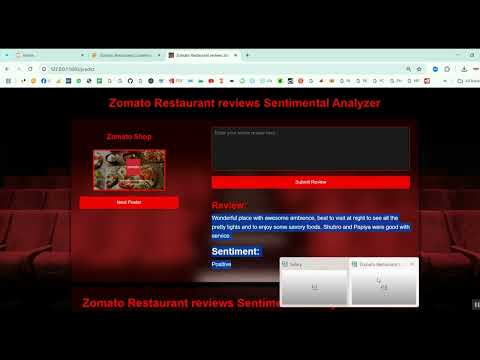
Zomato Restaurant Reviews Sentimental Analyzer in Python Projects
Zomato Restaurant Reviews Sentimental Analyzer in Python Projects
र 1000
⭐ Featured
⭐ Featured
AI & ML Models
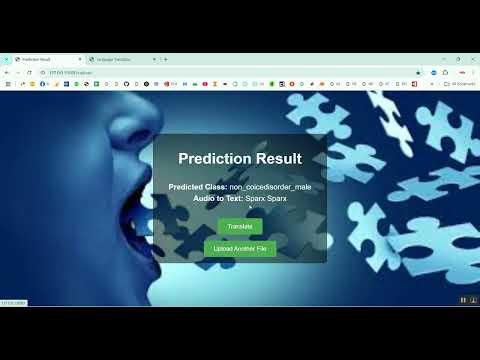
Voice Disorder Prediction using Audio Dataset in Python Projects
Voice Disorder Prediction using Audio Dataset in Python Projects
र 1000
AI & ML Models
Vitamin Deficiency Detection Using Image Processing in Python Projects
Vitamin Deficiency Detection Using Image Processing in Python Projects
र 1000