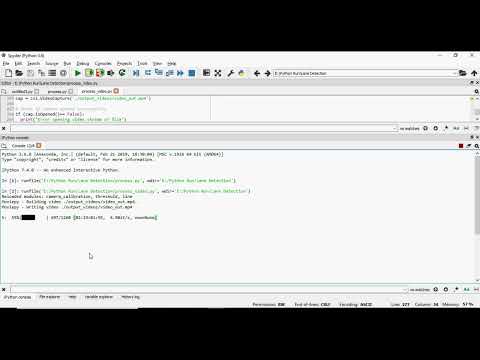
AI & ML Models
0.0 (0 reviews) • 0 downloads
Lane Detection Simulation Vehicle in Python Projects
र 1000
Lane Detection Simulation Vehicle in Python Projects
Technical Details
Domain : Python
Database : Sqlite
Tools : Anaconda
Run Tools: VS Code
Database : Sqlite
Tools : Anaconda
Run Tools: VS Code
Secure Payment
Instant Download
GST Invoice
24/7 Support
About This Product
Lane Detection Simulation Vehicle in Python Projects
Abstract
Lane detection is a critical component of advanced driver-assistance systems (ADAS) and autonomous vehicles, enabling safe navigation and lane-keeping on roads. The project “Lane Detection Simulation Vehicle in Python” focuses on developing a simulation-based vehicle system that detects lane markings in real-time using computer vision techniques. The system processes images or video streams from vehicle-mounted cameras, applies preprocessing and edge detection, and identifies lane boundaries using algorithms such as Canny edge detection and Hough Transform. Implemented in Python using libraries like OpenCV, NumPy, and Matplotlib, the simulation visualizes lane detection results and vehicle alignment within lanes. This project provides a platform for testing autonomous navigation algorithms, improving road safety, and experimenting with vehicle control strategies in a simulated environment.
Existing System
Traditional lane detection systems rely on simple image processing methods such as color segmentation, gradient thresholding, or manual calibration of lane boundaries. These methods work in controlled conditions but often fail under variable lighting, shadows, road wear, or curved lanes. Existing ADAS solutions may require specialized hardware, complex calibration, or extensive datasets to handle diverse driving scenarios. Many current systems also lack real-time visualization for testing and training, limiting their use for research and educational purposes.
Proposed System
The proposed system introduces a Python-based lane detection simulation framework that processes video or image sequences from a vehicle perspective. The input frames undergo preprocessing steps such as grayscale conversion, Gaussian blurring, and edge detection using the Canny algorithm. Detected edges are further analyzed using Hough Line Transform to identify lane lines, which are then overlaid on the original frames for visual feedback. The simulation allows the virtual vehicle to track lane position and orientation, providing insights into steering control and lane-keeping behavior. Python libraries such as OpenCV handle image processing, NumPy supports matrix operations, and Matplotlib is used for visualization of the detected lanes. By integrating computer vision with real-time simulation, this project provides an accessible, efficient, and scalable platform for developing and testing lane detection and autonomous driving algorithms without the need for physical vehicles.
Abstract
Lane detection is a critical component of advanced driver-assistance systems (ADAS) and autonomous vehicles, enabling safe navigation and lane-keeping on roads. The project “Lane Detection Simulation Vehicle in Python” focuses on developing a simulation-based vehicle system that detects lane markings in real-time using computer vision techniques. The system processes images or video streams from vehicle-mounted cameras, applies preprocessing and edge detection, and identifies lane boundaries using algorithms such as Canny edge detection and Hough Transform. Implemented in Python using libraries like OpenCV, NumPy, and Matplotlib, the simulation visualizes lane detection results and vehicle alignment within lanes. This project provides a platform for testing autonomous navigation algorithms, improving road safety, and experimenting with vehicle control strategies in a simulated environment.
Existing System
Traditional lane detection systems rely on simple image processing methods such as color segmentation, gradient thresholding, or manual calibration of lane boundaries. These methods work in controlled conditions but often fail under variable lighting, shadows, road wear, or curved lanes. Existing ADAS solutions may require specialized hardware, complex calibration, or extensive datasets to handle diverse driving scenarios. Many current systems also lack real-time visualization for testing and training, limiting their use for research and educational purposes.
Proposed System
The proposed system introduces a Python-based lane detection simulation framework that processes video or image sequences from a vehicle perspective. The input frames undergo preprocessing steps such as grayscale conversion, Gaussian blurring, and edge detection using the Canny algorithm. Detected edges are further analyzed using Hough Line Transform to identify lane lines, which are then overlaid on the original frames for visual feedback. The simulation allows the virtual vehicle to track lane position and orientation, providing insights into steering control and lane-keeping behavior. Python libraries such as OpenCV handle image processing, NumPy supports matrix operations, and Matplotlib is used for visualization of the detected lanes. By integrating computer vision with real-time simulation, this project provides an accessible, efficient, and scalable platform for developing and testing lane detection and autonomous driving algorithms without the need for physical vehicles.
Customer Reviews (0)
No reviews yet. Be the first!
Related Products
⭐ Featured

AI & ML Models
Zomato Restaurant Reviews Sentimental Analyzer in Python Projects
Zomato Restaurant Reviews Sentimental Analyzer in Python Projects
र 1000
⭐ Featured
⭐ Featured

AI & ML Models
Voice Disorder Prediction using Audio Dataset in Python Projects
Voice Disorder Prediction using Audio Dataset in Python Projects
र 1000
AI & ML Models
Vitamin Deficiency Detection Using Image Processing in Python Projects
Vitamin Deficiency Detection Using Image Processing in Python Projects
र 1000