AI & ML Models
0.0 (0 reviews) • 0 downloads
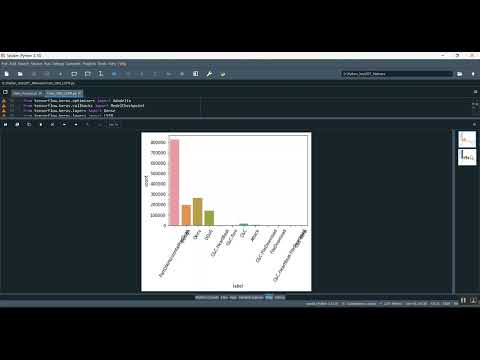
IOT Malware Detection Train CNN LSTM in Python Projects
र 1000
IOT Malware Detection Train CNN LSTM in Python Projects
Technical Details
Domain : Python
Database : Sqlite
Tools : Anaconda
Run Tools: VS Code
Database : Sqlite
Tools : Anaconda
Run Tools: VS Code
Secure Payment
Instant Download
GST Invoice
24/7 Support
About This Product
IOT Malware Detection Train CNN LSTM in Python Projects
Abstract
The increasing adoption of Internet of Things (IoT) devices has exposed networks to numerous cybersecurity threats, including sophisticated malware attacks. This project presents a Python-based IoT Malware Detection System that combines Convolutional Neural Networks (CNN) and Long Short-Term Memory (LSTM) models for accurate and real-time malware identification. The system analyzes IoT network traffic and device behavior data to detect and classify malicious activities. The CNN layers are used for spatial feature extraction from the input data, while the LSTM layers capture temporal dependencies across sequences, making the model effective against evolving malware patterns. Implemented using Python libraries such as TensorFlow, Keras, Pandas, and NumPy, this hybrid CNN-LSTM model enhances accuracy, reduces false positives, and provides adaptive learning for next-generation IoT malware detection and prevention.
Existing System
Existing IoT malware detection mechanisms often rely on signature-based or rule-based detection, which can only identify previously known malware patterns. These traditional systems are ineffective against zero-day attacks and dynamic threats that modify their behavior to evade detection. Moreover, many existing machine learning-based systems use static models that fail to capture temporal changes in network traffic, leading to reduced detection accuracy. The lack of integrated deep learning architectures and real-time adaptability limits the scalability and reliability of these conventional systems in large IoT environments.
Proposed System
The proposed system introduces an advanced hybrid CNN-LSTM deep learning model designed for real-time IoT malware detection and classification. The system processes network traffic logs, flow-based data, and device telemetry collected from IoT gateways. The data is preprocessed by normalization, feature selection, and sequence generation to prepare it for training. The CNN component extracts spatial and local feature patterns from packet-based or flow-level data, while the LSTM component captures sequential behavior to recognize time-dependent malicious activities. The hybrid model is trained using datasets such as Bot-IoT, TON-IoT, or N-BaIoT to achieve high detection accuracy. Python libraries such as TensorFlow/Keras are used for model building and training, Pandas and NumPy for data preprocessing, and Scikit-learn for evaluation metrics like accuracy, recall, precision, F1-score, and ROC-AUC. The model can be integrated into an IoT security monitoring system or cloud-based analytics platform for real-time detection. By combining spatial and temporal learning capabilities, the CNN-LSTM approach provides a robust, scalable, and intelligent framework for protecting IoT devices against evolving malware threats.
Abstract
The increasing adoption of Internet of Things (IoT) devices has exposed networks to numerous cybersecurity threats, including sophisticated malware attacks. This project presents a Python-based IoT Malware Detection System that combines Convolutional Neural Networks (CNN) and Long Short-Term Memory (LSTM) models for accurate and real-time malware identification. The system analyzes IoT network traffic and device behavior data to detect and classify malicious activities. The CNN layers are used for spatial feature extraction from the input data, while the LSTM layers capture temporal dependencies across sequences, making the model effective against evolving malware patterns. Implemented using Python libraries such as TensorFlow, Keras, Pandas, and NumPy, this hybrid CNN-LSTM model enhances accuracy, reduces false positives, and provides adaptive learning for next-generation IoT malware detection and prevention.
Existing System
Existing IoT malware detection mechanisms often rely on signature-based or rule-based detection, which can only identify previously known malware patterns. These traditional systems are ineffective against zero-day attacks and dynamic threats that modify their behavior to evade detection. Moreover, many existing machine learning-based systems use static models that fail to capture temporal changes in network traffic, leading to reduced detection accuracy. The lack of integrated deep learning architectures and real-time adaptability limits the scalability and reliability of these conventional systems in large IoT environments.
Proposed System
The proposed system introduces an advanced hybrid CNN-LSTM deep learning model designed for real-time IoT malware detection and classification. The system processes network traffic logs, flow-based data, and device telemetry collected from IoT gateways. The data is preprocessed by normalization, feature selection, and sequence generation to prepare it for training. The CNN component extracts spatial and local feature patterns from packet-based or flow-level data, while the LSTM component captures sequential behavior to recognize time-dependent malicious activities. The hybrid model is trained using datasets such as Bot-IoT, TON-IoT, or N-BaIoT to achieve high detection accuracy. Python libraries such as TensorFlow/Keras are used for model building and training, Pandas and NumPy for data preprocessing, and Scikit-learn for evaluation metrics like accuracy, recall, precision, F1-score, and ROC-AUC. The model can be integrated into an IoT security monitoring system or cloud-based analytics platform for real-time detection. By combining spatial and temporal learning capabilities, the CNN-LSTM approach provides a robust, scalable, and intelligent framework for protecting IoT devices against evolving malware threats.
Customer Reviews (0)
No reviews yet. Be the first!
Related Products
⭐ Featured

AI & ML Models
Zomato Restaurant Reviews Sentimental Analyzer in Python Projects
Zomato Restaurant Reviews Sentimental Analyzer in Python Projects
र 1000
⭐ Featured
⭐ Featured

AI & ML Models
Voice Disorder Prediction using Audio Dataset in Python Projects
Voice Disorder Prediction using Audio Dataset in Python Projects
र 1000

AI & ML Models
Vitamin Deficiency Detection Using Image Processing in Python Projects
Vitamin Deficiency Detection Using Image Processing in Python Projects
र 1000