AI & ML Models
0.0 (0 reviews) • 0 downloads
IOT Face Authentication App in Python Projects
र 1000
IOT Face Authentication App in Python Projects
Technical Details
Domain : Python
Database : Sqlite
Tools : Anaconda
Run Tools: VS Code
Database : Sqlite
Tools : Anaconda
Run Tools: VS Code
Secure Payment
Instant Download
GST Invoice
24/7 Support
About This Product
IOT Face Authentication App in Python Projects
Abstract
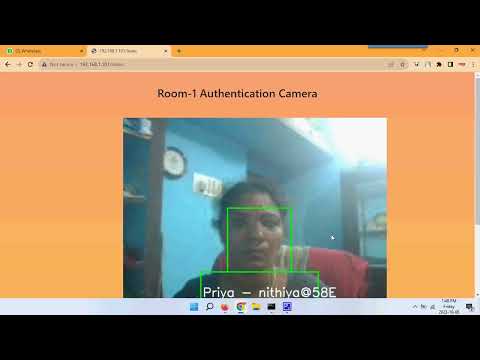
In the era of digital transformation, secure and intelligent authentication systems are crucial for ensuring privacy and access control. This project presents an IoT-Based Face Authentication App developed in Python that enables secure user identification through facial recognition integrated with IoT devices. The system uses a camera module connected to an IoT device, such as a Raspberry Pi, to capture the user’s face in real time. Machine learning and computer vision techniques are applied to extract and verify facial features before granting access or performing specific IoT-controlled actions. Python libraries such as OpenCV, face-recognition, NumPy, and Flask are used for detection, processing, and backend management, while MQTT or REST APIs enable device communication. The system provides a smart, contactless, and secure authentication solution suitable for home automation, industrial control, and smart office environments.
Existing System
Conventional IoT access systems often rely on manual authentication methods such as passwords, RFID cards, or PIN-based entry. These methods are prone to theft, duplication, and unauthorized usage, reducing overall security. Traditional systems also lack integration with biometric technology and cannot adapt dynamically to real-time identity verification. Additionally, existing IoT systems often do not store authentication logs or provide live monitoring capabilities, limiting their effectiveness in managing access across multiple connected devices.
Proposed System
The proposed system introduces a smart IoT-enabled face authentication framework that ensures real-time, contactless, and secure user verification. When a user attempts to access the IoT-controlled environment or device, the system captures a live image using an IoT-connected camera. Facial recognition algorithms, implemented using Python’s OpenCV and face-recognition libraries, process and compare the image against pre-stored user profiles. Upon successful verification, the system triggers an IoT action—such as unlocking a door, turning on a device, or granting network access—using MQTT or HTTP-based communication protocols. The Flask framework provides a web-based dashboard for user registration, monitoring authentication events, and managing device connections. All authentication attempts are logged in a database for audit and analysis. This face authentication IoT app ensures high security, ease of use, and adaptability across smart environments, making it ideal for next-generation secure IoT applications.
Abstract
In the era of digital transformation, secure and intelligent authentication systems are crucial for ensuring privacy and access control. This project presents an IoT-Based Face Authentication App developed in Python that enables secure user identification through facial recognition integrated with IoT devices. The system uses a camera module connected to an IoT device, such as a Raspberry Pi, to capture the user’s face in real time. Machine learning and computer vision techniques are applied to extract and verify facial features before granting access or performing specific IoT-controlled actions. Python libraries such as OpenCV, face-recognition, NumPy, and Flask are used for detection, processing, and backend management, while MQTT or REST APIs enable device communication. The system provides a smart, contactless, and secure authentication solution suitable for home automation, industrial control, and smart office environments.
Existing System
Conventional IoT access systems often rely on manual authentication methods such as passwords, RFID cards, or PIN-based entry. These methods are prone to theft, duplication, and unauthorized usage, reducing overall security. Traditional systems also lack integration with biometric technology and cannot adapt dynamically to real-time identity verification. Additionally, existing IoT systems often do not store authentication logs or provide live monitoring capabilities, limiting their effectiveness in managing access across multiple connected devices.
Proposed System
The proposed system introduces a smart IoT-enabled face authentication framework that ensures real-time, contactless, and secure user verification. When a user attempts to access the IoT-controlled environment or device, the system captures a live image using an IoT-connected camera. Facial recognition algorithms, implemented using Python’s OpenCV and face-recognition libraries, process and compare the image against pre-stored user profiles. Upon successful verification, the system triggers an IoT action—such as unlocking a door, turning on a device, or granting network access—using MQTT or HTTP-based communication protocols. The Flask framework provides a web-based dashboard for user registration, monitoring authentication events, and managing device connections. All authentication attempts are logged in a database for audit and analysis. This face authentication IoT app ensures high security, ease of use, and adaptability across smart environments, making it ideal for next-generation secure IoT applications.
Customer Reviews (0)
No reviews yet. Be the first!
Related Products
⭐ Featured

AI & ML Models
Zomato Restaurant Reviews Sentimental Analyzer in Python Projects
Zomato Restaurant Reviews Sentimental Analyzer in Python Projects
र 1000
⭐ Featured
⭐ Featured

AI & ML Models
Voice Disorder Prediction using Audio Dataset in Python Projects
Voice Disorder Prediction using Audio Dataset in Python Projects
र 1000

AI & ML Models
Vitamin Deficiency Detection Using Image Processing in Python Projects
Vitamin Deficiency Detection Using Image Processing in Python Projects
र 1000