AI & ML Models
0.0 (0 reviews) • 0 downloads
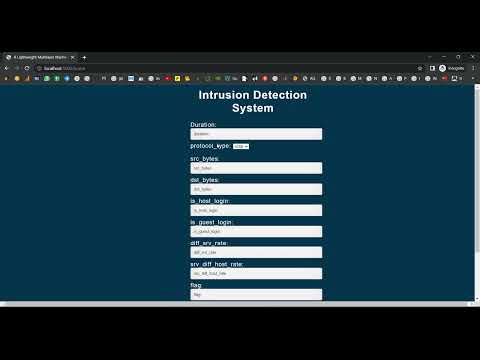
Intrusion Detection Web Flask App in Python Projects
र 1000
Intrusion Detection Web Flask App in Python Projects
Technical Details
Domain : Python
Database : Sqlite
Tools : Anaconda
Run Tools: VS Code
Database : Sqlite
Tools : Anaconda
Run Tools: VS Code
Secure Payment
Instant Download
GST Invoice
24/7 Support
About This Product
Intrusion Detection Web Flask App in Python Projects
Abstract
With the rapid growth of digital networks and online services, intrusion detection has become an essential component of cybersecurity. This project presents a Python-based Intrusion Detection Web Application developed using the Flask framework to identify and classify malicious network activities in real time. The system uses machine learning algorithms to analyze network traffic data and detect anomalies that indicate potential security breaches. Python libraries such as Pandas, NumPy, Scikit-learn, and Flask are employed for data preprocessing, model training, and web interface deployment. The web application allows users to upload datasets, visualize traffic behavior, and receive instant classification results, making it an efficient and user-friendly tool for monitoring and securing network environments.
Existing System
Traditional intrusion detection systems primarily rely on signature-based methods that match known attack patterns against incoming network data. While effective for familiar threats, these systems fail to recognize new, unseen attacks and generate a high rate of false positives. Additionally, existing intrusion detection tools often lack interactive graphical interfaces and operate only through console-based environments, which limits usability for security administrators. Moreover, many existing solutions are resource-intensive and lack real-time monitoring capabilities, reducing their applicability in dynamic network infrastructures.
Proposed System
The proposed system introduces an advanced web-based intrusion detection application powered by machine learning and integrated through Flask for interactive use. The model is trained on benchmark intrusion datasets such as NSL-KDD or CICIDS2017, which include both normal and malicious traffic records. Data preprocessing involves cleaning, normalization, and feature selection to improve learning efficiency. Various classifiers such as Random Forest, Decision Tree, Support Vector Machine (SVM), and Gradient Boosting are trained to detect anomalies and categorize different types of attacks. Flask provides an intuitive web interface where users can upload network traffic files, visualize classification outputs, and review detection results through dashboards and graphs. Libraries such as Pandas and NumPy handle data processing, Scikit-learn supports machine learning operations, and Matplotlib is used for visualization. By integrating real-time prediction with an easy-to-use web environment, the proposed Flask-based intrusion detection system provides a scalable, accurate, and accessible solution for proactive cybersecurity management.
Abstract
With the rapid growth of digital networks and online services, intrusion detection has become an essential component of cybersecurity. This project presents a Python-based Intrusion Detection Web Application developed using the Flask framework to identify and classify malicious network activities in real time. The system uses machine learning algorithms to analyze network traffic data and detect anomalies that indicate potential security breaches. Python libraries such as Pandas, NumPy, Scikit-learn, and Flask are employed for data preprocessing, model training, and web interface deployment. The web application allows users to upload datasets, visualize traffic behavior, and receive instant classification results, making it an efficient and user-friendly tool for monitoring and securing network environments.
Existing System
Traditional intrusion detection systems primarily rely on signature-based methods that match known attack patterns against incoming network data. While effective for familiar threats, these systems fail to recognize new, unseen attacks and generate a high rate of false positives. Additionally, existing intrusion detection tools often lack interactive graphical interfaces and operate only through console-based environments, which limits usability for security administrators. Moreover, many existing solutions are resource-intensive and lack real-time monitoring capabilities, reducing their applicability in dynamic network infrastructures.
Proposed System
The proposed system introduces an advanced web-based intrusion detection application powered by machine learning and integrated through Flask for interactive use. The model is trained on benchmark intrusion datasets such as NSL-KDD or CICIDS2017, which include both normal and malicious traffic records. Data preprocessing involves cleaning, normalization, and feature selection to improve learning efficiency. Various classifiers such as Random Forest, Decision Tree, Support Vector Machine (SVM), and Gradient Boosting are trained to detect anomalies and categorize different types of attacks. Flask provides an intuitive web interface where users can upload network traffic files, visualize classification outputs, and review detection results through dashboards and graphs. Libraries such as Pandas and NumPy handle data processing, Scikit-learn supports machine learning operations, and Matplotlib is used for visualization. By integrating real-time prediction with an easy-to-use web environment, the proposed Flask-based intrusion detection system provides a scalable, accurate, and accessible solution for proactive cybersecurity management.
Customer Reviews (0)
No reviews yet. Be the first!
Related Products
⭐ Featured
AI & ML Models
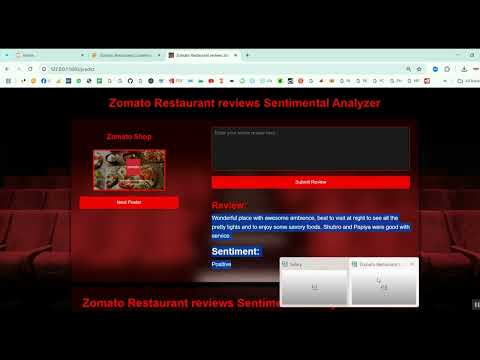
Zomato Restaurant Reviews Sentimental Analyzer in Python Projects
Zomato Restaurant Reviews Sentimental Analyzer in Python Projects
र 1000
⭐ Featured
⭐ Featured

AI & ML Models
Voice Disorder Prediction using Audio Dataset in Python Projects
Voice Disorder Prediction using Audio Dataset in Python Projects
र 1000
AI & ML Models
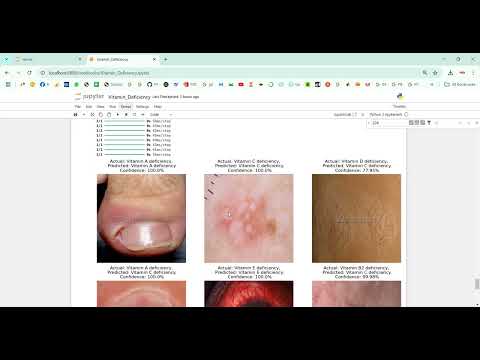
Vitamin Deficiency Detection Using Image Processing in Python Projects
Vitamin Deficiency Detection Using Image Processing in Python Projects
र 1000