AI & ML Models
0.0 (0 reviews) • 0 downloads
Image Super Resolution Flask App in Python Projects
र 1000
Image Super Resolution Flask App in Python Projects
Technical Details
Domain : Python
Database : Sqlite
Tools : Anaconda
Run Tools: VS Code
Database : Sqlite
Tools : Anaconda
Run Tools: VS Code
Secure Payment
Instant Download
GST Invoice
24/7 Support
About This Product
Image Super Resolution Flask App in Python Project
Abstract
Image Super Resolution is a deep learning-based computer vision technique that reconstructs high-resolution images from low-resolution inputs while preserving important visual details. This project develops a Flask-based web application that enables users to upload low-quality images and automatically enhance them using a trained super-resolution model. The system improves image sharpness, edge clarity, and texture quality, making it suitable for various image enhancement tasks.
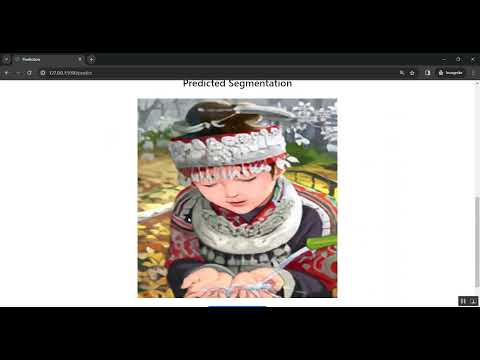
The application combines Python, Flask, OpenCV, and a deep learning model such as ESRGAN or SRCNN to provide an easy-to-use web interface for image processing. After uploading an image, the model performs super-resolution, and the enhanced image is displayed alongside the original for comparison. This solution is beneficial for digital photography, surveillance, medical imaging, satellite imagery, and old photo restoration.
Existing System
Traditional image enhancement techniques mainly rely on interpolation methods such as Nearest Neighbor, Bilinear, and Bicubic interpolation to enlarge low-resolution images. These methods estimate new pixel values mathematically without understanding the image content, resulting in blurred edges and loss of important details. They are computationally simple but cannot recover fine textures or missing information.
Several conventional image processing approaches also use filtering and sharpening techniques to improve image quality. However, these methods often amplify image noise and introduce visual artifacts while failing to reconstruct realistic high-frequency details. As a result, the enhanced images generally have lower visual quality and reduced accuracy for applications requiring detailed image analysis.
Proposed System
The proposed system utilizes a deep learning-based Image Super Resolution model integrated with a Flask web application. Users upload a low-resolution image through the web interface, after which the image undergoes preprocessing before being passed to a trained neural network. The model learns complex image features and reconstructs a high-resolution version with improved clarity, sharpness, and texture preservation.
After processing, the enhanced image is displayed alongside the original image, allowing users to compare the improvement. The system supports multiple image formats and provides an option to download the enhanced output. By using deep learning techniques, the proposed system achieves significantly better image quality than traditional interpolation methods while maintaining an intuitive and user-friendly interface.
Abstract
Image Super Resolution is a deep learning-based computer vision technique that reconstructs high-resolution images from low-resolution inputs while preserving important visual details. This project develops a Flask-based web application that enables users to upload low-quality images and automatically enhance them using a trained super-resolution model. The system improves image sharpness, edge clarity, and texture quality, making it suitable for various image enhancement tasks.
The application combines Python, Flask, OpenCV, and a deep learning model such as ESRGAN or SRCNN to provide an easy-to-use web interface for image processing. After uploading an image, the model performs super-resolution, and the enhanced image is displayed alongside the original for comparison. This solution is beneficial for digital photography, surveillance, medical imaging, satellite imagery, and old photo restoration.
Existing System
Traditional image enhancement techniques mainly rely on interpolation methods such as Nearest Neighbor, Bilinear, and Bicubic interpolation to enlarge low-resolution images. These methods estimate new pixel values mathematically without understanding the image content, resulting in blurred edges and loss of important details. They are computationally simple but cannot recover fine textures or missing information.
Several conventional image processing approaches also use filtering and sharpening techniques to improve image quality. However, these methods often amplify image noise and introduce visual artifacts while failing to reconstruct realistic high-frequency details. As a result, the enhanced images generally have lower visual quality and reduced accuracy for applications requiring detailed image analysis.
Proposed System
The proposed system utilizes a deep learning-based Image Super Resolution model integrated with a Flask web application. Users upload a low-resolution image through the web interface, after which the image undergoes preprocessing before being passed to a trained neural network. The model learns complex image features and reconstructs a high-resolution version with improved clarity, sharpness, and texture preservation.
After processing, the enhanced image is displayed alongside the original image, allowing users to compare the improvement. The system supports multiple image formats and provides an option to download the enhanced output. By using deep learning techniques, the proposed system achieves significantly better image quality than traditional interpolation methods while maintaining an intuitive and user-friendly interface.
Customer Reviews (0)
No reviews yet. Be the first!
Related Products
⭐ Featured

AI & ML Models
Zomato Restaurant Reviews Sentimental Analyzer in Python Projects
Zomato Restaurant Reviews Sentimental Analyzer in Python Projects
र 1000
⭐ Featured
⭐ Featured

AI & ML Models
Voice Disorder Prediction using Audio Dataset in Python Projects
Voice Disorder Prediction using Audio Dataset in Python Projects
र 1000
AI & ML Models
Vitamin Deficiency Detection Using Image Processing in Python Projects
Vitamin Deficiency Detection Using Image Processing in Python Projects
र 1000