AI & ML Models
0.0 (0 reviews) • 0 downloads
Image Comparison CNN Auto Encoder in Python Projects
र 1000
Image Comparison CNN Auto Encoder in Python Projects
Technical Details
Domain : Python
Database : Sqlite
Tools : Anaconda
Run Tools: VS Code
Database : Sqlite
Tools : Anaconda
Run Tools: VS Code
Secure Payment
Instant Download
GST Invoice
24/7 Support
About This Product
Image Comparison CNN Auto Encoder in Python Projects
Abstract
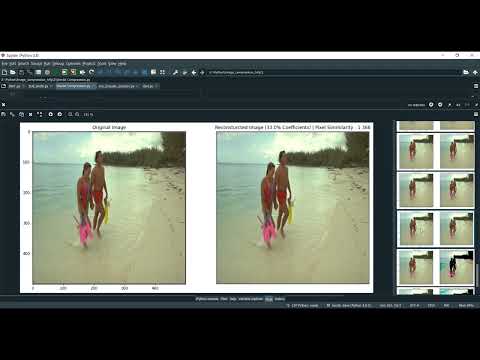
Image comparison is an essential task in computer vision for applications such as duplicate detection, similarity search, quality assessment, and anomaly detection. This project focuses on developing a Python-based Image Comparison system using Convolutional Neural Network (CNN) Autoencoders. The system encodes images into low-dimensional feature representations and reconstructs them to measure similarity between input images. Implemented using Python libraries such as TensorFlow/Keras, OpenCV, NumPy, and Matplotlib, the CNN Autoencoder learns compressed latent representations, enabling efficient and accurate comparison of large image datasets. This solution can be applied in image retrieval, content verification, and visual quality assessment.
Existing System
Traditional image comparison methods rely on pixel-wise differences, histogram comparison, or feature descriptors such as SIFT, SURF, or ORB. While effective in simple cases, these methods fail under variations in scale, rotation, lighting, or noise. Existing approaches may also be computationally intensive for large datasets and lack the ability to capture complex semantic similarities between images. Moreover, manual feature engineering limits adaptability to different image types and applications.
Proposed System
The proposed system introduces a CNN Autoencoder framework to compare images based on learned feature embeddings. Input images are preprocessed by resizing, normalization, and optional augmentation to improve model robustness. The CNN Autoencoder compresses images into a latent space representation and reconstructs them to evaluate similarity using reconstruction error or latent vector distance (e.g., cosine similarity or Euclidean distance). Python libraries such as TensorFlow/Keras are used for model building and training, OpenCV handles image preprocessing, NumPy manages data arrays, and Matplotlib visualizes reconstruction and similarity results. By leveraging deep learning, the system captures high-level semantic features, provides efficient similarity computation, and is adaptable to various image types and applications. This approach offers an automated, scalable, and accurate solution for image comparison and content-based image retrieval tasks.
Abstract
Image comparison is an essential task in computer vision for applications such as duplicate detection, similarity search, quality assessment, and anomaly detection. This project focuses on developing a Python-based Image Comparison system using Convolutional Neural Network (CNN) Autoencoders. The system encodes images into low-dimensional feature representations and reconstructs them to measure similarity between input images. Implemented using Python libraries such as TensorFlow/Keras, OpenCV, NumPy, and Matplotlib, the CNN Autoencoder learns compressed latent representations, enabling efficient and accurate comparison of large image datasets. This solution can be applied in image retrieval, content verification, and visual quality assessment.
Existing System
Traditional image comparison methods rely on pixel-wise differences, histogram comparison, or feature descriptors such as SIFT, SURF, or ORB. While effective in simple cases, these methods fail under variations in scale, rotation, lighting, or noise. Existing approaches may also be computationally intensive for large datasets and lack the ability to capture complex semantic similarities between images. Moreover, manual feature engineering limits adaptability to different image types and applications.
Proposed System
The proposed system introduces a CNN Autoencoder framework to compare images based on learned feature embeddings. Input images are preprocessed by resizing, normalization, and optional augmentation to improve model robustness. The CNN Autoencoder compresses images into a latent space representation and reconstructs them to evaluate similarity using reconstruction error or latent vector distance (e.g., cosine similarity or Euclidean distance). Python libraries such as TensorFlow/Keras are used for model building and training, OpenCV handles image preprocessing, NumPy manages data arrays, and Matplotlib visualizes reconstruction and similarity results. By leveraging deep learning, the system captures high-level semantic features, provides efficient similarity computation, and is adaptable to various image types and applications. This approach offers an automated, scalable, and accurate solution for image comparison and content-based image retrieval tasks.
Customer Reviews (0)
No reviews yet. Be the first!
Related Products
⭐ Featured

AI & ML Models
Zomato Restaurant Reviews Sentimental Analyzer in Python Projects
Zomato Restaurant Reviews Sentimental Analyzer in Python Projects
र 1000
⭐ Featured
⭐ Featured

AI & ML Models
Voice Disorder Prediction using Audio Dataset in Python Projects
Voice Disorder Prediction using Audio Dataset in Python Projects
र 1000
AI & ML Models
Vitamin Deficiency Detection Using Image Processing in Python Projects
Vitamin Deficiency Detection Using Image Processing in Python Projects
र 1000